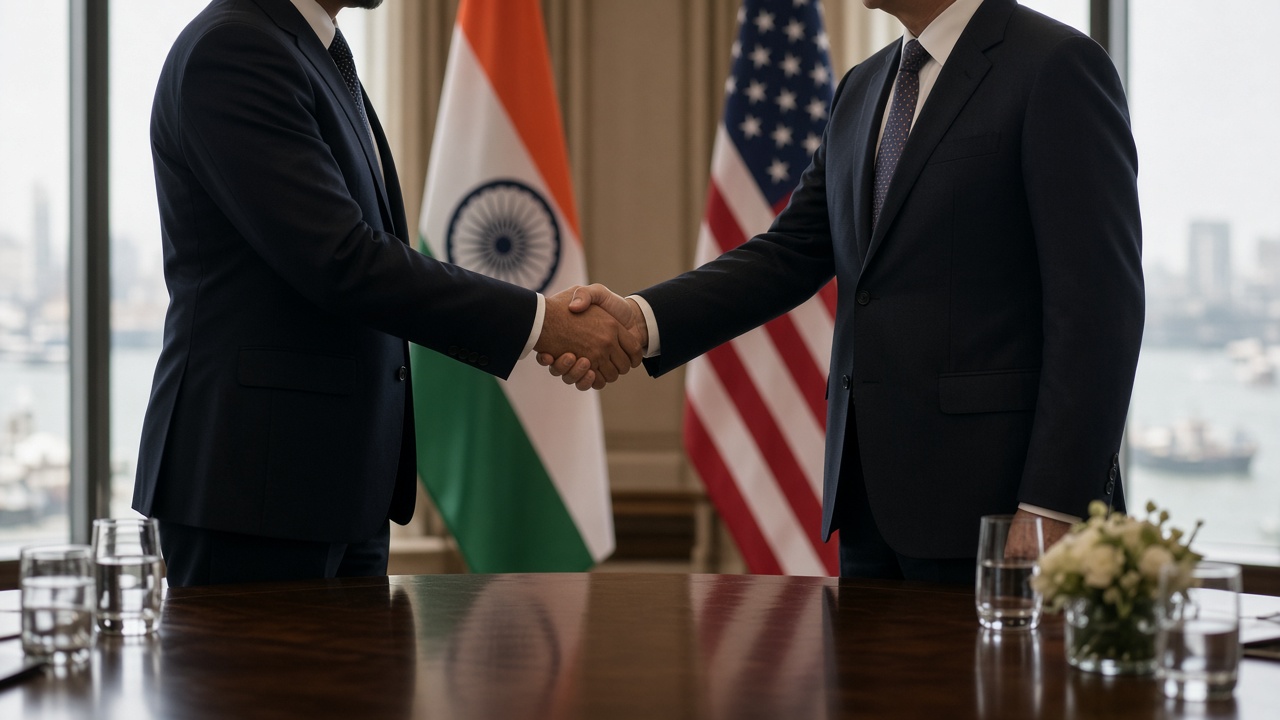
U.S. Secretary of State Marco Rubio said Tuesday that Washington and New Delhi are "about as close as you can be" to signing a trade agreement, telling reporters in Mumbai that negotiators need to wrap up only a small list of outstanding items after months of tariff fights and energy disputes.
Rubio met External Affairs Minister S. Jaishankar at the Taj Mahal Palace hotel following a wreath-laying at the memorial to victims of the 2008 Mumbai attacks. India's foreign ministry said the agenda covered trade, investment, energy and defence — the pillars New Delhi has tried to keep linked even when individual chapters stall.
Tariffs and competition
The Biden-era breakdown in trade talks led the Trump administration to impose tariffs of up to 50% on most Indian exports in August 2025. A February 2026 framework cut the headline rate to 18%, but Commerce Minister Piyush Goyal's recent claim that the first tranche was in its final stages collided with Finance Minister Nirmala Sitharaman's warning earlier in October that negotiations had "plateaued."
Indian officials insist any permanent rate must match concessions given to manufacturing rivals such as Vietnam. Rubio's public optimism Tuesday gives Jaishankar political cover to sell a deal to exporters in Gujarat and Tamil Nadu who have weathered two years of uncertainty.
Russian oil still in the room
India's continued purchases of discounted Russian crude have repeatedly irritated Washington. Speaking before he flew to South Asia, Rubio acknowledged that India had diversified suppliers but said it was "hard to pivot from one day to the next" while remaining a "substantial" buyer of Russian barrels. New Delhi counters that it must keep import costs stable for a growing economy and has pledged to expand U.S. energy purchases over time.
Rubio is scheduled to visit Reliance Industries' Jamnagar refinery complex in Gujarat on Wednesday and meet business leaders there — a stop that underscores how energy ties and manufacturing investment travel together in U.S.-India diplomacy.
Gateway optics and Gulf calendar
Earlier Tuesday, Rubio posed with Maharashtra Chief Minister Devendra Fadnavis and U.S. Ambassador Sergio Gor at the Gateway of India, projecting continuity after a Central Asia swing. Jaishankar was also due to host UAE Deputy Prime Minister Sheikh Abdullah bin Zayed Al Nahyan in Mumbai the same day, with West Asia security — including Houthi strikes on Saudi infrastructure — on the bilateral calendar.
For Indian industry groups, Rubio's Mumbai sound bite matters less than the text of whatever agreement emerges: rules on digital trade, agriculture market access and visa flows for skilled workers still sit in the closed-door stack. Until those pages are initialed, exporters will treat Tuesday's handshake as progress, not a finish line.