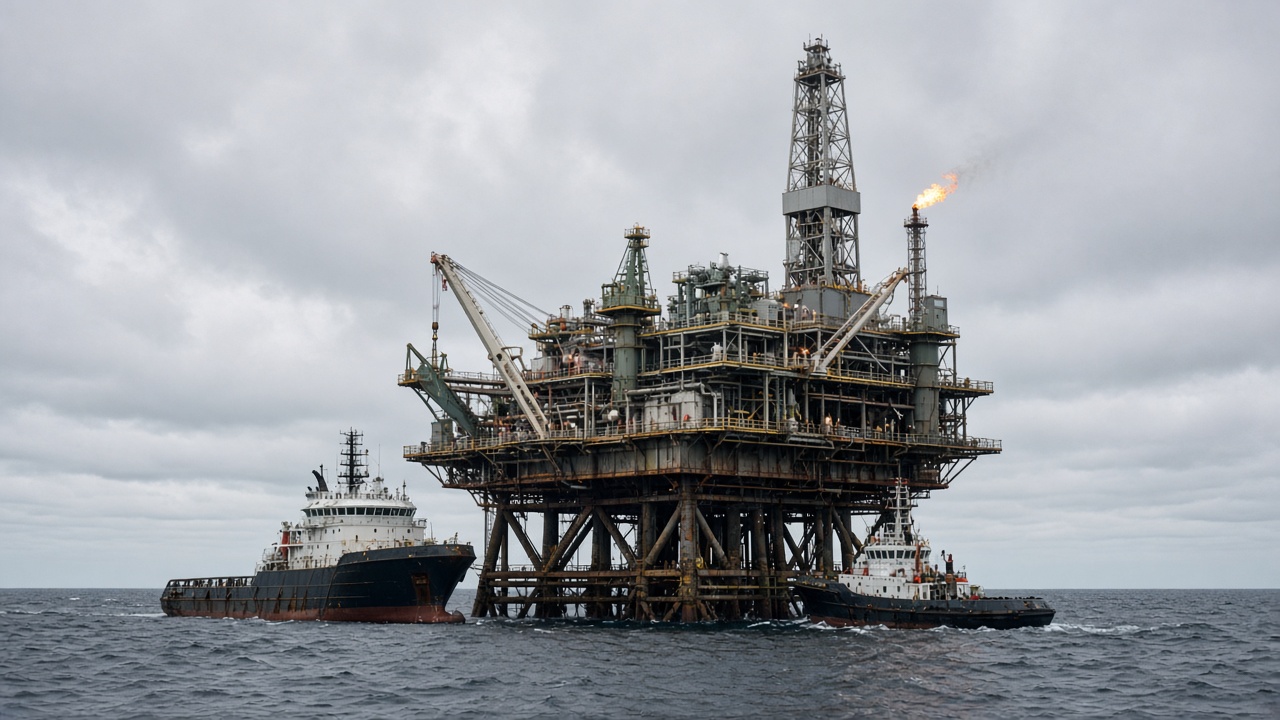
Serica Energy shares fell sharply on Monday after the North Sea operator trimmed its 2026 production forecast and warned that the restart of its Triton floating production system would slip again, removing barrels the UK market had already priced in.
The company, which produces from mature UK continental shelf assets including the Greater Buchan area, told investors that mechanical work on Triton was taking longer than planned. Analysts said the delay matters because Triton contributes a meaningful slice of Serica's cash flow at a moment when European gas prices remain volatile and Chancellor Rachel Reeves is preparing an October budget that could reshape North Sea tax treatment.
Why Triton timing moves the share price
Triton processes output from Serica's western North Sea fields. When the vessel is offline, production is deferred rather than lost forever, but deferred barrels still hit quarterly revenue, hedge positions and the debt metrics Serica uses with lenders. RBC Capital Markets noted in client comments that the market had been modelling a restart within weeks; pushing that window out forces models to cut near-term free cash flow.
Serica is not alone in fighting ageing infrastructure. UK North Sea production has been declining for years, and operators increasingly depend on expensive life-extension work on platforms and floating units commissioned decades ago. Any slip in restart schedules feeds straight into London-listed valuations because few large buyers remain willing to fund greenfield exploration.
Investor read-through for UK gas supply
Britain still sources a portion of winter gas from the North Sea, and while Triton's volumes are modest in national terms, traders watch operator updates for signs of broader maintenance backlogs. Monday's move in Serica came on a day when broader UK equities were already under pressure after reports that the Prudential Regulation Authority was scrutinising Barclays' treatment of private-credit derivatives.
For pension funds holding mid-cap energy names, the episode is a reminder that operational risk in the UK shelf has not disappeared even as climate policy debates dominate headlines. Serica's management said it would provide a further operational update with third-quarter results, leaving analysts to recut 2026 EBITDA estimates in the meantime.
What Serica said
In its statement, Serica said safety remained the priority on Triton and that it was working with contractors to complete remaining checks before returning to full rates. The company did not quantify the production shortfall in public filings on Monday, but the guidance cut implied a material gap versus prior forecasts.
Institutional holders will now press management on whether insurance recoveries or contractual protections with field partners can offset any lost revenue. For retail investors, the lesson is familiar: single-asset operators on the UK shelf can rerate quickly when one vessel misses a deadline, even if long-term reserves are unchanged.
Broker notes and hedging
City analysts said Serica's hedge book partly shields near-term cash flow from spot gas moves, but production volume still drives covenant headroom on its revolving credit facility. Any sustained outage at Triton could push the company toward the lower end of peer valuation multiples even if commodity prices rally on Middle East tension.
Retail shareholders who bought into Serica after its acquisition spree should revisit portfolio weightings: the stock behaves like a leveraged bet on UK gas realisations plus operational uptime, not a passive income play comparable to a major integrated oil company.
Climate protesters who target North Sea operators are unlikely to sympathise with production delays, but investors focused on energy security will watch whether Serica can recover lost volumes before winter demand peaks. Government statements on licensing rounds remain separate from company-specific maintenance schedules.
Environmental groups will continue to challenge new North Sea approvals in court, but Monday's sell-off was driven by operational timing rather than policy shocks. Pension trustees holding Serica through passive mid-cap funds may not notice the move, yet active energy managers said they trimmed positions into the close pending clearer restart dates from the board.