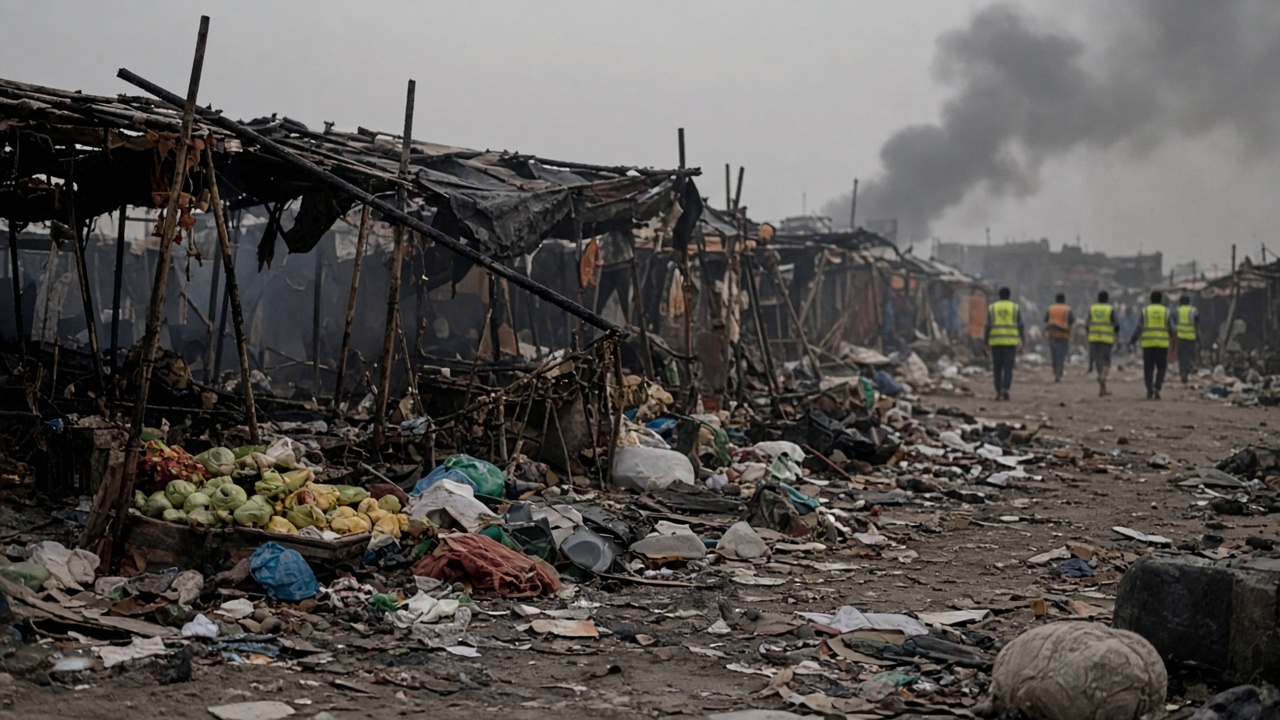
Sudan's army is facing accusations that it launched a wave of drone strikes across West Kordofan and into the disputed Abyei area that killed more than 200 people, including dozens traveling to a funeral and shoppers at a cross-border market. The Sudan War Observatory, which tracks the conflict between the army and the Rapid Support Forces, said Sunday evening attacks alone left about 150 dead in the town of Al-Dabab, with a separate strike on Monday morning killing 73 people at Amiet Common Market near Abyei town.
The scale of the reported toll makes the episode one of the deadliest single days for civilians since Sudan's war reignited in 2023, and it arrives as armed drones have become the dominant weapon on both sides despite a partial United Nations arms embargo. United Nations spokesperson Stéphane Dujarric said Monday the world body was alarmed by strikes that are killing civilians, including children, and disrupting food and medical services while roughly 20 million people face acute hunger.
Funeral convoy hit at Al-Dabab
According to the Sudan War Observatory, the deadliest strike Sunday evening targeted a truck carrying about 200 mourners who had traveled from an area north of Abyei as they reached Al-Dabab in West Kordofan. Sources cited by the group said 145 people were killed in that attack and five more died when a tent where mourners had gathered was hit. The monitoring organization said about 150 others were wounded and that additional drones struck a market in Al-Mujlad the same evening, though casualty figures there remained incomplete.
Witnesses quoted by Agence France-Presse described a transport hub crowded with villagers seeking rides home after market day when a drone strike tore through the gathering. Ahmed Abakar Wadi, a resident who helped recover bodies, told AFP that at least 50 corpses were visible at the scene, including his brother's. The Guardian and other outlets reported similar witness accounts of mass burials with little time to identify the dead.
Abyei market strike raises border tensions
On Monday, Yohana Akol Ngor, information minister for the Abyei administrative area, told Radio Tamazuj that drones struck Amiet Common Market around 11:30 local time, killing 73 people. The market sits about 10 kilometers from Abyei town in a region jointly administered by Sudan and South Sudan but claimed by both governments since South Sudan's independence in 2011.
A military source told the BBC that Sudan's army carried out the Abyei attack, describing the market as a fuel supply point for RSF fighters. South Sudan summoned Sudan's ambassador to protest, and diplomats warned that fighting could spread across a border already strained by refugee flows and oil transit routes. BBC Verify published satellite imagery showing extensive fire damage at the northeastern corner of the market compound, which aerial photos had previously shown packed with trucks.
Drones and denials
The Sudan War Observatory said the strikes likely originated from army-held Kadugli in South Kordofan, part of the Greater Kordofan corridor that links RSF-controlled Darfur to Khartoum, now held by the army. Foreign suppliers have continued to equip both the army and the RSF with unmanned aircraft, making drone strikes a routine feature of battles that have displaced more than 14 million people.
Sudan's army has not publicly responded to the specific allegations about Al-Dabab and Al-Mujlad. In statements reported by international media, military officials have insisted they do not target civilians even when they believe RSF fighters are present among them. Independent verification of each strike remains difficult because phone networks and road access in West Kordofan are unreliable, and neither side grants routine access to investigators.
What happens next
Humanitarian groups said hospitals in Abyei town were treating wounded patients from Monday's market attack, stretching clinics that already serve displaced families. Aid agencies warn that any escalation along the South Sudan border could interrupt food convoys, while mediators have yet to restore a durable ceasefire since the 2022 truce largely collapsed.