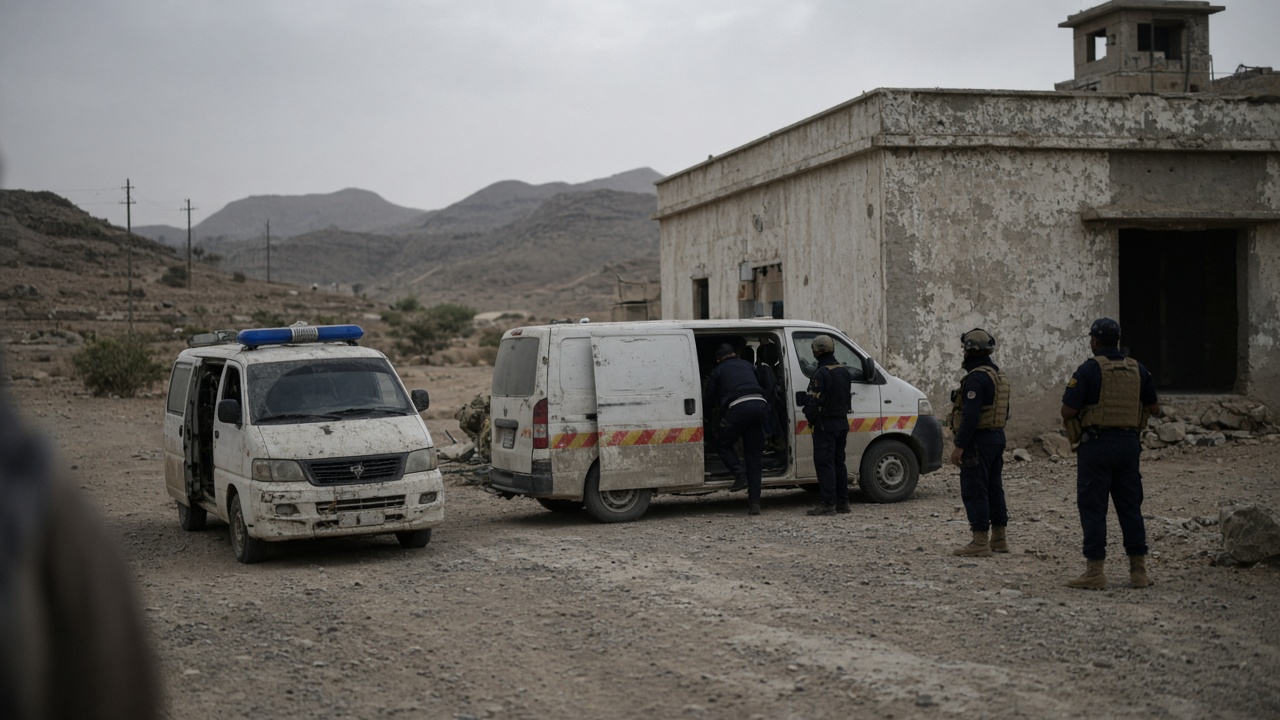
Houthi forces fired ballistic missiles into the Martyr Ahmed al-Sulaimani training centre at al-Alam, near Ataq in Yemen's Shabwa province, on Monday, killing at least 53 recruits and wounding more than 200 in what Yemeni officials called one of the deadliest single strikes since fighting surged again this summer.
A spokesman for the Saudi-backed Yemeni armed forces said three missiles struck the camp, which was training internal security personnel and police from several provinces. Shabwa's media office said recruits were gathered for instruction when the salvo landed. Video circulated online showed bodies scattered across dusty ground; Reuters verified footage from the province showing injured people amid the wreckage.
Recruits, not front-line brigades
Information Minister Moammar al-Eryani said the strike amounted to a war crime because the site trained police, not combat brigades on an active front. Houthi military spokesman Yahya Sarea countered that the missiles hit a gathering of "Saudi enemy" forces and claimed Saudi officers ran the camp — an allegation government officials rejected.
Presidential Leadership Council head Rashad al-Alimi condemned the "criminal attack" and promised a firm response. The strike lands in the middle of a pro-government offensive launched in early October to claw back western territory the Houthis still hold, including around Sanaa.
Hospitals overwhelmed
Deputy governor Fahad al-Khalifi told AFP that Shabwa hospitals could not absorb the casualty load and that the most serious cases were sent to Hadramout and Aden. Governor Awad Ibn al-Wazir later told the Associated Press that many of the dead were 18 to 20 years old and that some recruits remained missing a day after the attack, with provincial officials continuing to revise the death toll upward as recovery work proceeded.
Truce in name only
The 2022 nationwide truce had largely frozen major ground fighting until this year's escalation tied to renewed Saudi air campaigns over Houthi-held areas and Houthi missile and drone volleys toward the kingdom. In parallel statements on Monday, Sarea also claimed attacks on Saudi energy sites and airports — claims that helped push Riyadh to postpone its flagship investment forum — but the Shabwa camp deaths mark the heaviest reported loss inside Yemen's own front lines in months.
Western and regional capitals have treated the Houthis as both a Yemeni faction and an Iran-aligned missile force capable of reaching Gulf infrastructure. Monday's camp strike shows how quickly those threads knot: a police training graduation becomes a mass-casualty event, provincial health systems buckle, and council leaders face pressure to answer with offensive operations that could widen the war just as diplomats still speak, in abstract terms, about reviving ceasefire talks.