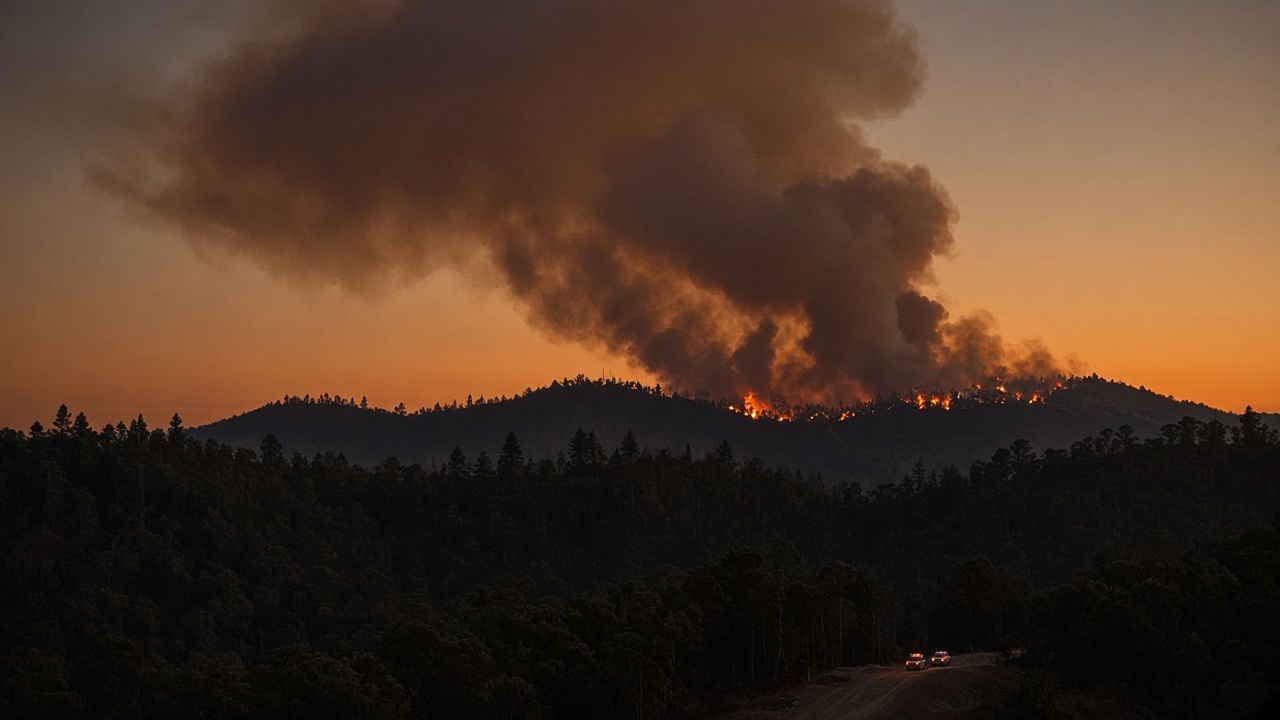
CSIRO has deployed a bushfire smoke transport model on the national compute grid, giving state emergency agencies 48-hour plume forecasts at suburb-scale resolution before summer heat returns to eastern Australia.
From research code to operations
The model couples vegetation fuel moisture data from the Bureau of Meteorology with satellite hotspots and local terrain to predict particulate spread. Hamish Clarke’s desk has tracked similar tools in California; the Australian version adds eucalyptus emissivity parameters that earlier prototypes lacked.
During a controlled burn near Bourke last week—where October temperatures broke records—the system correctly flagged downstream smoke impacts on Dubbo’s hospital helipad, prompting NSW Health to pre-position asthma kits. CSIRO said runtime fell from eight hours on a university cluster to 22 minutes on the national grid nodes in Canberra and Perth.
Who gets access
Fire agencies in NSW, Queensland and Victoria will have login access from 1 November, with South Australia joining after the November state election caretaker period ends. The federal National Emergency Management Agency will host a public-facing simplified map, but granular concentrations remain restricted to avoid panic selling in tourism towns.
Insurers are interested too. Suncorp told a parliamentary inquiry last month that smoke taint and business-interruption claims spike when plumes drift hundreds of kilometres from the fire ground. CSIRO is negotiating a data feed with the Insurance Council but has not finalised pricing.
Limits
The model does not predict ignition; it assumes hotspots from RFS and satellite feeds are accurate. CSIRO warned that thunderstorm downdrafts—common in November—can still scramble forecasts with less than six hours’ notice. Nevertheless, emergency leaders said any extra lead time beats the ad-hoc phone chains used during the 2019–20 black summer.
Funding and summer outlook
The deployment was funded through the National Recovery and Resilience Agency’s $28 million analytics package announced after the 2022 flood inquiries. CSIRO will train RFS volunteers to read probability contours so incident controllers do not misread low-risk shading as permission to ignore wind shifts.
Longer term, researchers want to couple smoke outputs with power-grid models because major lines tripped during the 2019–20 season when insulators fouled. Energy Queensland said it will trial the feeds on two transmission corridors west of Brisbane before November heatwaves.