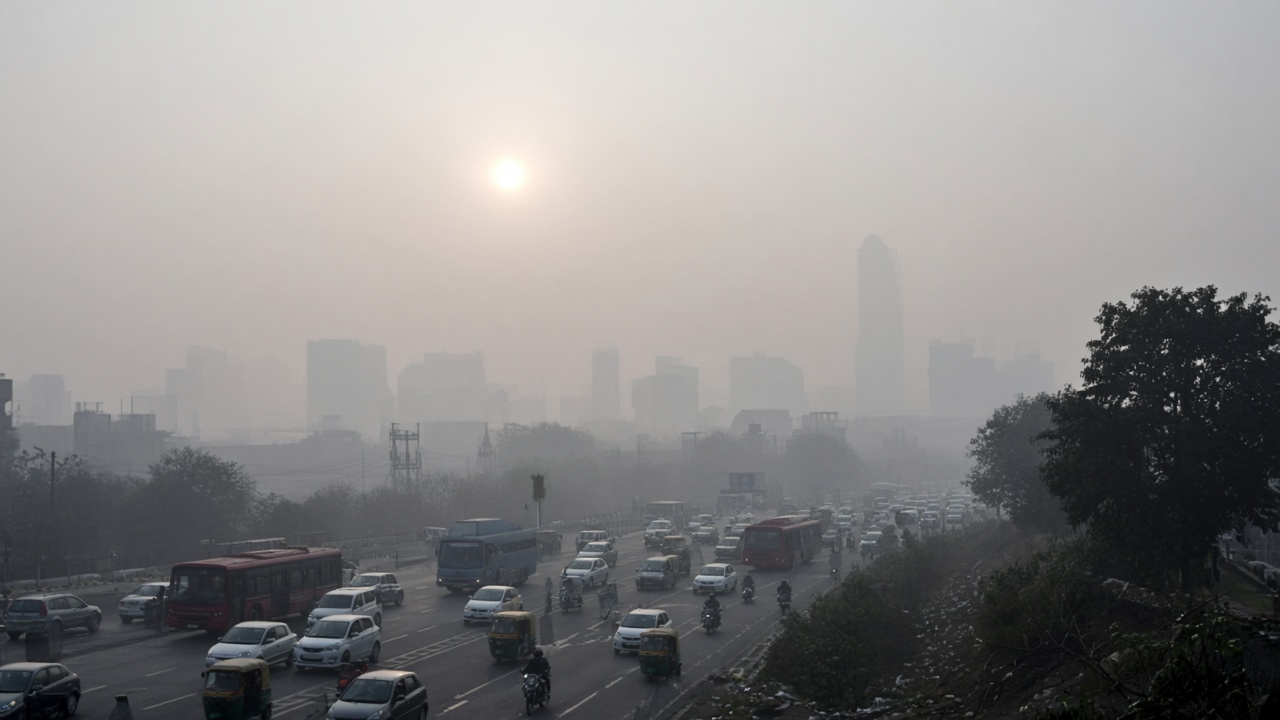
Delhi’s air quality deteriorated sharply on Tuesday, with the capital’s Air Quality Index climbing to 244 by early afternoon and pushing authorities to invoke the first stage of the Graded Response Action Plan across the National Capital Region. Monitoring stations in Anand Vihar and Dwarka recorded even higher localized readings, underscoring how traffic corridors can spike pollution above the citywide average.
How GRAP Stage 1 changes daily life
The Commission for Air Quality Management triggers Stage 1 when the regional AQI sits in the “poor” band between 201 and 300. Measures announced for the NCR include restrictions on coal and firewood use in restaurant tandoors and limits on diesel generator sets, with carve-outs for essential and emergency services.
Officials said the index had stood at 179 on Monday before weather conditions, crop-residue burning upwind and local traffic emissions combined to trap particulates over the Indo-Gangetic plain. GRAP is a seasonally updated playbook shared by Delhi, Haryana, Uttar Pradesh and Rajasthan; higher stages add construction bans, truck entry curbs and school advisories if readings worsen.
Health and political pressure
Doctors’ groups have warned that sustained “poor” readings aggravate asthma and cardiovascular stress, particularly for children and outdoor workers. The timing is sensitive: northern India is moving through the post-monsoon window when farm fires in Punjab and Haryana typically peak, and Delhi’s winter inversion season is only weeks away.
State environment ministers have traded blame in recent years over stubble-burning enforcement and industrial emissions. Tuesday’s activation does not yet mandate office closures or a construction halt, but it signals that regulators expect several days of elevated particulate levels unless wind patterns shift or fire counts fall.
What officials are watching next
CAQM will publish daily bulletins on fire hotspots and industrial violations. Municipal corporations have been asked to step up water sprinkling on arterial roads and crack down on open waste burning, which contributes a smaller but visible share of local pollution.
Residents are advised to limit strenuous outdoor activity when the AQI remains above 200 and to use certified masks if they must commute during morning peaks. Schools in several districts sent notices reminding parents to watch for wheezing or eye irritation, and hospitals reported a modest uptick in outpatient visits for respiratory complaints by evening.
If the index approaches the “very poor” band above 301, Stage 2 would add stricter diesel restrictions and enhanced parking fees in Delhi—steps officials hope to avoid but have templates ready to deploy within 24 hours of a sustained breach. Satellite fire maps on Tuesday showed hundreds of active stubble-burning points in Punjab; state governments said they had issued more than 1,400 fines over the past week but acknowledged that enforcement gaps persist in remote blocks where farmers face tight planting windows.