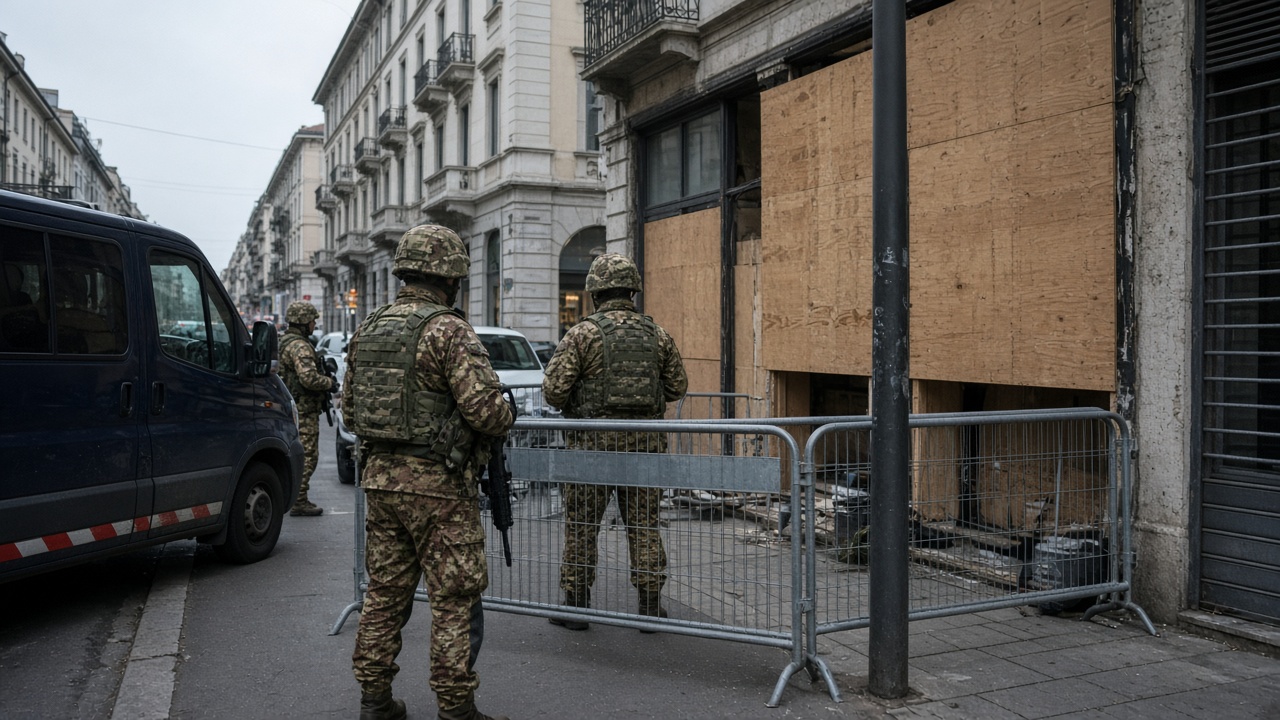
Prime Minister Giorgia Meloni said Tuesday that Italy will send 500 additional soldiers to Milan until the end of 2026 and tighten criminal law after cost-of-living marches turned into looting, smashed storefronts and attacks on police in Milan and other cities over the weekend.
What the cabinet approved
Meloni outlined the measures in a video after a Council of Ministers meeting. The troop reinforcement falls under the existing Strade Sicure (Safe Streets) operation, which already mixes army patrols with police at sensitive sites. Defence Minister Guido Crosetto said the deployment will strengthen checkpoints, increase surveillance around critical infrastructure and support prevention work without changing the military’s core mission, according to a ministry statement dated 20 October.
Italian media reported that giving those troops full judicial-police powers in Milan was discussed but dropped after pushback from President Sergio Mattarella’s office. Troops will operate in a support role alongside law enforcement, government officials said.
New offences and parental liability
The decree introduces a specific crime of “violent participation in a demonstration,” Meloni said. Joining a group of five or more people who throw stones, firecrackers or sticks during a march can carry up to five years in prison and fines up to €20,000, with higher penalties if faces are covered or someone is injured.
Justice Minister Carlo Nordio told reporters at Palazzo Chigi that promoting violent groups for demonstrations—including through online tools—can bring four to twelve years in prison. Meloni also detailed a “you break it, you pay” mechanism: damage to public property can trigger a prefect’s payment order, while private owners can seek fast-track court orders. When minors cause damage, parents can be held financially responsible, she said.
Preventive detention rules that previously applied only to adults will now extend to minors in certain cases, Meloni added, and a presumption that youths aged 14 to 18 understood their actions will take immediate effect under the decree rather than waiting for a separate parliamentary bill.
Political reaction
Opposition parties and some trade unions accused the government of conflating peaceful protest with the weekend’s violence. Meloni said nobody should downplay images of ransacked shops and injured officers. CGIL, Italy’s largest union, is planning a separate demonstration, and ministers said ordinary marches would not be targeted by the new provisions if they remain peaceful.
Parliament must convert the decree into law within the usual constitutional timeframe; until then, the measures are in force. Milan’s prefecture said it would publish updated patrol maps once army units arrive, expected within days.
Weekend damage in context
Retail associations in Lombardy estimated that dozens of shops along major arteries suffered broken glass and stolen goods, though consolidated figures were still being compiled Tuesday. Transport operators reported temporary suspensions on some tram lines after debris blocked tracks. ANSA quoted local merchants calling for faster insurance payouts.
Interior Ministry data released earlier this year showed a rise in demonstrations tied to housing and energy prices across southern Europe; Italian officials said Tuesday’s package was meant to deter copycat violence without banning lawful assembly. European Commission spokespeople declined to comment on the troop deployment, calling it a national security matter.