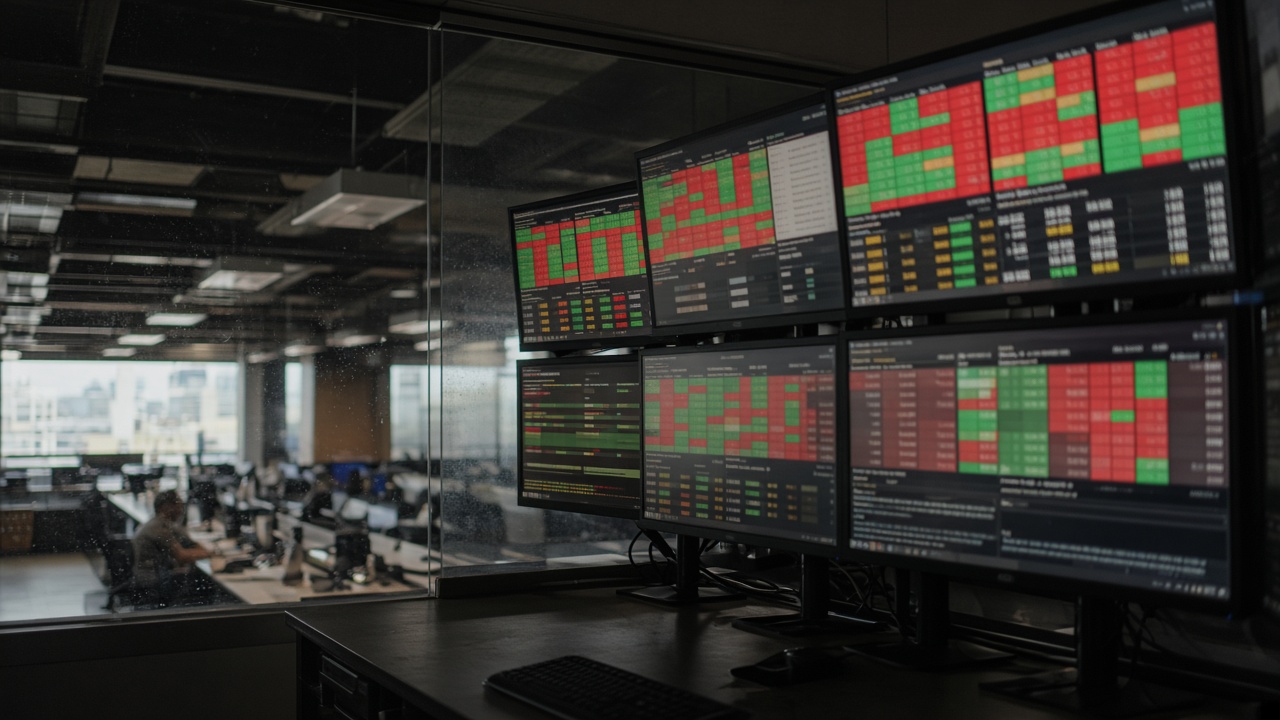
Australian shares slipped on Wednesday as a sharp pullback in CSL and ResMed outweighed early support for Macquarie Group, leaving the S&P/ASX 200 down 0.4 percent in thin trading ahead of next week’s Reserve Bank board meeting.
Healthcare drag
CSL fell 3.1 percent after a US broker trimmed margin assumptions on the blood-products division, citing slower immunoglobulin collections in the American Midwest. The move wiped roughly $2.8 billion from the benchmark’s market cap by lunchtime Sydney time, enough to offset gains in BHP and Rio Tinto that had tracked a firmer iron ore print out of Dalian.
ResMed and Cochlear followed CSL lower, extending a rotation out of defensives that began when September quarter inflation surprised to the upside. Traders said superannuation funds were rebalancing ahead of November contribution flows, selling winners from the first half of 2026 to lock in performance fees.
Macquarie’s commodities desk
Macquarie rose as much as 1.2 percent in the first hour after the bank said its commodities and global markets unit had benefited from volatility in LNG spreads and battery-metal forwards, without quantifying the quarter-to-date contribution. Investors treated the comment as a signal that trading income could offset softer advisory fees in infrastructure, where several privatisation mandates slipped into 2027.
Miners could not hold the index. BHP finished flat as Singapore iron ore futures retreated on reports that Chinese steel mills are cutting October output to meet emissions targets. Fortescue lost 0.8 percent, while gold names were mixed after the Aussie dollar strengthened against the US dollar on hawkish repricing of rate cuts.
Rates and the week ahead
Interest-rate futures now imply less than a 30 percent chance of a November easing, down from nearly even odds before the September consumer price index. Commonwealth Bank economists told clients that the ASX’s rate-sensitive real-estate trusts may remain under pressure unless labour market data due Friday shows a sharper softening than August’s 4.5 percent unemployment print.
Volume on the cash market was 18 percent below the thirty-day average, typical for a Wednesday sandwiched between US earnings and local AGM season. Tess Harlow’s desk will watch Woodside’s update on Thursday for cues on energy dividends, but Wednesday belonged to healthcare shareholders nursing another growth scare.
Analysts at Goldman Sachs told clients that CSL’s intraday slide was exaggerated relative to the broker note that triggered it, suggesting super funds used the headline as a liquidity excuse. Still, the episode shows how concentrated the ASX 200 has become: a handful of healthcare giants can move the entire index even when bulk commodities look steady.