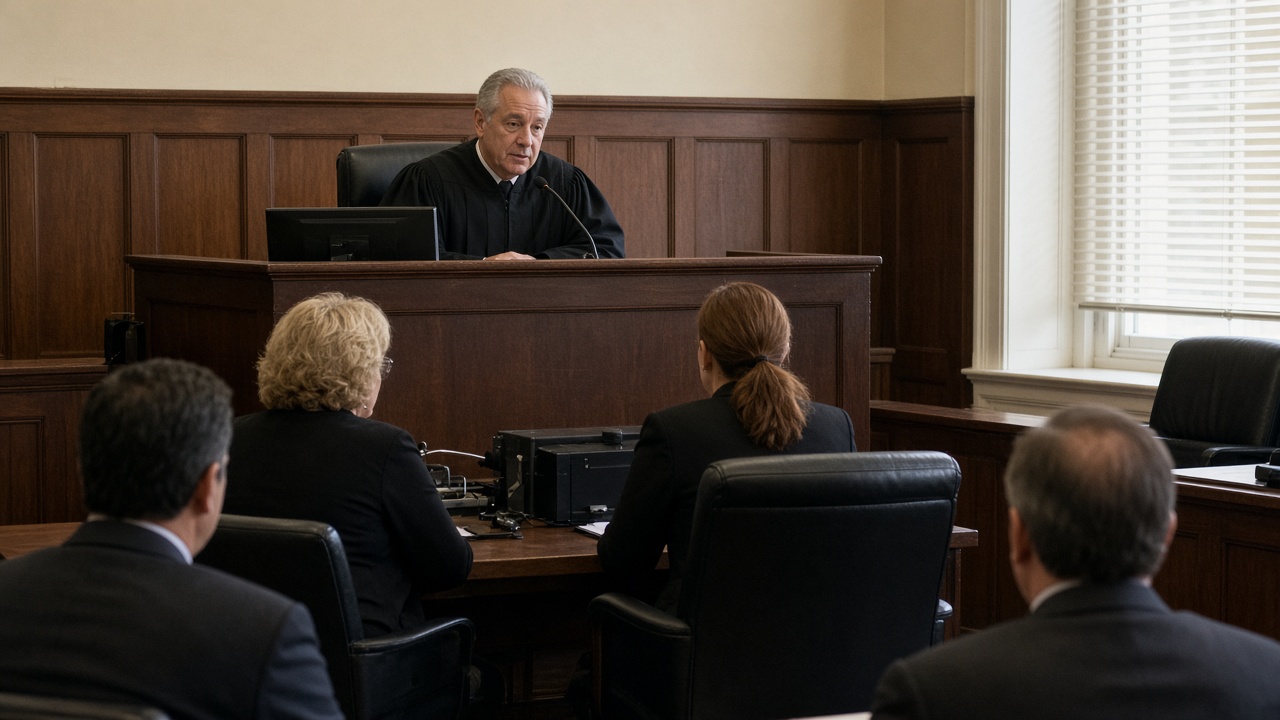
Santa Fe District Court Judge Francis J. Mathew on Wednesday ordered Meta Platforms to pay $25 billion in civil penalties to New Mexico, capping a state lawsuit that grew out of the Cambridge Analytica data scandal but also challenged years of privacy and content promises Facebook made to users.
The figure follows a September jury verdict that Meta committed 43,899,725 violations of the New Mexico Unfair Practices Act. Mathew's 20-page judgment first calculates a statutory maximum above $219 billion, then reduces the award to $25 billion in the same order. The penalty accrues 15 percent interest each year until Meta pays, adding roughly $3.75 billion annually on the current balance.
What the jury found
Attorney General Raúl Torrez sued Meta in 2021 after reporting showed Cambridge Analytica obtained personal data from tens of millions of Facebook accounts through a third-party quiz app, without users' knowledge, for political profiling tied to Donald Trump's 2016 campaign. New Mexico's case argued the company also misled residents about who could access their information, how hate speech and misinformation were handled, and what internal policies actually governed the platform.
Jurors concluded Meta's public statements amounted to systematic unfair practices toward New Mexicans. Mathew wrote that "Facebook's wrongdoing — over the course of years and systematically broadcast to the public — goes to the heart of Facebook's core business practices." Meta had argued that multiplying per-user violations into billions of dollars in penalties would violate constitutional limits on fines; the judge nonetheless imposed what Torrez called one of the largest single state awards against a U.S. corporation.
How this compares with earlier settlements
The Federal Trade Commission fined Meta $5 billion in 2019 over Cambridge Analytica-related privacy failures. Seven other states settled related claims for $459.2 million as part of a broader $17.1 billion multistate agreement Meta reached in August over allegations that its platforms harmed teen mental health. New Mexico stayed in court rather than join that package, pressing a trial on consumer-protection counts.
Analysts note Meta's market capitalization still dwarfs the penalty, and the company is widely expected to appeal both the violation count methodology and the final dollar amount. Legal experts said appellate courts may focus on whether each alleged misrepresentation to each user can be treated as a separate violation for penalty purposes.
What happens next
Mathew's order addresses damages but leaves injunctive relief — possible court-ordered changes to Meta's disclosures or practices — for further briefing. A Meta spokesperson did not immediately comment after the ruling, though the company has previously said billion-dollar state penalties risk due-process violations.
Torrez told reporters in Albuquerque that the judgment sends a warning to technology firms that New Mexico will enforce its consumer laws at scale. Until an appeal stays the award, the interest clock runs on a balance larger than many countries' annual budgets, even as Meta continues to earn the bulk of its revenue outside the state.