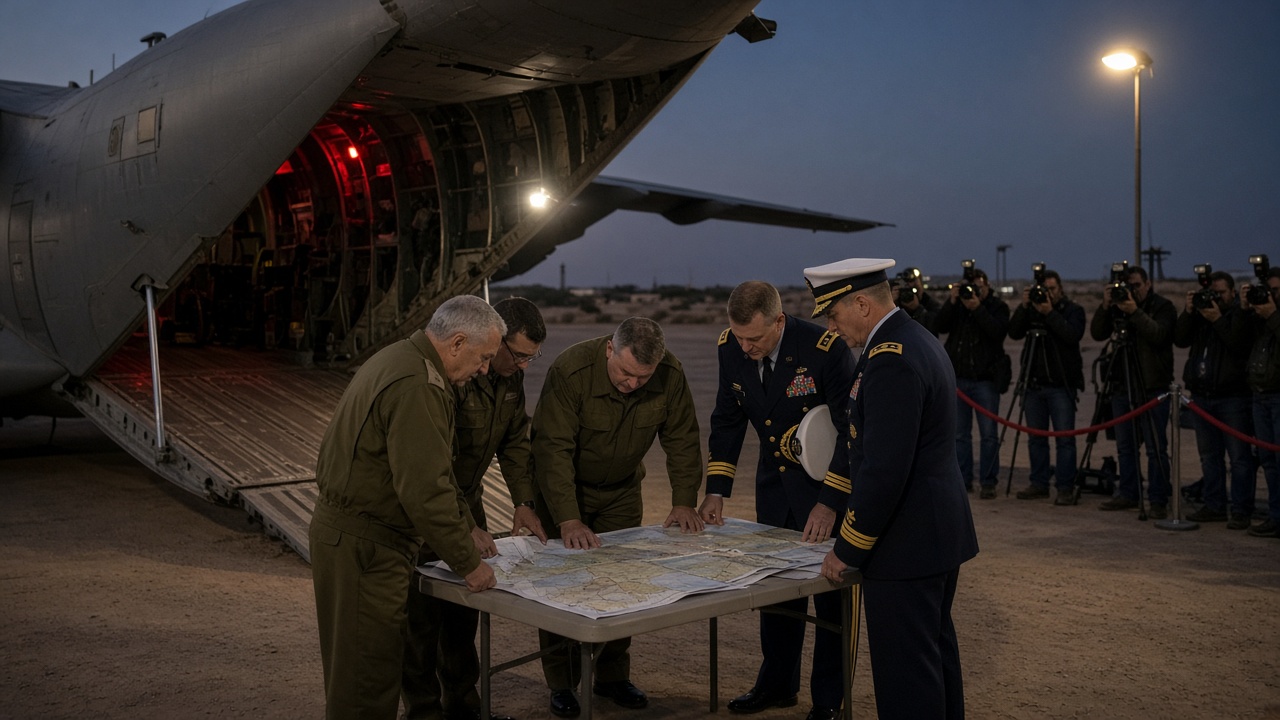
Israel’s military had prepared a multi-day bombing campaign against Iran for the weekend of 10 October, targeting nuclear sites, regime facilities and civilian infrastructure, but shelved the operation after U.S. President Donald Trump opposed reigniting the conflict ahead of the 3 November midterm elections, the Financial Times reported on Wednesday.
What the FT says was on the table
Three people familiar with the planning told the newspaper that Prime Minister Benjamin Netanyahu had instructed the Israel Defense Forces to prepare a new offensive larger in scale than February’s Operation Roaring Lion. The weekend window would have combined strikes on Iran’s nuclear programme with pressure on energy plants and other regime-linked targets, the sources said.
Trump blocked the plan because he did not want a fresh Middle East war to dominate the closing weeks of the U.S. campaign season, the FT reported. It remained unclear whether Washington was expected to participate directly; one source told the paper that joint strikes in the coming weeks were “not an unreasonable scenario,” while another summed up the fork as: “There will either be a deal or an attack.”
Public messaging sharpens in Jerusalem
The report landed hours after Netanyahu told an audience in northern Israel that Israel was “committed” to overthrowing Iran’s government and that he had discussed that goal with Trump “two days ago,” on Sunday. He linked regime change in Tehran to the “elimination of Hezbollah” and a durable peace with Lebanon.
Israeli media had already confirmed that U.S. Defense Secretary Pete Hegseth met Netanyahu on Monday at southern Israel’s Ovda air base, with Iran high on a confidential agenda that excluded several senior Israeli commanders. U.S. officials confirmed the visit to Reuters but declined to detail the talks.
Why Washington is drawing a line now
The Indian Express, citing the FT, said the IDF had been ready to resume large-scale strikes around 10 October, only to stand down after Trump’s opposition. The White House has not published a formal statement on the aborted timeline, but the episode fits a pattern of U.S. pressure to keep oil markets and battlefield risk contained while voters head to the polls.
Netanyahu is eight days from a national election, and his coalition has publicly pressed to resume combat against Iran after the June ceasefire. Holding the October offensive would not end planning; the FT said he is still campaigning internally to restart strikes. Diplomats in the Gulf, meanwhile, are watching whether Tehran responds to mediation offers as Houthi attacks keep pressure on Saudi Arabia and global shipping lanes.
What happens next
Israeli officials did not confirm the October schedule on the record. Analysts said any renewed campaign would again hinge on U.S. consent for intelligence support, munitions and political cover at the United Nations. Until Trump signals otherwise, the weekend that did not happen may define the ceiling on Israeli action through election day in both countries.