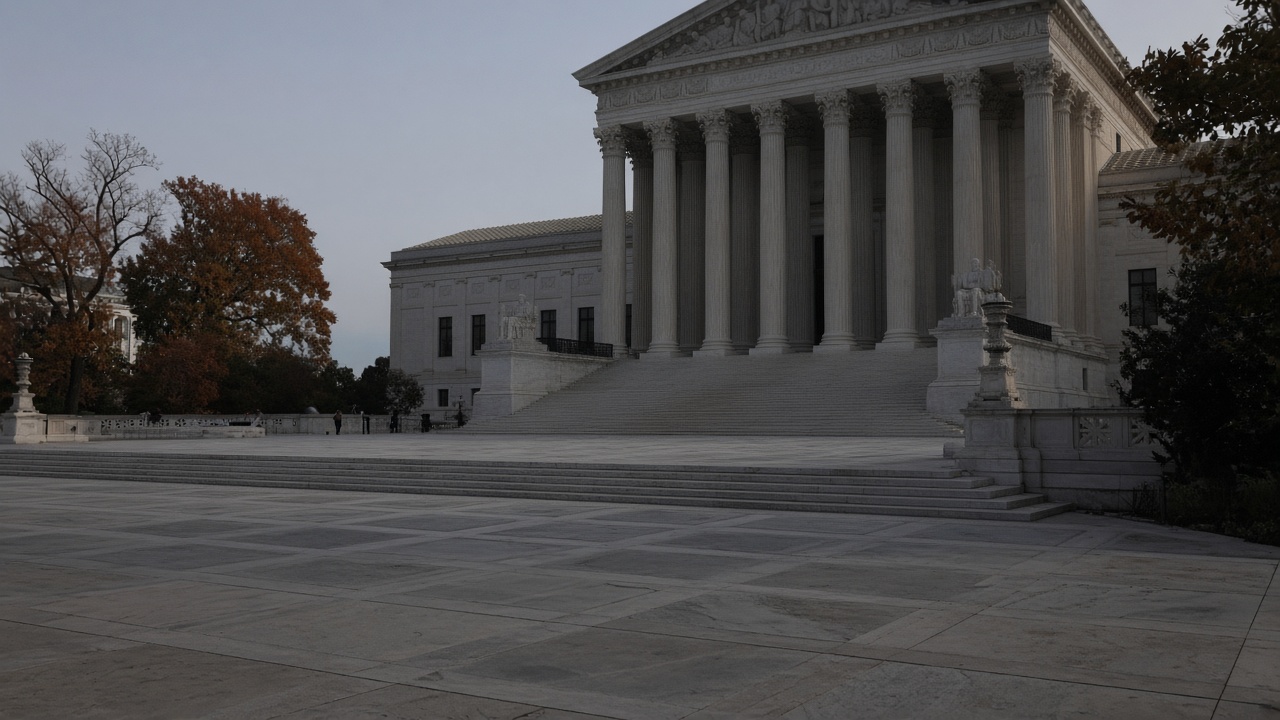
The Supreme Court on Wednesday denied the Trump administration’s emergency request to freeze a federal judge’s order that keeps the Bureau of Prisons from enforcing a new policy restricting gender-affirming care for transgender inmates, leaving hormone therapy and certain social accommodations in place while litigation continues.
The order and the votes
In an unsigned one-page disposition, the court rejected application 26A416 in Trump v. Kingdom, turning down the government’s bid to pause Senior U.S. District Judge Royce Lamberth’s injunction. Justices Clarence Thomas and Samuel Alito noted they would have granted the stay; the court did not otherwise explain its reasoning, as is typical on emergency applications.
The dispute reached the justices after the U.S. Court of Appeals for the District of Columbia Circuit, on a divided vote in late September, declined to lift Lamberth’s August 26 order. Solicitor General D. John Sauer had argued that the district court overstepped by second-guessing prison administrators’ medical judgments.
What the BOP policy would change
The Bureau of Prisons adopted the challenged policy in February 2026, saying it acted on updated scientific review rather than solely on a January 2025 executive order that directed agencies to ensure federal funds are not spent to “conform an inmate’s appearance to that of the opposite sex.” The new rules would bar hormone therapy and limit “social accommodations” such as makeup, wigs and padding for transgender prisoners.
In court filings, the government said the prior approach relied on standards from the World Professional Association for Transgender Health that prison officials now consider unreliable. The BOP also warned that access to transition-related procedures could expose transgender inmates to violence and fuel resentment among other prisoners.
Plaintiffs and the path ahead
Three transgender federal inmates brought a class-action challenge in Washington, arguing the policy violates the Eighth Amendment and administrative law. Lamberth found the record did not support abruptly ending care that many inmates had received for years.
Wednesday’s denial is not a final ruling on the merits. The administration could return to the Supreme Court after the D.C. Circuit rules on the full appeal, or if it rewrites the policy with a thicker administrative record. The Justice Department did not immediately comment on next steps.
For now, the Bureau of Prisons must continue prior treatment protocols for the several dozen transgender women in federal custody who receive hormone therapy, according to court filings cited by advocates. Civil-rights groups called the order a reprieve but warned that parallel lawsuits over state prison systems could produce a patchwork of rules unless Congress clarifies funding limits. Conservatives pressing the administration to enforce the 2025 executive order said they would look to legislation if the courts keep blocking the BOP memo through the 2026 term.