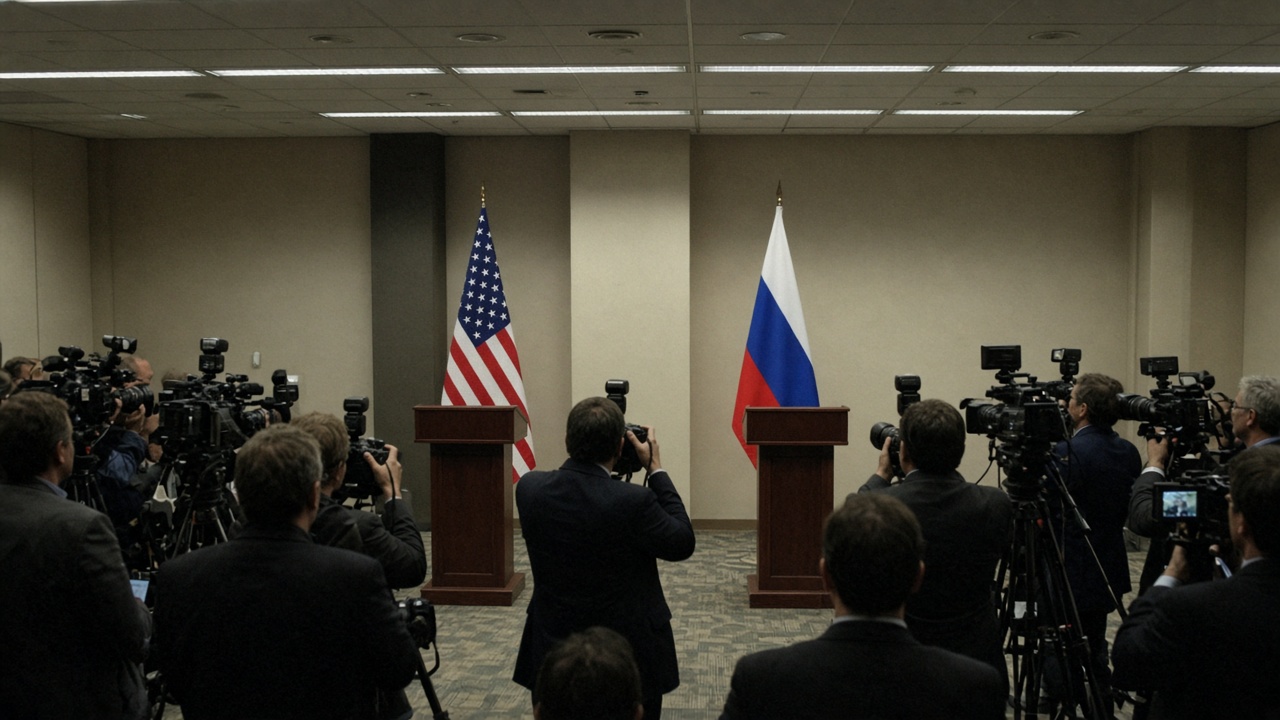
A senior White House official told reporters on Tuesday that President Donald Trump has no plans to meet Russian President Vladimir Putin “in the immediate future,” pulling the plug—for now—on a Budapest summit Trump had promoted just days earlier as the fastest path to ending the war in Ukraine.
The reversal followed a Monday call between U.S. Secretary of State Marco Rubio and Russian Foreign Minister Sergey Lavrov. Both sides described the conversation as productive, but officials said Rubio and Lavrov would not meet face to face, and the White House concluded an in-person Trump-Putin session would not advance negotiations.
From phone call to pause
Trump had announced the prospective Budapest meeting after a lengthy telephone conversation with Putin last week, framing it as a chance to lock in terms before winter fighting intensifies. European allies had cautioned that Moscow was unlikely to accept an immediate ceasefire without sweeping Ukrainian concessions, and Tuesday’s statement from Washington aligned with that skepticism.
Asked about the delay, Trump told reporters he did not want a “wasted meeting” if Russia was not prepared to move. “I’ll see what happens,” he added, leaving open the possibility of a later encounter without offering a new date or venue.
Why Budapest is off—for now
Preparations for a Hungary-hosted summit had advanced quickly on the diplomatic calendar, with Polish officials warning Putin against routing flights through NATO airspace if he traveled west. Those logistics are now moot.
Russia has publicly rejected an unconditional halt to fighting, insisting that any settlement must reflect territorial realities on the ground—a formulation Kyiv and its backers read as a demand for permanent loss of land. European leaders who issued a joint statement backing Trump’s ceasefire push on Monday found themselves explaining why the summit they had been briefed on might never convene.
Ukraine’s battlefield clock
On the ground, Ukrainian officials continued to report Russian strikes on energy infrastructure, while Moscow said Ukraine had carried out drone attacks deep inside Russia. Neither narrative shifted Tuesday; what changed was the diplomatic tempo in Washington.
Ukrainian President Volodymyr Zelenskyy has urged partners not to negotiate over Ukraine without Ukraine present. European diplomats said they would press the Trump administration to keep allied capitals in the loop if talks resume, whether in Budapest or elsewhere.
What comes next in Washington
Administration officials emphasized that diplomacy was not abandoned—only paused. Rubio’s channel with Lavrov remains open, and European envoys said they expected further calls among foreign ministers before the Asia-Pacific summit season accelerates later in the month.
For Trump, the political risk is familiar: having advertised a breakthrough meeting, he must now explain a stall without appearing to walk away from peacemaking altogether. For Putin, the delay buys time to harden positions while global attention shifts to other crises. For Ukraine, the immediate question is whether paused summitry translates into continued weapons flows and sanctions pressure—or into pressure on Kyiv to accept terms it has rejected.