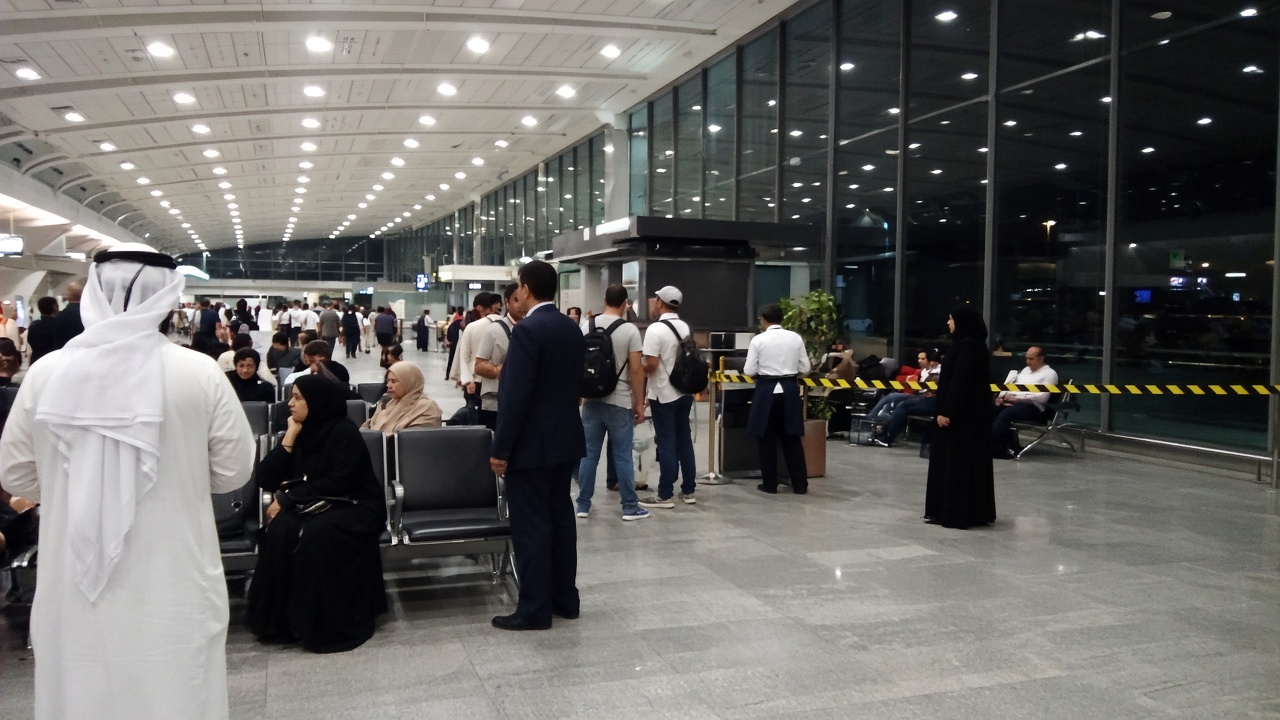
The U.S. State Department ordered non-emergency government employees and their family members to leave Saudi Arabia on Wednesday, hours after Saudi civil aviation authorities said an attack on King Fahd International Airport in Dammam killed one resident and wounded eight others.
Spokesperson Tommy Pigott said Iran-aligned Houthis have "increasingly engaged in hostilities against Saudi Arabia," including strikes on civilian airports and other infrastructure that have caused casualties and disrupted travel. The ordered departure applies to Saudi Arabia only, he said on social media, after Reuters reported that other Gulf missions might also move out dependents.
What Saudi authorities reported overnight
Saudi Arabia's General Authority of Civil Aviation said King Fahd International Airport was targeted on the evening of Wednesday, 21 October. Injuries ranged from minor to critical, and the authority said property damage was being assessed. The airport serves Saudi Arabia's Eastern Province on the Persian Gulf, near Bahrain and Qatar.
Separately, Saudi Arabia's energy ministry said air defenses intercepted a drone aimed at Aramco's Shaybah oilfield on Wednesday. Falling debris killed two people and injured two others, according to reporting by The Hill and other outlets citing the ministry. India's embassy in Riyadh said one Indian national was injured at Shaybah and that it was in contact with Saudi authorities.
Embassy warnings and what comes next
The U.S. embassy in Riyadh issued a security alert warning of possible further Houthi attacks after the recent strikes, including on airports. The notice said U.S. government employees in Saudi Arabia now need chief-of-mission approval to use any airport in the kingdom following missile and unmanned aerial vehicle attacks.
Washington had returned some diplomatic personnel to the region in recent months after many were pulled out when Iran launched retaliatory attacks on U.S. facilities following the U.S.-Israeli war on Iran that began in late February. The new drawdown underscores how fighting in Yemen has reopened another front in a conflict that has already snarled energy trade and pressured Gulf economies.
President Donald Trump told reporters Wednesday he was not aware of broader Gulf evacuations when asked about reports that families of embassy staff in the United Arab Emirates, Jordan, Qatar and Bahrain might also be ordered to leave. Pigott did not address changes to missions outside Saudi Arabia in his post.
Regional context
Houthi forces have intensified attacks on Saudi-backed Yemeni government territory and on Saudi infrastructure as the war in Yemen escalates. In government-held Hadramout, local officials told reporters that drones and ballistic missiles have repeatedly targeted the Al-Dhabba oil terminal and Al-Rayan International Airport in Mukalla.
Egyptian President Abdel Fattah El-Sisi said Wednesday that any Egyptian military effort to defend Saudi Arabia would be limited to protecting the kingdom's territory and would not involve attacking Yemen, according to a statement from his office carried by Xinhua.
For U.S. travelers and energy markets, the combination of a fatal airport strike, casualties near a major oilfield and a diplomatic departure order marks a sharp step up in perceived risk inside Saudi Arabia, even as the State Department insists the move is about protecting personnel rather than signaling a broader regional pullout.