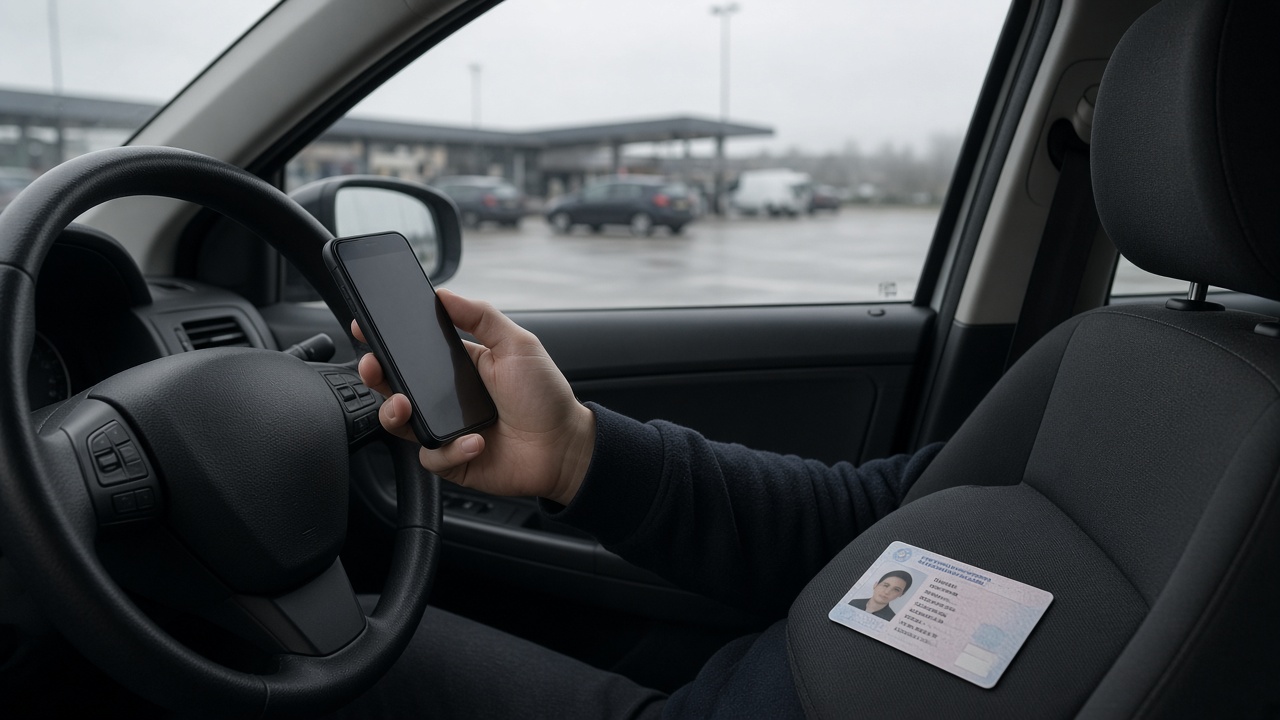
The Driver and Vehicle Licensing Agency opened a wallet-based driving licence trial on Wednesday for motorists in Kent, Surrey and Sussex, letting them carry a cryptographically signed digital counterpart alongside the plastic card already in circulation.
Participants must hold a full photocard licence issued in England and install the government’s GOV.UK Wallet app, which binds the credential to the same identity proofing used for HMRC online services. Police and car-hire desks involved in the pilot can verify the licence through a QR code that refreshes every 60 seconds.
How verification works
The digital document does not replace the photocard for every interaction. Rental firms in the trial can accept the wallet pass at airport counters, but magistrates courts and some overseas border posts still require the physical card. DVLA emphasised that driving entitlement remains tied to the master register in Swansea, not the phone screen.
Security architects said offline presentation uses the same ISO mobile-driving-licence standard adopted by several EU states, which should ease recognition for UK travellers renting cars in the Republic of Ireland after Brexit paperwork changes.
Privacy safeguards
Civil liberties groups asked whether traffic stops might encourage officers to seize phones. The Home Office pilot protocol requires officers to use a dedicated verification handset that scans the QR code without retaining gallery data. Misuse complaints route through the Independent Office for Police Conduct.
DVLA will not sell wallet analytics to insurers during the trial, though officials acknowledged commercial telematics firms have requested access for premium discounts. Any data-sharing would need secondary legislation, they said.
Roadmap
If error rates stay below 0.5 percent on verification checks, the agency plans to extend invitations to Greater Manchester and the West Midlands before Budget week. Long-term savings come from reduced plastic reprints when addresses change, but card fees will not disappear until at least 2028 under current forecasts.
For drivers outside the South East, nothing changes yet. They should still carry the photocard abroad and treat the wallet pass as optional convenience for domestic hires and identity checks at parcel depots that already accept GOV.UK sign-in.
Motor insurers participating in the pilot said they will not require wallet presentation at claims scenes this winter, but may accept it for mid-term address updates when paired with a one-time DVLA check. Breakdown services such as the RAC and AA are updating patrol handhelds to read the credential without storing images on personal devices.
Parliament’s Transport Committee plans a short evidence session in November on whether digital licences should eventually replace plastic for domestic use entirely. Witnesses from motoring groups and civil liberties charities are expected to clash over data retention periods and the risk of device theft at traffic stops.