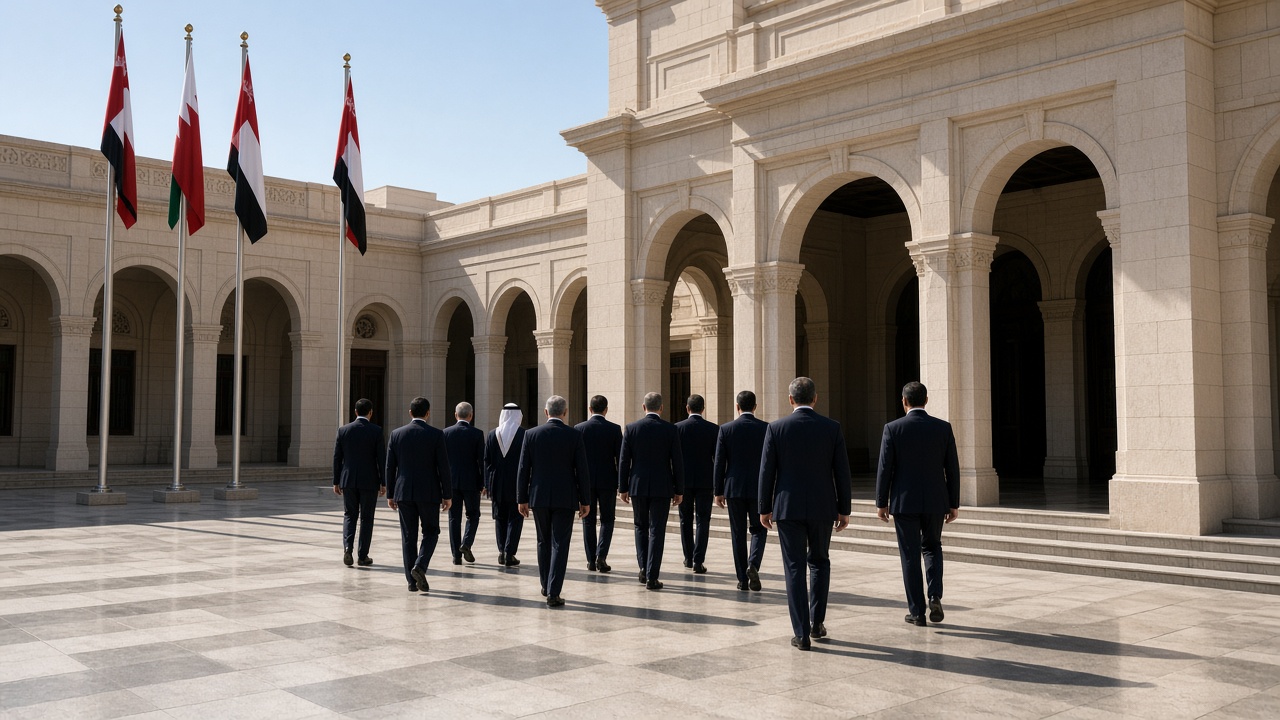
Prime Minister Lawrence Wong and UAE President Sheikh Mohamed bin Zayed announced negotiations on a Comprehensive Economic Partnership Agreement (CEPA) on 21 October 2026, capping a three-day Abu Dhabi visit that also produced energy, water and disease-vector control memoranda.
What was signed in Abu Dhabi
Wong was received at Qasr Al Watan before a working luncheon hosted by Sheikh Mohamed. After the meeting, both governments said they would begin CEPA talks aimed at deepening trade and investment flows rather than relying on the 2019 Comprehensive Partnership framework alone.
Three memoranda of understanding were exchanged at the witness table: energy cooperation, water cooperation, and disease-vector control. Singapore's Ministry of Foreign Affairs listed the texts in an annex to its press statement, noting they build on outcomes from the 17th Abu Dhabi–Singapore Joint Forum held in Singapore on 28 September.
Wong had earlier met Crown Prince Sheikh Khaled bin Mohamed and senior Abu Dhabi officials on energy, artificial intelligence, advanced technologies and defence. Those sessions were hosted by Khaldoon Khalifa Al Mubarak, chairman of the Abu Dhabi Executive Affairs Authority.
Why CEPA matters for Singapore Inc.
The UAE is already one of Singapore's larger Gulf trading partners, with state investors active in logistics, ports and real estate. A CEPA would give businesses a clearer rules book on tariffs, services market access and dispute settlement—topics that bilateral MOUs typically leave to case-by-case negotiation.
For Singapore ministries, the timing also keeps economic diplomacy visible while Wong holds both the premiership and the finance portfolio. CEPA talks can proceed in parallel with the joint energy taskforce, which MFA said will map opportunities across the value chain from trading desks to downstream plants.
Energy and utilities angle
The energy MOU and taskforce announcement land as both countries hedge fuel and power exposure. Singapore imports nearly all its energy; the UAE exports crude and increasingly trades in LNG and petrochemicals. A structured taskforce gives regulators and GLCs a recurring venue to pitch projects without waiting for annual leader visits.
Water cooperation carries similar logic. Singapore's PUB has long licensed desalination and reuse technology abroad; Abu Dhabi has scaled solar-powered desalination on its coast. The MOU text is not public, but MFA framed it as strengthening bilateral cooperation rather than a single vendor contract.
Disease-vector control
The third MOU covers disease-vector control—mosquito and pest management that ties directly to dengue and other arbovirus work in Singapore's National Environment Agency portfolio. Linking that file to a Gulf partner reflects post-pandemic habits of signing health-security agreements alongside trade packages.
What happens after Wong flies home
CEPA negotiations will require scoping meetings on goods schedules, rules of origin and professional mobility. Singapore's trade negotiators typically publish few interim details, but businesses will watch for early sectoral side letters in logistics, finance and digital trade.
The joint energy taskforce is expected to report into the Abu Dhabi–Singapore Joint Forum architecture. If it follows earlier forum practice, working groups could meet quarterly with industry observers from Singapore Exchange-listed multinationals and UAE sovereign funds.
For Parliament watchers, Wong's return clears the calendar for domestic briefings on haze management and year-end supply-chain planning. The UAE visit does not require a separate parliamentary motion, but ministers may field questions on how CEPA overlaps with existing Gulf free-trade agreements Singapore already maintains.
Regional context
Other ASEAN capitals have pursued CEPAs with the UAE and Saudi Arabia as Gulf capital pivots toward Asia. Singapore's pitch stresses trusted courts, arbitration and a hub status for commodities trading. The UAE side emphasises technology transfers and food-security investments.
Neither leader attached a deadline for concluding CEPA talks in the public readout. Trade officials in both capitals have previously aimed for roughly 12 to 18 months on comparable agreements, though energy chapters can slow ratification when subsidy rules are contested.
Wong also laid a wreath at Wahat Al Karama and visited Sheikh Zayed Grand Mosque during the visit—ceremonial stops that nonetheless signal continuity with earlier Singapore prime ministerial tours of the Gulf.