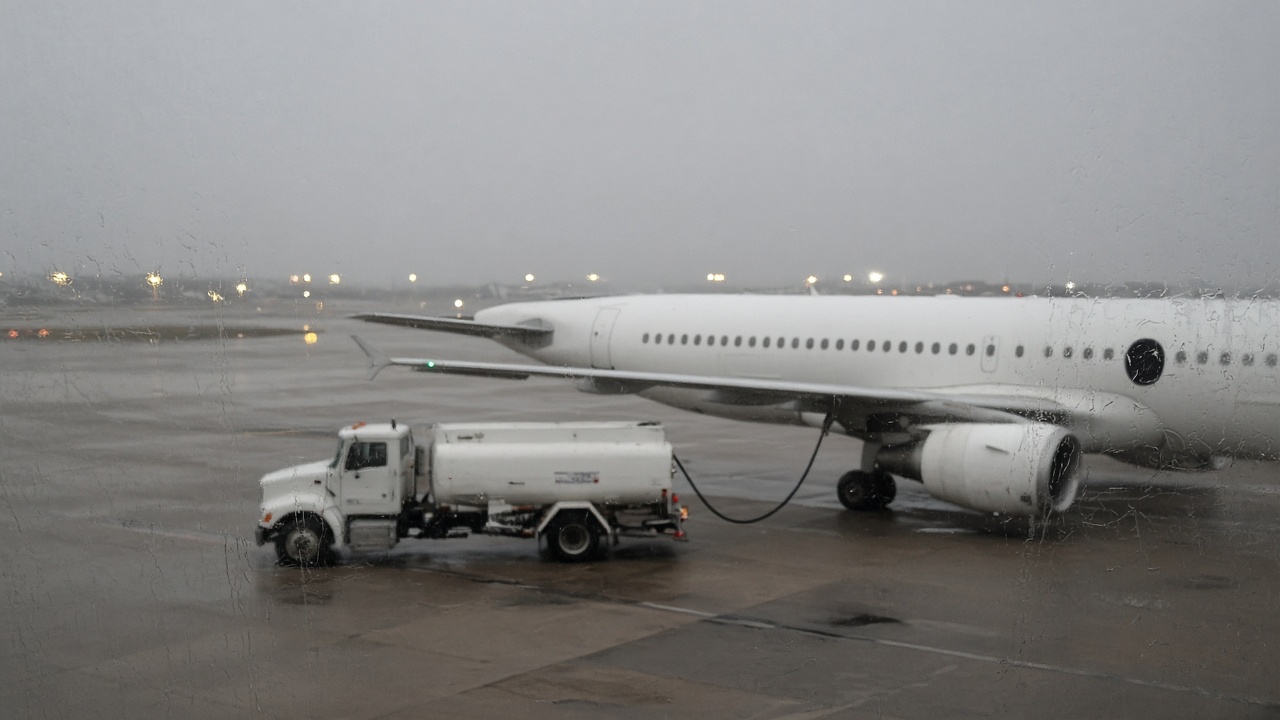
American Airlines Group Inc. told investors Thursday that holiday demand looks strong even as jet fuel priced near $4.70 a gallon forces the carrier to forecast another quarterly loss and slower 2027 growth.
Record revenue, red ink
The Fort Worth-based carrier reported third-quarter revenue of $16.3 billion, up 19.3% year over year and above its own guidance range. Premium cabin revenue rose 22.9% and main cabin 19.5%, while managed corporate revenue climbed 27.6% — the sixth straight quarter of double-digit business travel growth.
Fuel expense nonetheless jumped $1.9 billion, or 67.5%, producing a GAAP net loss of $269 million and an adjusted loss of 28 cents per share, narrower than analysts expected but still underwater. Chief Executive Robert Isom called it the strongest year-over-year revenue growth of his career, a statement that underscores how fuel — not empty seats — is erasing profit this year.
What the fourth quarter guidance means for fares
American expects fourth-quarter revenue to grow 19.5% to 22.5% versus 2024’s quarter, with capacity up 5.5% to 6.5%. At the forward fuel curve it cited, fuel spending could rise about $2.8 billion year over year in the period. The airline projected an adjusted loss of 50 cents to $1.10 per share for the quarter and widened its full-year adjusted loss range to $1.00 to $1.60 per share, a reversal from summer guidance that had allowed for modest profit.
For travelers, revenue growth with higher capacity usually implies firm ticket prices, especially on peak Thanksgiving and December routes. American said about 25% of fourth-quarter bookings were on the books at recent conferences, with executives expecting a solid holiday season supported by employment trends. That does not guarantee cheap seats: carriers can trim December flying if margins collapse, a tactic leadership flagged when fuel spiked earlier this fall.
International and loyalty tailwinds
Transatlantic unit revenue rose 14.5%, Latin America 21.1%, and Pacific 11.3% in the quarter. AAdvantage enrollments grew 27.4%, giving American more mileage balances to monetize through bank card partners even when fares rise. Co-brand and loyalty income is part of why revenue can set records while fuel wipes operating profit.
Practical booking advice for November trips
If you already hold American tickets for Thanksgiving week, watch for schedule-change emails: fuel-driven capacity cuts tend to appear as aircraft swaps or consolidated flights rather than headline cancellations. Refundable fares remain expensive, but they are the hedge if December trims affect tight connections.
Compare total trip cost including bags and seat fees; American’s revenue strength partly reflects ancillary charges, not just base fares. Southwest and other competitors face the same fuel curve, so bargain hunters should set price alerts now rather than betting on a late-November fare war that may not materialize while oil trades above $100 on Brent.
Balance sheet cushion
American ended September with about $11.8 billion of total available liquidity and more than $26 billion of unencumbered assets, figures the company highlighted even while widening loss guidance. That liquidity matters for travelers because it reduces the odds of a liquidity-driven bankruptcy reorganization, but it does not force the airline to discount peak-week tickets when demand is strong.
Unit costs excluding fuel and special items rose 3.0% in the third quarter, the best among U.S. network carriers by the company’s own comparison. Controllable cost discipline helps, yet when jet fuel nearly doubles year over year, efficiency gains land in the fuel line item instead of the fare you see online.
Investor versus passenger takeaway
Wall Street focused on the widened 2026 loss guide and American’s comment that 2027 network growth will slow from 2026 levels. Passengers should hear a different line: planes are filling at record revenue rates, which keeps average fares elevated even when the income statement shows red. Until fuel normalizes, the airline’s commercial strategy is working — your wallet is just funding the offset.