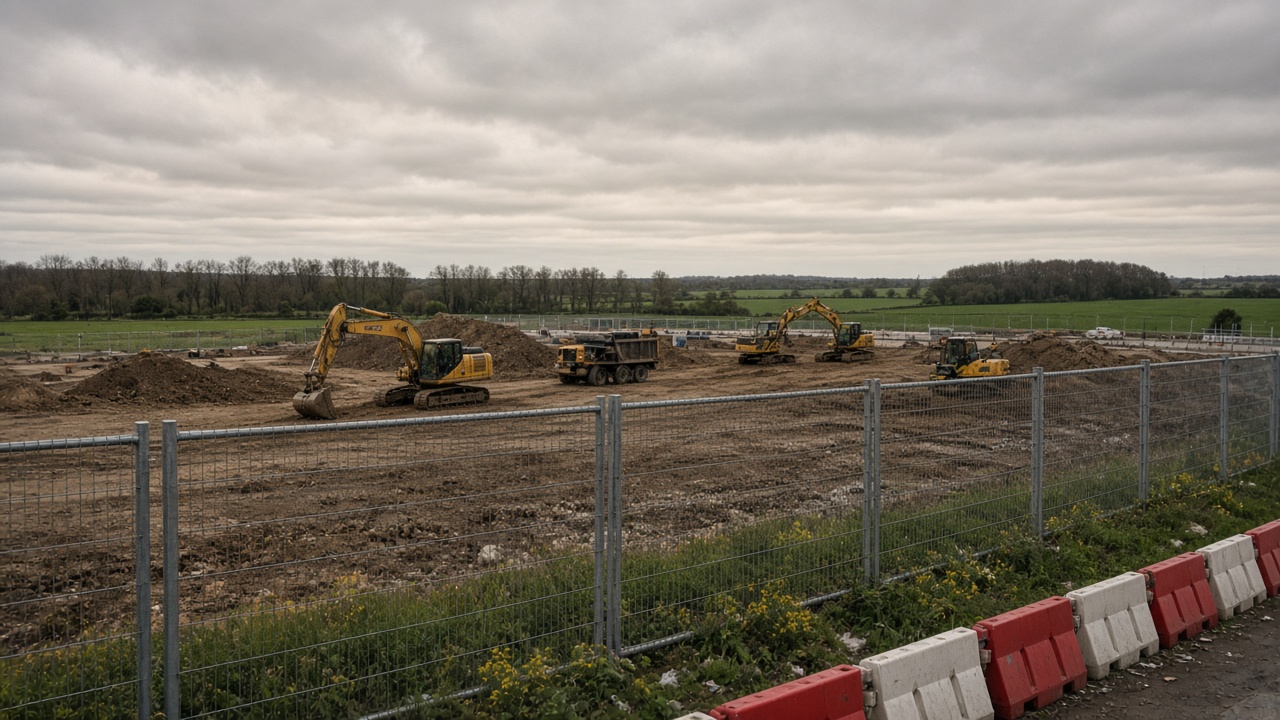
The Department for Transport said on Wednesday that HS2’s link between Birmingham and the West Coast Main Line at Handsacre will remain on ice until at least 2029, extending a pause first ordered in 2023 to control costs.
Scope of the deferral
Officials described the decision as part of a “reset” that concentrates spending on getting trains running between Old Oak Common and Birmingham Curzon Street. The Handsacre junction was meant to let new high-speed trains join legacy lines toward Manchester, Liverpool, and Scotland.
Without it, northern cities wait longer for journey-time cuts even after the core HS2 segment opens. The Guardian reported that the extension adds four years to an already lengthy hiatus, pushing meaningful benefits past 2033 on current schedules.
Industry reaction
Rail suppliers said the pause forces another round of layoffs among civils contractors who had kept teams on standby. Digital signalling vendors warned that integration tests with Network Rail timetables cannot proceed without the physical tie-in.
West Coast Main Line operators face continued congestion around Lichfield and Stafford. Passenger groups argue that deferring the junction undermines the original case for HS2 as a capacity release valve on Britain’s busiest intercity corridor.
Technology and systems work
HS2 Ltd will continue software testing on train control and power systems for the core route, but hands-on interface work with legacy signalling at Handsacre stops. Engineers must warehouse switchgear already fabricated for the junction, adding storage costs.
Ministers promised to publish a revised delivery profile with the next spending review. Transport select committee members said they will summon officials to explain how delays affect Northern Powerhouse rail pledges.
Passenger impact
Until the junction is built, passengers changing at Birmingham New Street still rely on conventional paths. Journey planners will not show HS2-through services to the North West, keeping modal shift targets harder to hit.
Advocates for integrated ticketing say IT projects linking HS2 reservations with legacy operators should not slip even while civils pause. The Rail Delivery Group said it would press for clarity on timetabling assumptions used in franchise bids.
What comes next
Parliament will debate the deferral after recess. Ministers insist the reset protects taxpayers from an open-ended construction bill, but northern mayors counter that delay costs show up as lost productivity rather than a line item in Treasury books.
For technology teams, 2029 is now the earliest date to resume interface testing—a timeline that will shape every signalling upgrade contract signed this decade.
Land and compensation
Farmers along the paused corridor said uncertainty blocks investment in drainage and housing. HS2 Ltd confirmed blight payments continue under existing schemes, but landowners argued deferred works freeze land values indefinitely.
Environmental assessments for the junction will be refreshed when work resumes, potentially adding seasons for protected species surveys.
Property agents along the corridor reported buyers demanding larger discounts on homes marketed as “HS2 adjacent,” citing uncertainty on completion dates. Councils in Staffordshire said they would revisit local plan housing numbers if rail capacity assumptions slip again.
Freight operators told the ORR that delayed junction work keeps more lorries on the M6, undermining carbon targets tied to modal shift incentives.