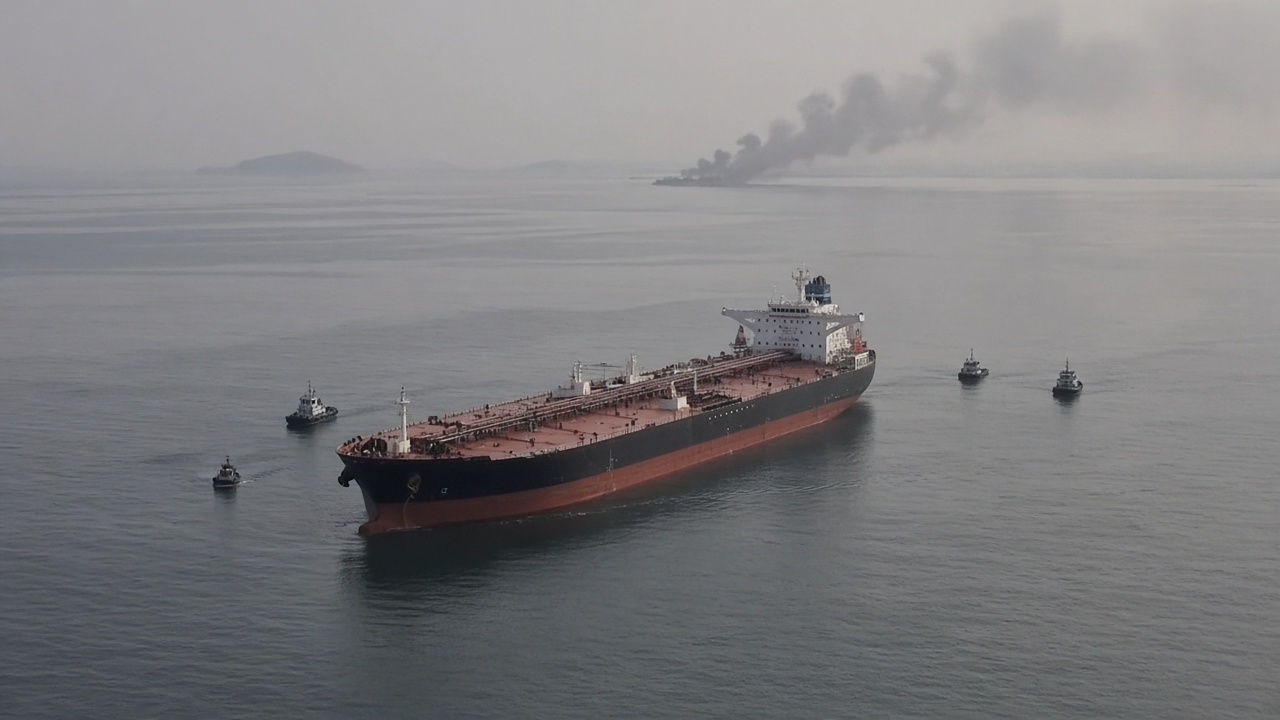
Iranian state television said seven oil tankers caught fire or were damaged overnight in and near the Strait of Hormuz, describing the episode as the largest single-night toll on commercial shipping since the Gulf crisis widened this month. The claim has not been independently verified, but it landed hours after Saudi Arabia reported casualties at King Fahd International Airport in Dammam and as Washington and Tehran traded warnings over the waterway that carries roughly a fifth of the world’s seaborne oil.
What Iran is alleging
State media said some vessels were hit after striking naval mines west of Hormuz, while others involved in alleged illicit oil transfers in the northern Persian Gulf were targeted simultaneously. The Islamic Revolutionary Guard Corps Navy said it had tracked the ships before they burned, repeating long-standing accusations that sanctions-busting fleets move crude outside official channels.
Separately, the IRGC warned that continued “provocations” over Gulf navigation could draw strikes against U.S. military facilities across the region. U.S. officials have not confirmed any American base was threatened in writing on Thursday, but Central Command has kept a heightened posture since Houthi and Iranian-linked attacks escalated against Saudi and Emirati infrastructure.
Why insurers and traders are watching
Even unverified tanker damage reshapes risk premiums overnight. Underwriters already lifted war-risk surcharges on Hormuz transits after drone and missile incidents near energy sites. A seven-hull event—if confirmed—would force charterers to reroute via longer passages or pause loadings until mine-clearance teams can survey lanes that are only a few nautical miles wide at their choke point.
Benchmark crude prices were volatile in Asian trading as traders weighed the report against President Donald Trump’s statement that Washington is “not negotiating” with Iran and that “something” would happen in the conflict “fairly soon,” with many analysts expecting action after the 3 November U.S. midterm elections. The New York Times reported that U.S. and Israeli planners have drawn up options for a short, intensive campaign that could include energy and missile sites, though no order has been announced.
Regional fallout beyond the strait
The tanker claims followed a deadly strike on Dammam’s airport, where Saudi civil aviation authorities said one person was killed and eight injured. India’s embassy said an Indian national was among those hurt in a separate attack on the Shaybah oilfield. The European Union and Saudi Arabia condemned the wider wave of missiles and drones, underscoring how infrastructure far from Hormuz is now in the same risk basket as shipping lanes.
Shipping agencies have urged masters to broadcast automatic identification signals, avoid night transits where possible, and report suspicious small craft. The U.K. Maritime Trade Operations centre has logged a sharp rise in reported incidents in the Gulf this month, including several that never became public headlines because crews reached port without casualties.
What comes next
Verification will hinge on port records, salvage tugs, and satellite imagery over the next 48 hours. Iran has not named flag states or cargo owners for the seven vessels, and no major operator has issued a matching casualty bulletin as of Thursday morning in the Gulf. If fires are confirmed, expect emergency meetings among OPEC Gulf producers and emergency releases from strategic stocks discussed behind closed doors in Washington and Brussels.
Diplomatic channels remain thin. Trump told reporters boarding Air Force One that most observers believe major U.S. action will wait until after the election, but he left open the timing of any strike package. Until then, a single night’s tally of burning tankers—real or asserted—can move markets as surely as a launched missile.