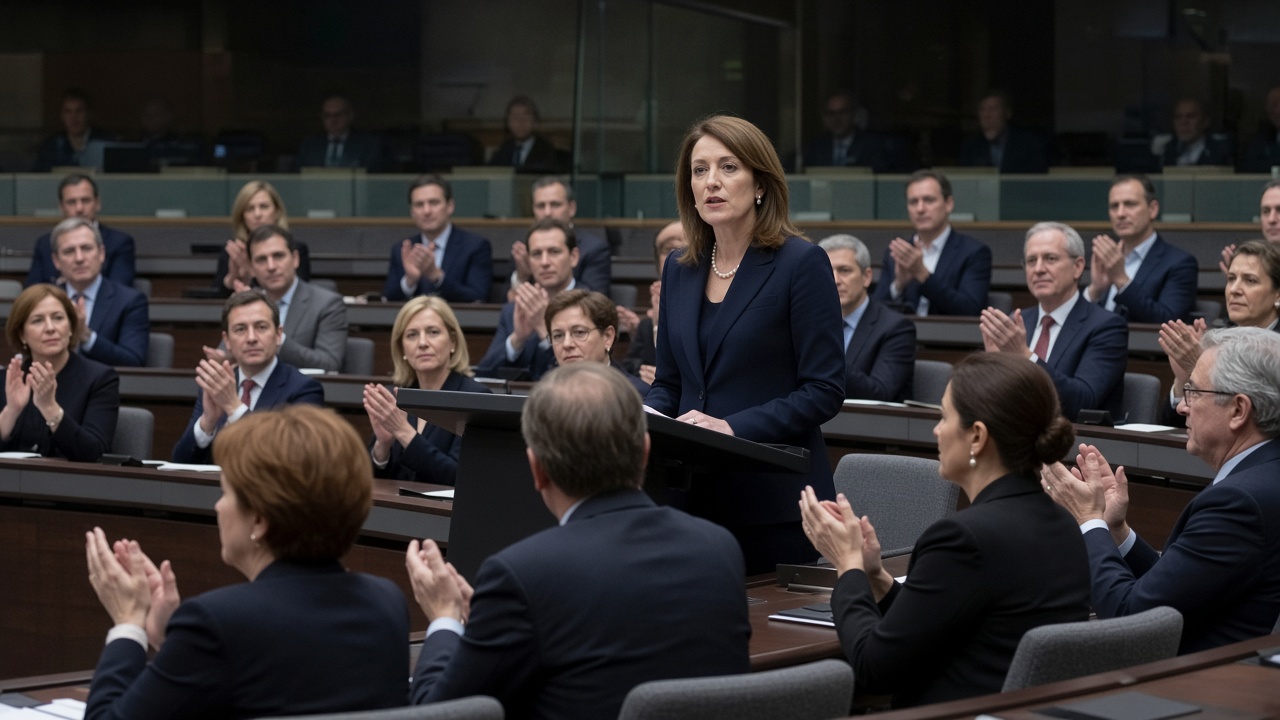
European Parliament President Roberta Metsola named the International Criminal Court and its officials as the collective winner of the 2026 Sakharov Prize for Freedom of Thought on Thursday, drawing a standing ovation in Strasbourg as the tribunal faces renewed U.S. pressure.
“The European Union is built on respect for multilateralism and international institutions,” Metsola said from the hemicycle. “With the award of the Sakharov prize to the International Criminal Court and its officials, the European Parliament recognises the Court’s important work in upholding international law and justice.”
What the prize recognises
The Sakharov award, named for Soviet dissident Andrei Sakharov, carries a €50,000 cheque and a formal ceremony scheduled for 16 December in Strasbourg. Parliament’s political group leaders chose the ICC over two other finalists: Tanzanian opposition figure Tundu Lissu, who faces treason charges, and Iranian sisters Taraneh and Romina Rahimi, jailed after anti-government protests in January.
The Hague-based court investigates genocide, war crimes, crimes against humanity and aggression, operating as a court of last resort when national systems cannot or will not act. Thursday’s announcement highlighted live investigations, prosecutions and arrest warrants—notably those that have drawn sharp criticism from governments whose nationals are in the dock.
Timing against U.S. sanctions
The vote lands less than two weeks after former ICC judge Navi Pillay received the Nobel Peace Prize for work on a United Nations report that concluded Israel had committed genocide in Gaza. Days later, the Trump administration announced fresh sanctions targeting the court, prosecutors and staff—measures European lawmakers have described as an assault on the rules-based order.
Socialist lawmaker Chloé Ridel, who helped nominate the ICC, called the outcome “historic” and framed it as “a message of hope and resistance sent to Donald Trump.” Dutch centre-right MEP Dirk Gotink cautioned that the prize alone would not “save” the court but said it sent a clear signal that Parliament backs international law under what he called unprecedented American pressure.
What Brussels may do next
Parliament has repeatedly urged the European Commission to activate the EU’s blocking statute, which would nullify certain foreign court decisions inside the bloc and allow operators to seek damages when extraterritorial sanctions bite. MEPs have also pressed for continued EU budget support so the ICC can keep operating while U.S. measures restrict banking and travel for its personnel.
In a statement, the ICC thanked Parliament and said the Sakharov award “reaffirm[s] the importance of independent judicial institutions” at a moment when sanctions aim to disrupt its mandate. Court President Piotr Hofmański and senior judges briefed committees in 2025 and 2026 on how those restrictions affect both casework and staff personally.
What happens now
The ceremonial handover in December will put ICC leadership back in front of EU cameras, but the harder questions remain operational: whether member states will harmonise protection for court employees, and whether Washington eases or escalates enforcement after the midterm elections. For now, Strasbourg has used its loudest annual human-rights stage to align with The Hague—not with the White House.