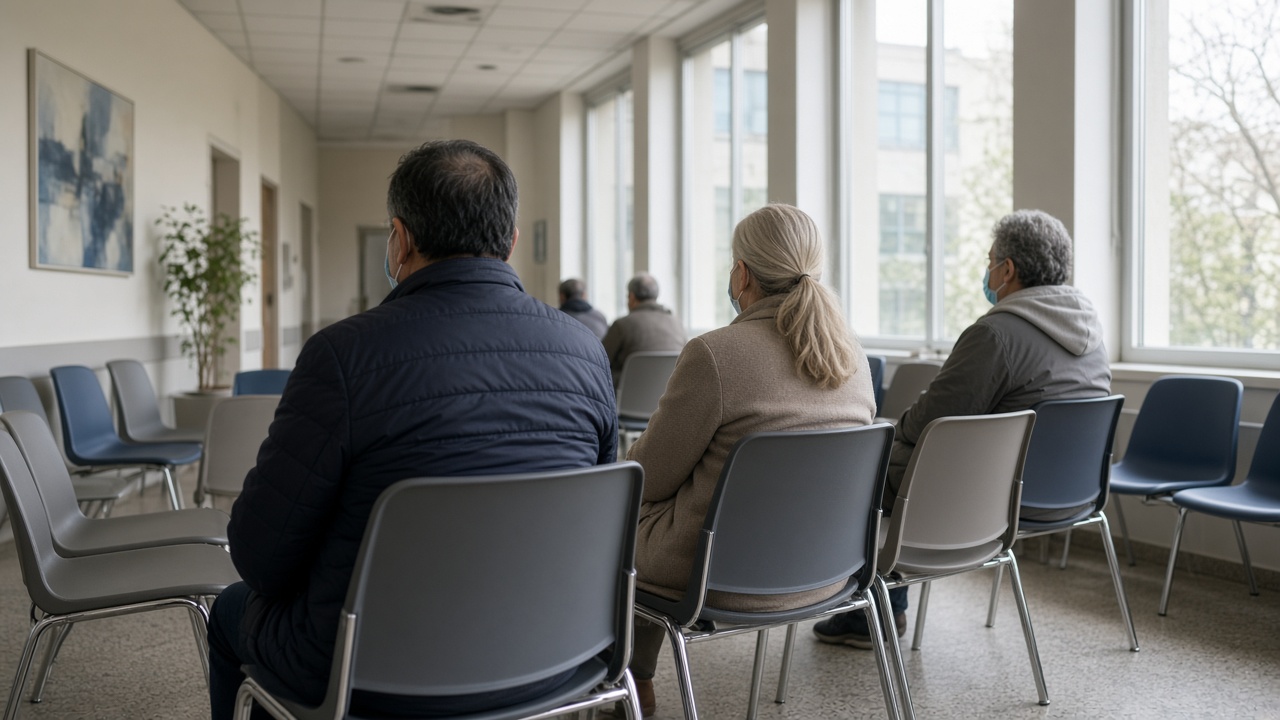
Long-COVID referral clinics at Seoul National University Hospital and Busan’s Pusan National University Hospital said Thursday they are booking new fatigue assessments three weeks out after the Chuseok exodus produced a post-holiday surge in patients reporting brain fog, exercise intolerance, and sleep disruption.
Holiday transmission
Epidemiologists caution that the pattern is anecdotal, not yet a national wave. Still, internal tallies showed 182 new referrals across the two centers between Oct. 12 and Oct. 20, compared with 96 in the prior eight-day window. Most patients are fully vaccinated adults in their 30s and 40s who tested positive during family gatherings in late September or on intercity buses during the holiday peak.
Doctors said many cases are mild reinfections that did not require hospitalization yet triggered lingering post-viral symptoms. Clinics run multidisciplinary intake with cardiology and neurology consults because fatigue often masks arrhythmia or autonomic dysfunction.
Capacity constraints
National Health Insurance covers initial long-COVID workups, but rehabilitation sessions remain capped at eight visits per year unless physicians document disability. Physical therapists at the Seoul clinic said they are triaging home exercise kits to patients who cannot wait for supervised sessions.
The Korea Disease Control and Prevention Agency has not revised public masking guidance, yet hospital posters urge symptomatic travelers to delay visits to elderly relatives—a message that collided with cultural expectations during Korea’s largest family holiday.
Employer questions
Occupational health lawyers reporting to the Welfare Committee audit said more employers are asking whether long-COVID qualifies for workplace accommodation subsidies. Thursday’s patient surge will feed those debates as lawmakers weigh whether to expand rehabilitation benefits in the 2027 health budget.
For now, clinicians ask a simpler question: whether winter travel will produce a second backlog if influenza and COVID-19 circulate together in December.
Seoul Metropolitan Government said it will keep five public health centers open on Saturdays through November for post-COVID counseling, though staffing shortages may limit same-day blood work. Busan officials are coordinating with ferry operators to distribute symptom checklists at terminals after several passengers reported dizziness on overnight sailings during Chuseok returns.
Researchers at the Korea National Institute of Health told reporters they are sequencing samples from a subset of the new referrals to see whether a recently described subvariant is overrepresented. Results are expected before the end of the month, but clinicians cautioned that variant labels rarely change treatment for long-COVID patients whose primary complaint is fatigue rather than acute respiratory distress.