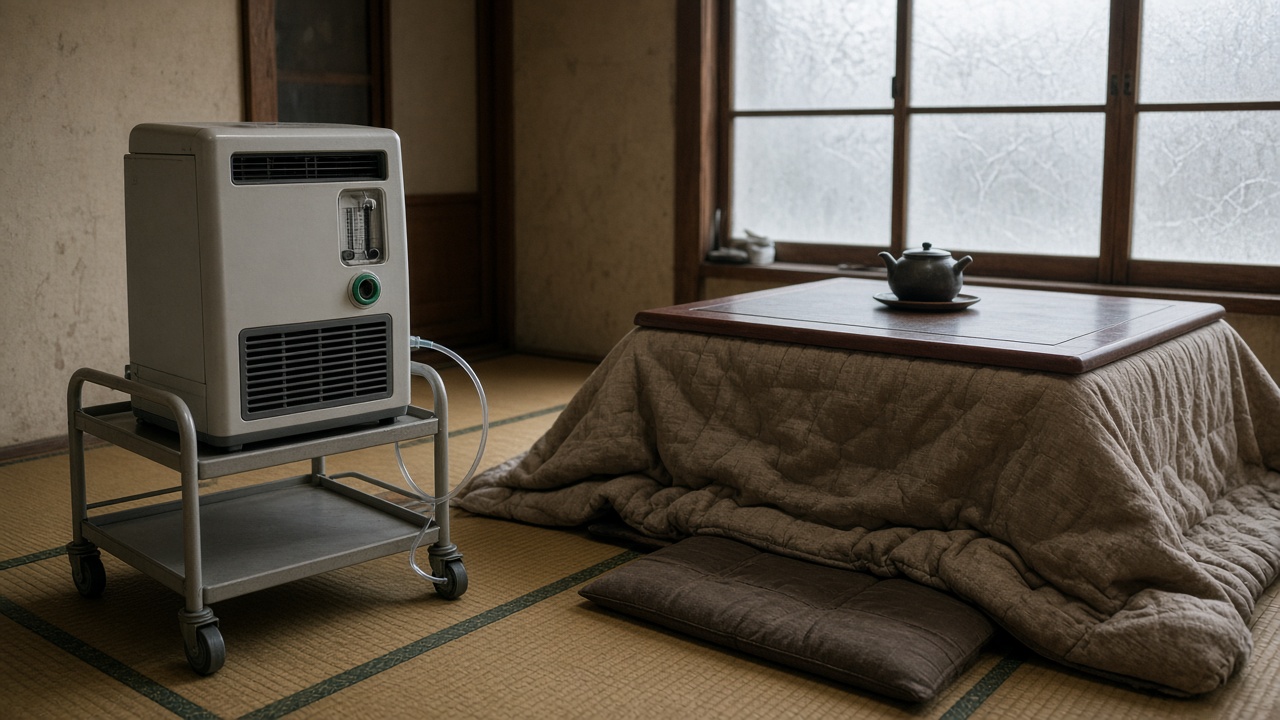
Fourteen clinics in Niigata Prefecture launched a pooled lending program Thursday for portable oxygen concentrators aimed at homebound chronic obstructive pulmonary disease patients who struggle with heavy cylinder tanks during winter. Nurses visiting snow-country apartments said stair landings are too narrow for standard regulators, pushing patients toward emergency rooms when saturation dips after short walks to the mailbox.
How the pool works
Participating clinics bought twenty concentrators with a prefectural subsidy covering thirty percent of capital costs. Patients receive a two-week loan while insurers process long-term rental paperwork; extensions require pulmonologist sign-off. Technicians sanitize filters between users and train caregivers on alarm sounds when power outages hit Niigata's aging housing stock.
The Japanese Respiratory Society endorsed the model as a bridge, not a replacement for prescribed flow rates. Concentrators suffice for stable COPD but not for every acute exacerbation, doctors emphasized in rollout materials.
Why Niigata first
Demographics skew older than the national average, and snowfall blocks home visits more often than in Tokyo wards with elevator access. Prefectural officials counted forty-two winter ambulance calls last year coded as hypoxia among COPD patients who refused hospital admission because they lacked portable oxygen at home.
Electricity cooperatives partnered to offer discounted night rates for devices that must run continuously, reducing household objections to higher utility bills.
Funding and limits
National health insurance covers stationary oxygen for qualifying patients, but portable units face paperwork delays. The clinic pool absorbs that gap with local tax supplements earmarked for aging society measures. If demand exceeds twenty machines, clinics will prioritize patients awaiting discharge from Niigata University Hospital's respiratory ward.
Private home-care companies worry the public pool competes with their rentals; prefectural leaders responded that commercial options remain available for patients who want newer models with battery backups.
Expansion prospects
Neighboring Nagano and Fukushima prefectures sent observers to Thursday's launch. MHLW watchers said success could inform national guidance on municipal medical equipment libraries, similar to wheelchair sharing programs already common in Osaka.
For patients, the immediate benefit is simpler: breathe more safely while waiting for insurance forms, without hauling steel tanks through Niigata snow.
Training and liability
Caregivers must complete a ninety-minute course on fire safety because concentrators enrich oxygen near heated kotatsu tables, a winter hazard in older homes. Clinics documented informed-consent forms clarifying that loans end if patients miss pulmonology follow-ups, preventing devices from sitting unused in closets.
Insurers reviewing claims said they will count pool loans as supportive evidence when approving long-term rentals, potentially shortening approval queues if Niigata publishes outcome statistics next spring.
Pharmacy chains offered to deliver replacement filters to patients who cannot reach clinics during snowstorms, extending the cooperative network beyond the initial fourteen sites.
Volunteer drivers in Nagaoka offered to ferry concentrators between clinics when snow blocks clinic vans, a grassroots add-on the prefectural medical association publicized on Thursday afternoon.