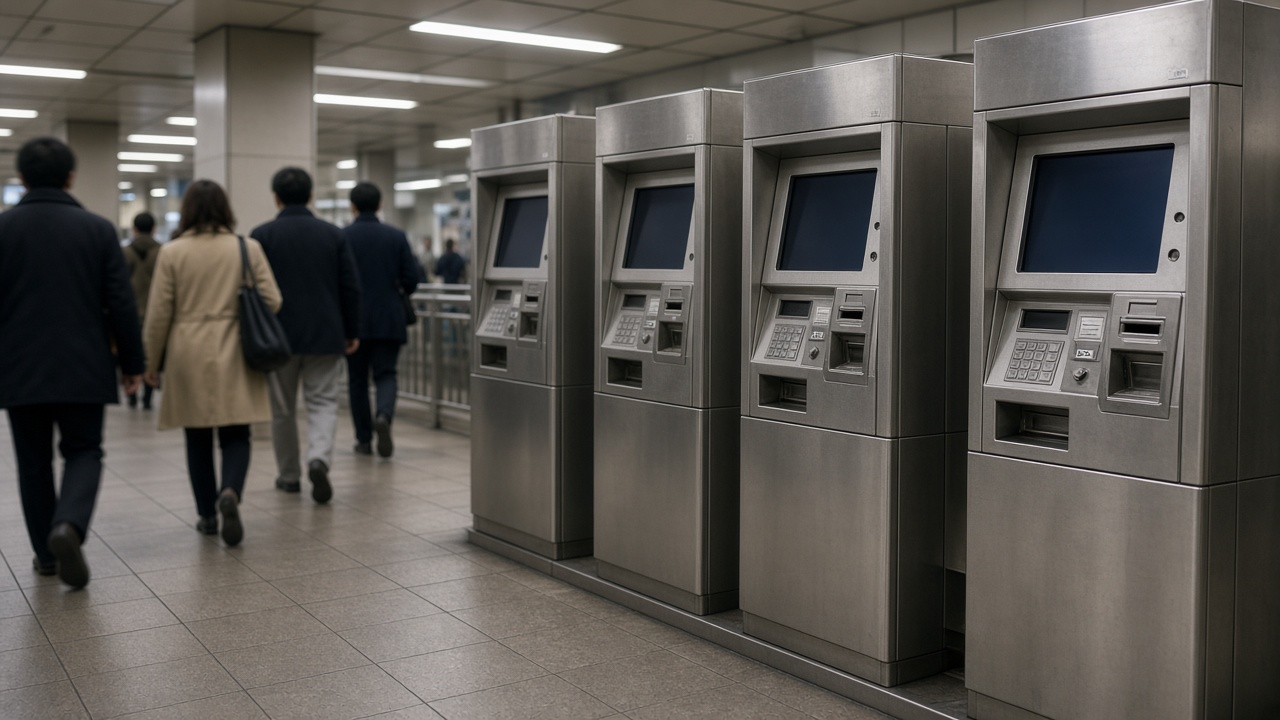
PayPay Corporation flipped on QR-code payments at roughly 120 East Japan Railway stations Thursday, wiring its wallet into convenience kiosks that sit beside ticket machines on the Ueno–Omiya corridor. Commuters can now buy drinks, umbrellas, and prepaid mobile top-ups by scanning a dynamic PayPay code on the kiosk screen, a upgrade JR East pilots before a wider rollout to Tohoku and Joetsu lines next quarter.
Why station kiosks matter
Japan's push toward a cashless society often stalls at train stations, where coin change remains common for small purchases and foreign tourists still carry yen notes. JR East's kiosks historically accepted only cash and transit IC cards for stored-value loads. Adding PayPay—and optionally other QR schemes through a neutral acquirer layer—reduces friction for the 7 million daily passengers who already use PayPay at convenience stores outside the gates.
The integration uses a middleware contract with a domestic payment gateway so station staff do not handle card numbers. Settlement batches nightly to kiosk operators, who pay JR East a concession fee tied to gross merchandise volume rather than per-transaction interchange.
Security and uptime requirements
JR East's technology subsidiary demanded offline fallback: if wide-area LTE drops during a typhoon, kiosks revert to cash-only mode without corrupting PayPay ledgers. PayPay engineers said pending transactions sync within fifteen minutes of connectivity return, a standard borrowed from rural vending deployments in Kyushu last year.
The Financial Services Agency has urged e-money issuers to spell out user liability for mistaken scans; PayPay updated in-app receipts to show station names parsed from JR East's facility codes, helping commuters expense small buys through employer commuter benefit programs.
Competitive context
Mobile FeliCa wallets Suica and PASMO dominate fare payment but have been slower to own non-fare retail inside stations. PayPay's move pressures Rakuten Pay and au PAY to negotiate similar kiosk rails, though JR East said it will evaluate fraud rates for three months before signing additional wallets.
Merchants inside station buildings—bakery chains and bookstores—welcomed the change because it aligns with their street-front stores' QR acceptance, simplifying staff training. A bento vendor at Omiya said morning queues shortened when customers stopped breaking ¥1,000 notes at the ticket machine first.
Policy alignment
The Ministry of Internal Affairs and Communications tracks cashless ratios municipality by municipality; Saitama Prefecture, bisected by the pilot corridor, lags Tokyo's adoption rate. Local officials hope station kiosks nudge suburban riders who only use cash on weekends to keep digital wallets topped up.
For PayPay, the JR East footprint is symbolic scale: even if average ticket sizes are tiny, proving reliability on a flagship commuter line helps win municipal transit bids elsewhere in Asia where JR East consults on station retail design.
What riders should expect
Stickers on kiosk bezels mark PayPay readiness; legacy machines without cameras stay cash-only until retrofit schedules reach them in December. Commuters should update the PayPay app to the September build, which adds brightness boost for scanning under harsh platform fluorescents.
If the three-month pilot hits volume targets, JR East will publish a timeline for Yokohama Line and Saikyo Line stations—turning a Thursday software switch into a template for how Japan's largest commuter railway marries FeliCa fare gates with QR retail at scale.
Pilot metrics JR East will judge
Internal targets call for at least eighteen percent of eligible kiosk revenue on the corridor to clear via QR within ninety days, with chargeback rates below five basis points. Station masters will log outage minutes separately so PayPay cannot claim credit for sales that would have been cash anyway during maintenance windows.
Accessibility advocates asked JR East to keep audio guidance on kiosks synchronized when switching to QR mode; the railway said it tested screen-reader paths with visually impaired commuters in Saitama last month.
Accounting teams at kiosk operators must reconcile FeliCa and QR tenders separately for franchise royalty statements, a back-office change PayPay documented in merchant playbooks released Wednesday night.