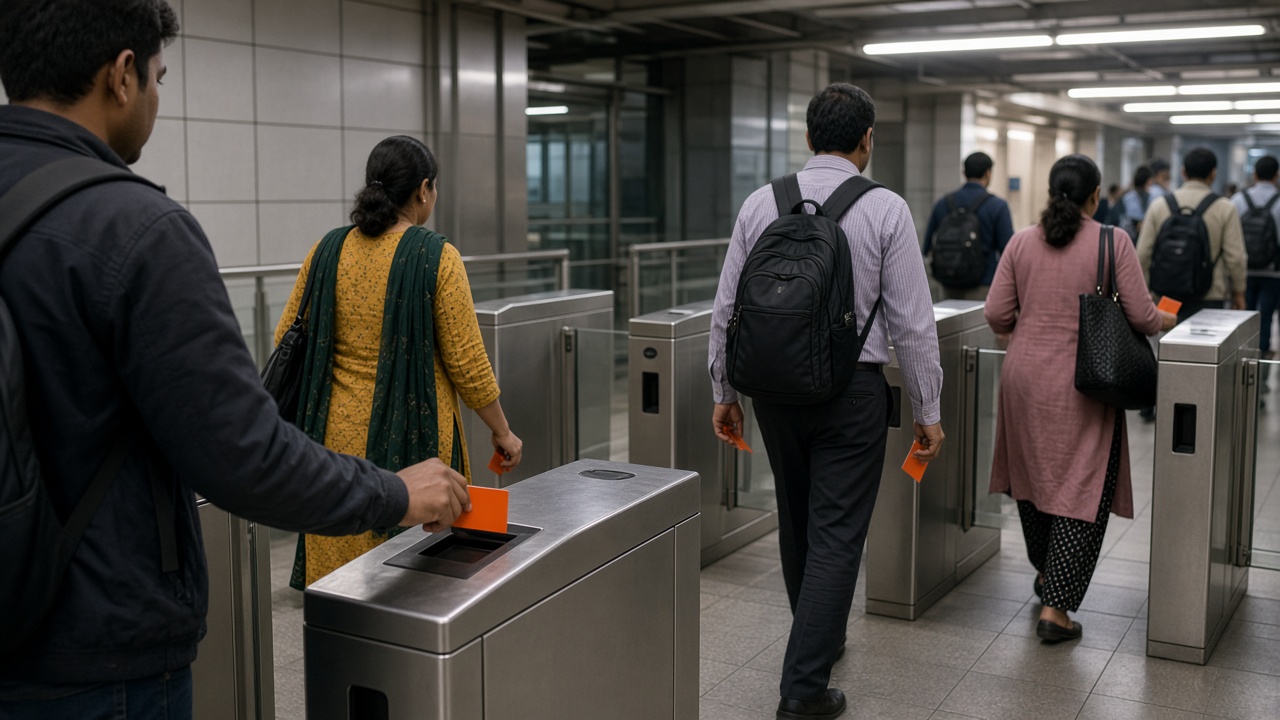
Slice began offering pay-in-three instalments on Delhi Metro smart-card reloads for Super Card customers this week, letting commuters spread top-ups of ₹500 or more across three statement cycles without a finance charge.
The fintech issuer pitched the feature to salary-earners under 35 who use Metro Rail for daily office commutes and face higher incidental travel during the pre-Diwali shopping season. Reloads must be initiated inside Slice’s app and linked to a Delhi Metro card number already registered for automatic balance checks.
How the product works
Eligible transactions convert into three equal EMI lines on the Super Card statement. Slice said it will not charge interest if all instalments clear on time, but late payments revert to the card’s standard revolving rate. The offer excludes cash withdrawals and peer-to-peer transfers, and it caps at two active Metro EMI plans per user to limit credit exposure.
Delhi Metro Rail Corporation did not co-brand the plan; commuters still reload through the existing NPCI rail-payment gateway. Slice is essentially financing the float between the rider’s payday and the upfront debit to the card network.
Why issuers care about transit
Transit spends are small individually but highly frequent, making them valuable for models that predict default risk. Issuers that win reload volume gain reliable interchange on tap-and-go payments and a hook to cross-sell personal loans after festive season.
Competitors have experimented with similar features on bus passes in Bengaluru and Mumbai, but Delhi’s scale—more than six million daily boardings pre-pandemic—makes it a reference market. UPI still dominates person-to-merchant rail payments, yet card EMI on transit is growing at double digits year on year among private-label programmes.
Consumer watchdog angle
Financial educators warn that zero-cost EMI can encourage overspending on non-essential top-ups. Slice’s disclosures state that missed instalments trigger full interest from the transaction date, a clause regulators have scrutinised on other buy-now-pay-later products.
For commuters who manage statements tightly, the feature simply smooths cash flow when festival travel stacks extra rides onto a fixed Metro pass. For the issuer, it is another data point in a crowded credit-card market where differentiation increasingly happens in ₹100 increments rather than headline reward rates.
Delhi Metro officials said fare policy is unchanged; any payment innovation must comply with existing gateway security standards. Slice plans to extend pay-in-three to Noida Metro reloads if Delhi uptake crosses internal targets by November.
Risk controls
Slice said it runs device fingerprinting and velocity checks before approving EMI conversions, blocking users with prior delinquencies on other fintech products. The underwriting model weights Metro reload frequency more heavily than restaurant spend, on the theory that commuters with stable tap patterns present lower loss rates.
Payment networks confirmed that transit EMI transactions are classified as standard purchase authorisations, meaning chargeback rights mirror other merchant categories. Consumer courts in Delhi have previously ruled against issuers that hid finance charges in transit promotions; Slice’s disclosure runs three screens before confirmation.
Metro officials separately reminded riders that smart-card balances do not earn interest and that lost cards require a police report for refunds above ₹200. Those mundane rules matter because fraudsters sometimes pose as helpdesk agents near station exits.
Industry analysts expect other fintech issuers to copy pay-in-three on transit if Slice’s delinquency stays below portfolio averages through December.
Metro officials track reload channel mix quarterly; UPI still dominates, but card-based reloads rose after banks linked transit credits to lounge-mile promotions. Slice’s EMI feature targets the subset of riders who reload ₹1,000 or more monthly for joint family cards shared among spouses and college-going children.
Credit bureau executives said transit EMI performance will be reported like other unsecured lines starting next year, giving issuers historical data to price future offers instead of relying on proxy scores from e-commerce spend alone.