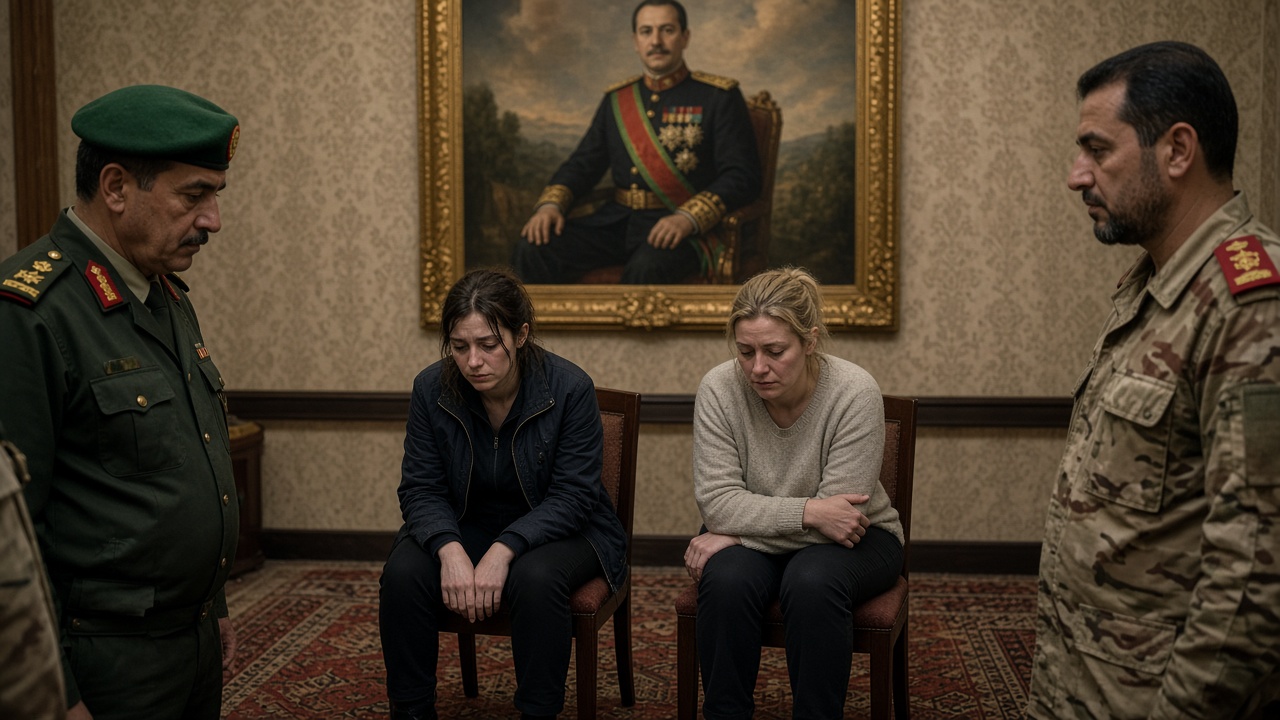
A Swiss woman and an Austrian aid worker kidnapped in Niger more than a year ago were freed and flown to Benghazi in eastern Libya on Thursday, where Swiss and Austrian officials said crisis teams took charge of them before their return home.
The Swiss Federal Department of Foreign Affairs said the Swiss national was abducted on 13 April 2025 and was received in Benghazi by federal staff who provided medical care. Authorities in Vienna identified the Austrian as Eva Gretzmacher, 73, who was taken from her home in Agadez on the night of 11 January 2025. Both women had spent years working on education and development projects in the Sahel.
Benghazi handover and thanks on Libyan television
Libya's al-Masar television reported that the two women arrived after what it described as intervention by Saddam Haftar, deputy commander under his father, Field Marshal Khalifa Haftar, who controls much of eastern Libya. Video broadcast by the channel showed the women seated beneath a portrait of the elder Haftar, speaking in French to thank the Haftars for their release.
The Swiss woman, whom Swiss media have identified as Claudia Abbt, 69, said in the footage that she had been held for a year and six months. Gretzmacher said she had been captive for a year and nine months. Swiss Foreign Minister Ignazio Cassis wrote on social media that he was relieved the Swiss hostage was free after more than 18 months and thanked domestic and foreign partners. Austrian Foreign Minister Beate Meinl-Reisinger called the day deeply moving and said Gretzmacher's family had endured an unimaginable strain.
Libyan officials said the women would be handed to their national authorities after administrative steps in Benghazi. Neither Bern nor Vienna disclosed which armed group had held them or what concessions, if any, secured their freedom. Reuters cited anonymous officials saying both had landed in Benghazi on Wednesday evening.
Kidnappings in a widening Sahel crisis
The abductions occurred in Agadez, a hub on the edge of the Sahara that has long hosted aid groups even as jihadist violence linked to al-Qaeda and Islamic State affiliates has spread across Niger, Mali and Burkina Faso. Kidnappings of foreigners and locals have increased in Niger over the past year, adding pressure on humanitarian corridors that already face military coups and expulsions of some Western forces.
Switzerland said it formed an interagency task force after the Swiss kidnapping, involving federal police, intelligence services and cantonal authorities, and coordinated closely with Austria from the outset. The Austrian ministry said a long and sensitive diplomatic process had concluded successfully but gave no operational detail.
What happens next
Both governments said they would protect the women's privacy and focus on medical assessments and reunions with families. Analysts noted that eastern Libya's role as a broker could complicate European diplomacy, because Khalifa Haftar's forces remain outside the United Nations-backed government in Tripoli and face their own sanctions history, even as they present themselves as security partners in the Sahel.
For aid agencies still operating in Niger, the releases are a rare piece of good news in a year of tighter security rules and evacuations. They do not, however, answer the broader question of who targeted long-term residents in Agadez or whether other hostages remain unaccounted for in the region.