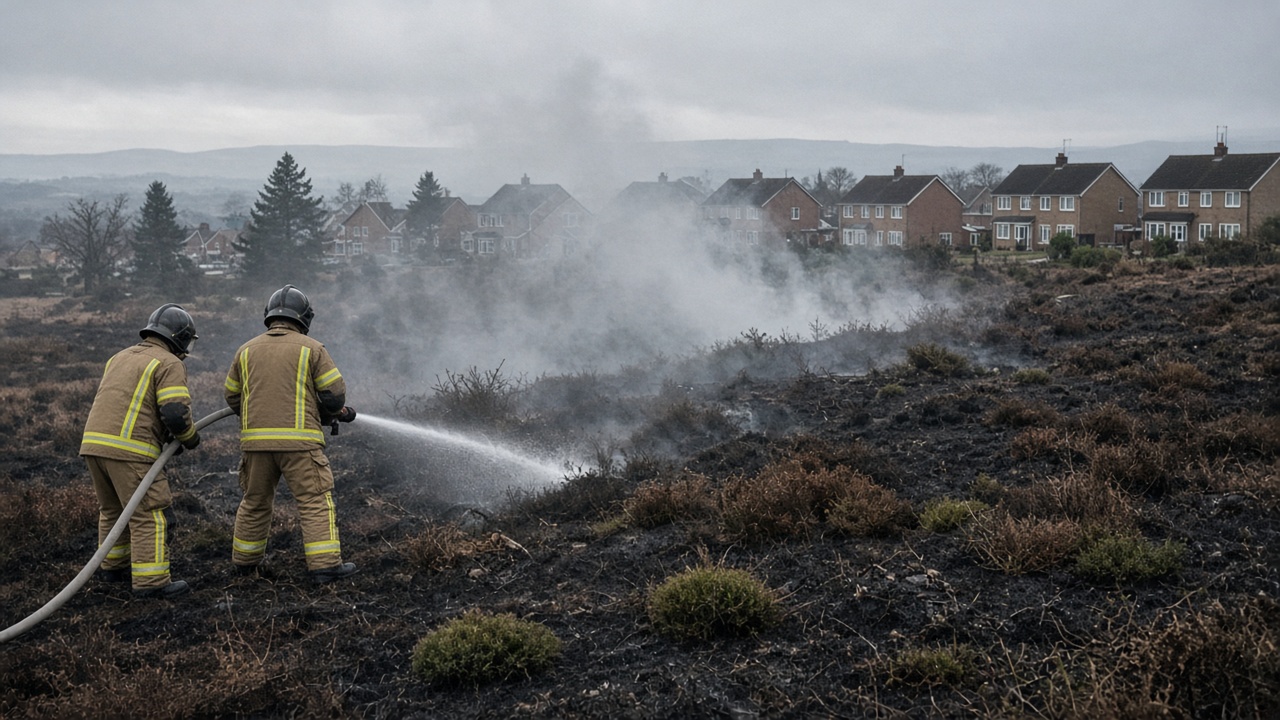
Wildfires can no longer be treated as rare British emergencies, a House of Commons committee warned on Tuesday, after a 2026 season that destroyed homes, scorched thousands of hectares and repeatedly overwhelmed local fire services. The Environment, Food and Rural Affairs Committee said the government must stand up a UK aerial firefighting capability, restrict disposable barbecues during extreme risk periods and fund a national awareness campaign before the next prolonged dry spell.
Scale of the 2026 season
Fire and rescue services in England and Wales recorded 1,132 wildfires between 1 January and 16 August, exceeding the total for all of 2025, the committee said. Major incidents were declared from Suffolk’s Dunwich Heath and RSPB Minsmere to the Cairngorms, Hampshire, Cambridgeshire’s Holme Fen and large parts of the West Midlands. Nineteen homes were lost in a Stourbridge blaze that MPs cited as evidence that urban-edge grassland fires now carry housing risk, not only moorland damage.
During the August heatwave, millions of people in England and Wales received an emergency phone alert warning of very high wildfire risk. Fire chiefs told the committee they were under “incredible pressure,” with 11 major fires in 48 hours at one point and simultaneous outbreaks across south Wales, Hampshire and the West Midlands stretching crews and water supplies.
Gaps in national resilience
The report said the season exposed weaknesses in how the UK secures aerial firefighting support, coordinates water for rural blazes and shares resources across borders. MPs concluded the current process for borrowing aircraft from abroad is “no longer fit for purpose” and called for a detailed implementation plan for a domestic aerial capability ahead of the 2027 fire season.
Committee chair Sir Robert Goodwill said wildfire had become part of the UK’s long-term climate resilience challenge rather than a freak event. The panel urged ministers to treat prevention as seriously as response: funding a national campaign, making disposable barbecues, campfires and cigarette discards socially unacceptable during elevated risk, and ensuring landowners and local authorities have clearer guidance on vegetation management.
Government response
A government spokesperson said improving wildfire preparedness was a “major priority” and that officials would study the committee’s recommendations. The report lands as Storm Austen brings a different weather threat—Met Office amber wind warnings for Wales and much of the UK on Friday—but MPs stressed that hotter, drier summers will return. Military assistance was deployed to some Welsh fires this year; the committee argued that such deployments should not substitute for purpose-built aerial assets and better cross-border mutual aid.
What households should expect
For residents in fire-prone corridors—from suburban interfaces in the West Midlands to heathland in southern England—the committee’s message is that risk maps and building standards may need to catch up with reality. Insurance, planning and public health officials are likely to face renewed questions about smoke exposure and evacuation routes. Ministers have not yet committed funding lines for aircraft or a prevention campaign; the EFRA report sets a political clock toward next spring, when fire services traditionally begin pre-season planning and when another heatwave could test whether 2026 was a wake-up call or a repeat drill.