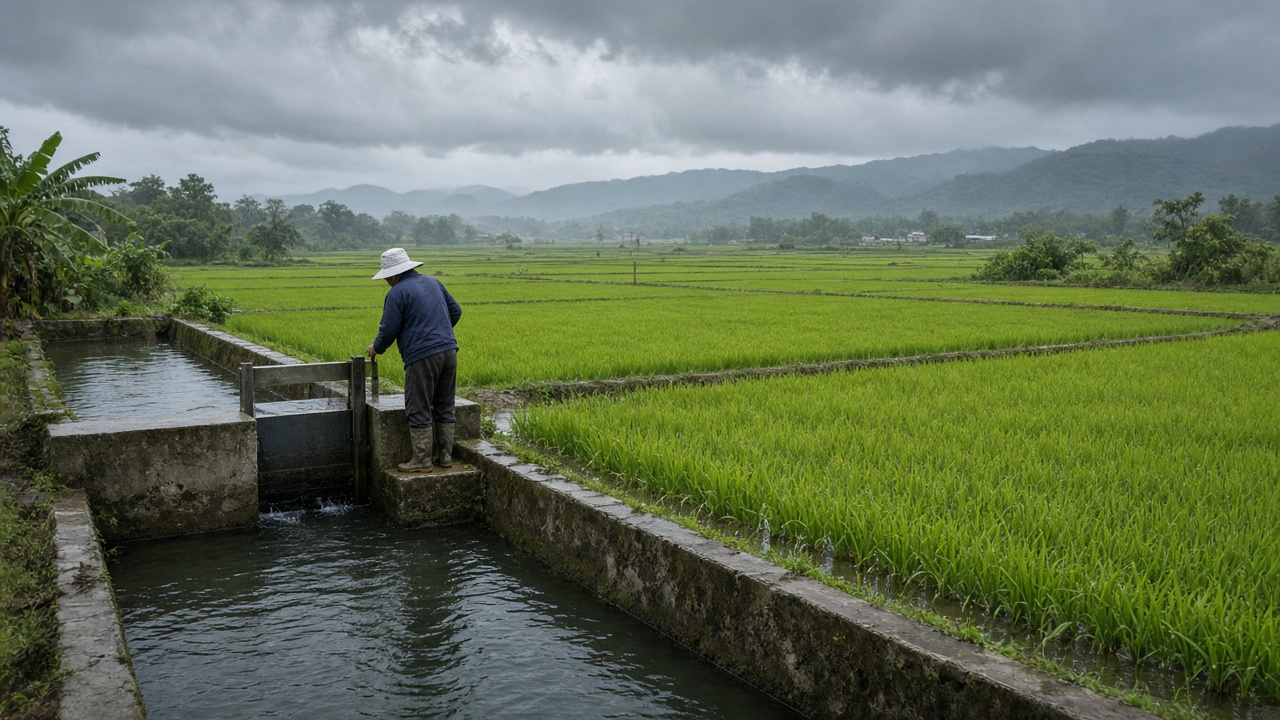
The World Meteorological Organization warned Tuesday that the developing El Niño could rival record events this winter, and southern Taiwan irrigation managers said they are adjusting October water releases to protect second-crop rice ahead of Typhoon Champi's rain bands.
What the bulletin measured
Sea-surface temperatures in the central Pacific already exceed plus 1.5 degrees Celsius above normal, a threshold associated with stronger winter rainfall along Taiwan's south coast. WMO scientists said atmospheric coupling—the feedback that turns warm water into sustained storms—strengthened in September.
For Tainan and Chiayi growers, the concern is timing: paddies need steady moisture now, but a strong El Niño winter can bring week-long deluges that drown heading rice if drains clog.
Local water math
The Southern Region Water Resources Office said it will hold Chianan irrigation channels at 85 percent of design flow until Champi passes, then reassess. Association leaders told farmers to clear ditch weeds before Friday, when combined typhoon and monsoon moisture could hit within 48 hours.
Researchers at National Taiwan University said El Niño also raises nighttime temperatures, which can reduce grain fill if heat arrives during flowering. They urged cooperatives to stagger planting where possible, even though many fields are already committed.
Beyond agriculture
Insurance brokers reported upticks in parametric weather riders for pomelo and mango orchards in Pingtung, where excess rain bruises fruit bound for Lunar New Year gift boxes. Fisheries officials warned that warm Pacific water could shift squid migrations, affecting offshore boats that share ports with typhoon evacuees.
Champi will dominate headlines this week, but the WMO note is the longer fuse: if El Niño peaks in December, Taiwan's south may face a wetter than normal winter regardless of individual typhoon tracks. Growers are betting on disciplined irrigation now to avoid learning that lesson acre by acre later.
Insurance and export timing
Agricultural banks said they would roll over short-term operating loans for cooperatives that document storm damage, while exporters of boxed rice to Japan asked for humidity-controlled warehousing if harvest moisture readings climb.
Climate researchers plan airborne dropsonde flights after Champi departs to compare El Niño moisture with typhoon rain, improving models for 2027 planting windows.