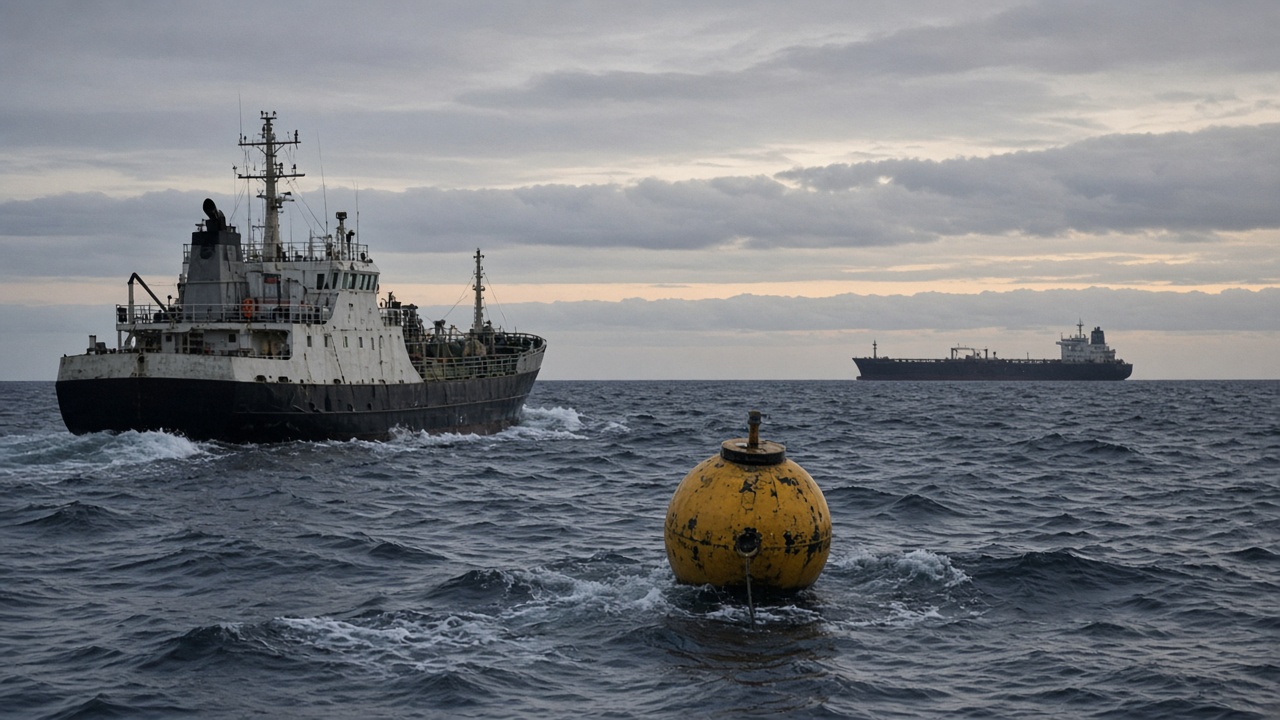
Tehran has drawn up detailed plans to target undersea communications cables in the Gulf if the United States and Israel attack Iran again, two senior Iranian security officials told Reuters in interviews published late Friday. The officials spoke on condition of anonymity and did not describe specific attack methods, but one said Iran would try to prevent repairs after any cuts in order to prolong internet and telecom outages across the region.
The disclosure lands as Brent crude has pushed back toward four-year highs and as Saudi-led air defences reported intercepting a Houthi ballistic missile aimed at Riyadh. Diplomatic channels between Washington and Tehran remain fragile after the earlier U.S.-Israeli campaign, and Iranian leaders have repeatedly warned that a renewed war would erase previous restraint.
What Iranian officials told Reuters
According to Reuters, the two officials said Iran had mapped vulnerable fiber routes and could move quickly if Iranian infrastructure were hit again. One warned Washington not to “play with fire” and claimed Tehran could “easily destroy” cables it can reach. The other stressed a post-attack goal of blocking repair ships and permits so outages would linger.
“If Iran is attacked, there will be no more red lines … from undersea cables to military bases, including covert ones,” one official told the news agency.
That language echoes public comments by Yadollah Javani, deputy head of political affairs for Iran’s Islamic Revolutionary Guard Corps. Javani said on Wednesday that Iran could target seven major internet cables beneath the Strait of Hormuz if Iranian assets came under fire, according to Reuters and regional outlets that carried the agency’s reporting.
Why cables matter even when Hormuz carries little global bandwidth
Subsea fiber carries the vast majority of international internet traffic. The International Telecommunication Union, a United Nations agency, estimates that roughly 99 percent of global data travels on submarine links rather than satellites.
Yet analysts caution that a Hormuz-focused campaign would not necessarily throttle the worldwide internet. Alan Mauldin, research director at TeleGeography, told Reuters that less than 1 percent of international bandwidth transits the strait. Capacity routed through the Red Sea is larger—about 3 percent of global international demand and roughly 10 percent of inter-regional traffic, Mauldin said—though Tehran has not publicly threatened cables there.
Even a geographically limited cut could still sting. Multiple severed links would force operators to reroute traffic, potentially slowing finance, e-commerce and cloud workloads for Gulf states and neighbours. Mauldin and other telecom researchers note that wartime repairs are slow: insurers raise rates, crews need coastal-state permission, and hostile waters complicate maintenance.
What operators and governments are watching next
Reuters reported that Iranian officials also pointed to U.S.-linked data centres and artificial-intelligence facilities as potential targets in a renewed conflict, without offering evidence of imminent action. Western governments have long classified subsea infrastructure as critical, and Gulf states have invested heavily in landing stations that connect Asia, Europe and Africa.
For now, the Reuters account describes planning and rhetoric, not an attack. Cable owners and cloud providers typically maintain redundant paths, and regional carriers can shift loads when a link fails. The new reporting nonetheless adds a concrete sabotage scenario to an already tense energy and security environment around Hormuz, where tanker traffic and missile activity have both spiked in recent weeks.
Markets, diplomats and network operators will be watching whether the anonymous officials’ comments remain background messaging or become operational orders if fighting restarts.