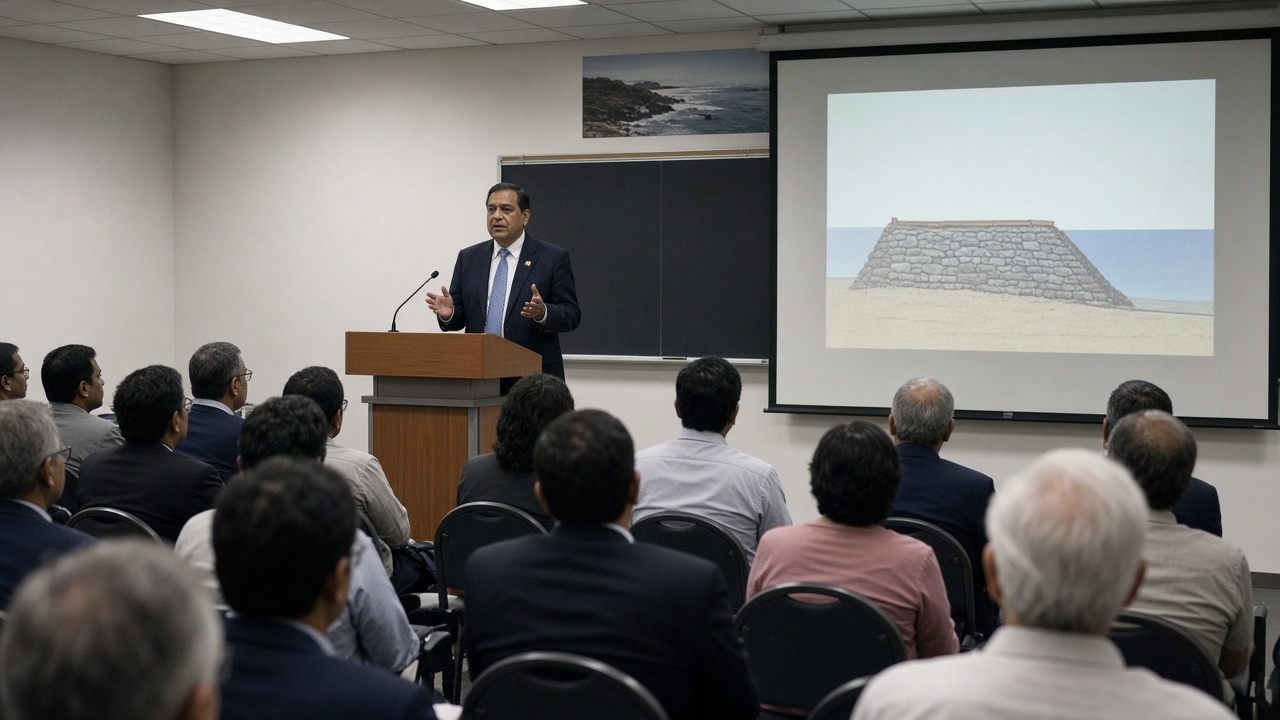
National water agency PUB will receive another S$135 million under Singapore’s Research, Innovation and Enterprise 2030 plan to sharpen work on coastal barriers, tidal gates and flood monitoring, Senior Parliamentary Secretary for Sustainability and the Environment Goh Hanyan said on 21 October at the Coastal Protection and Flood Resilience Institute’s annual symposium.
What the money is for
The Coastal and Flood Resilience Funding Initiative builds on the Coastal Protection and Flood Management Research Programme that Parliament funded in 2023. PUB said grant calls will open from 2027, beginning with applied research and institute-led projects.
Three themes will dominate the new tranche. First, researchers will test construction methods that cut build time and material use for seawalls and embankments expected to roll out from the 2030s. Second, engineers will study how tidal gates and pumping stations can fit Singapore’s dense waterfront while handling intense rainfall. Third, teams will expand digital monitoring so operators can coordinate drainage outlets, sensors and maintenance schedules across the island.
Why inland flooding is in the brief
Ms Goh told the symposium that heavier rain, higher sea levels and storm surges can coincide, slowing how stormwater drains through coastal outlets. That combination pushes flood risk inland, not only along East Coast Park or the downtown waterfront.
PUB has already set aside S$10 billion in the Coastal and Flood Protection Fund for studies and construction, including barriers recommended between the city centre and East Coast. The research tranche does not replace those capital works; it feeds design choices before shovels hit the ground.
Projects named on 21 October
Eight new research awards were announced alongside the funding line. One explores hybrid defences that pair conventional structures with mangroves or corals. Another tests modular barriers that can be deployed quickly while permanent walls are repaired.
Coastal protection legislation passed earlier in 2026 assigns responsibilities to public and private landowners along the coast. PUB is preparing a Code of Practice to translate those duties into engineering standards; the RIE2030 work is meant to supply evidence for that code.
What happens next
Living Lab test beds funded in June 2026 will start along selected shorelines from 2027. Researchers under the new initiative will feed findings into those sites and into PUB’s long-range adaptation plan, which the Ministry of Sustainability and the Environment updates as climate projections shift.
For residents, the near-term effect is indirect: fewer surprises when a pumping station appears beside a park connector, and clearer standards for developers who must protect their own frontage. The dollar figure matters because major coastal works take a decade or more to plan; missing research now would narrow options later.
Regional context
Southeast Asian neighbours are spending on similar adaptation work; Indonesia’s northern Java seawall programme carries a far larger price tag but faces similar land constraints. Singapore’s research emphasis on compact pumping stations reflects lessons from Japan’s underground discharge chambers, which visiting delegates discussed at the Singapore International Water Week leaders summit.
Parliament watchers should expect the Coastal and Flood Protection Fund to reappear in budget debates even as RIE2030 covers science rather than concrete pours. The two funding lines are complementary, not interchangeable.