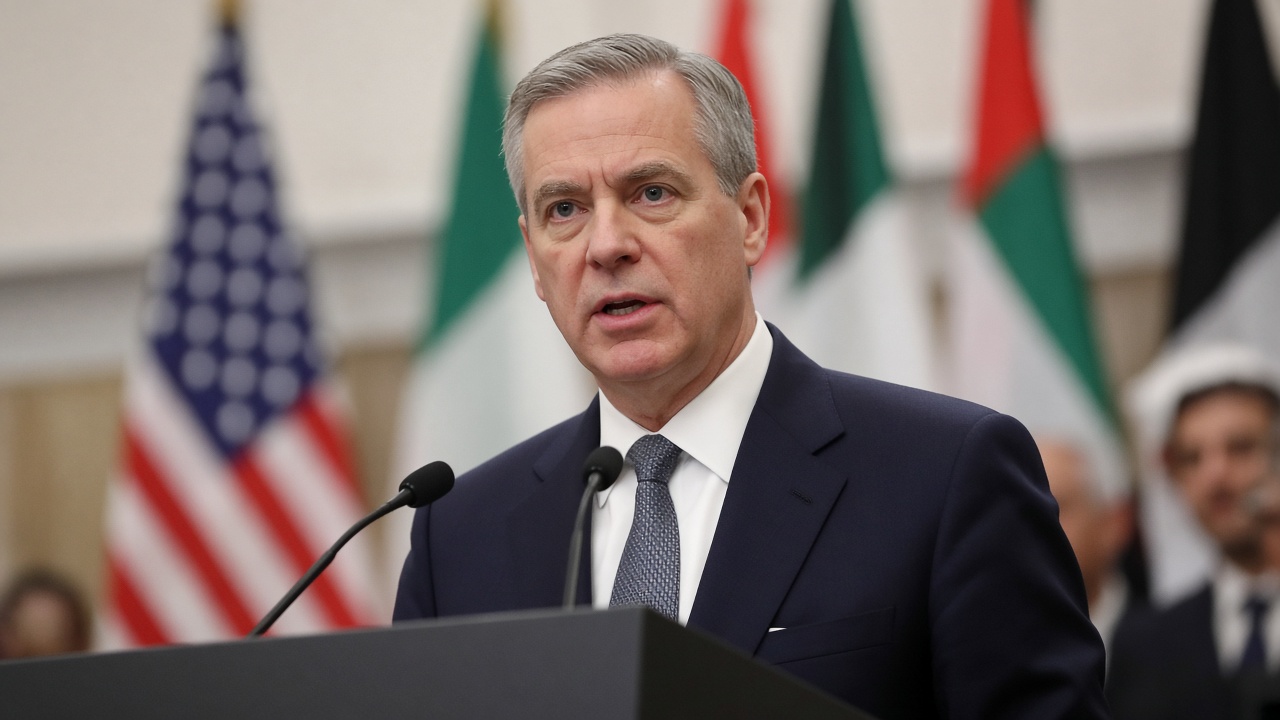
U.S. Ambassador to Turkey Tom Barrack said Friday that Washington could launch another military strike on Iran within days, reopening a live question about timing even as President Donald Trump told reporters he knew nothing about such planning and Brent crude has already climbed on fears of Gulf escalation.
What Barrack said
Barrack, who also serves as the U.S. special envoy for Syria and Iraq, answered “absolutely” when online commentator Mario Nawfal asked whether a strike could come as soon as this weekend. A clip of the exchange circulated widely on Friday as Israeli leaders continued to press for pressure on Tehran ahead of Tuesday’s Israeli election.
Barrack framed the administration as still open to diplomacy. He said Trump “is very clear” about being “open and available and accessible to a deal” after months at the negotiating table, and he described enrichment and nuclear details as “punctuation in the chapter that needs to be finished.”
At the same time, he warned that continued threats against U.S. allies and Gulf partners would draw consequences. Barrack explicitly rejected regime change as the U.S. goal, echoing Trump’s repeated insistence that Washington is not seeking to topple Iran’s government. “The problem with regime change always is — what’s the day-two scenario?” he said.
Trump pushes back
Hours later, Trump appeared to distance himself from Barrack’s timeline. Asked about the ambassador’s comment, Trump noted that Barrack is the envoy to Turkey and quipped that he is “a pretty powerful man, I guess,” before adding: “If that’s the case, I don’t know anything about it.”
The exchange highlights a recurring tension in the administration’s Iran messaging. Trump has alternated between threatening new strikes and suggesting he would wait until after the Nov. 3 U.S. midterm elections, while other officials and allies publicly argue for faster action. Israeli Prime Minister Benjamin Netanyahu has again called for bringing down Iran’s clerical leadership after two major bombing campaigns since last year.
Markets and diplomacy
Oil traders were already reacting before Barrack spoke. Brent crude rose sharply on Friday, briefly topping $117 a barrel at one point, as Tehran warned it could retaliate against Gulf energy infrastructure and data centers if attacked. European and Middle Eastern ministers have urged de-escalation, and U.S. officials have stressed that no final decision on post-election strikes has been made.
Barrack’s portfolio centers on Turkey and Syria; he does not hold a formal Iran portfolio. U.S. media have reported that Trump is weighing multi-day strikes on missile, drone, energy and nuclear targets after the midterms, but advisers disagree on whether additional force would push Tehran toward a deal or deeper defiance.
What comes next
Negotiations remain stalled, and Iran’s leadership has publicly dismissed pressure to return to talks on U.S. terms. Barrack’s remarks may reflect genuine contingency planning, personal speculation, or an effort to keep Tehran off balance — the White House did not immediately clarify which.
For now, the split screen is familiar: a senior envoy floating near-term military options, a president claiming ignorance of the calendar, and markets treating any headline as a reason to bid oil higher. Until Trump sets a date or rules one out, Gulf governments, NATO allies and congressional leaders will keep parsing every interview for the same answer — whether the next salvo is days away or parked until after voters go to the polls.