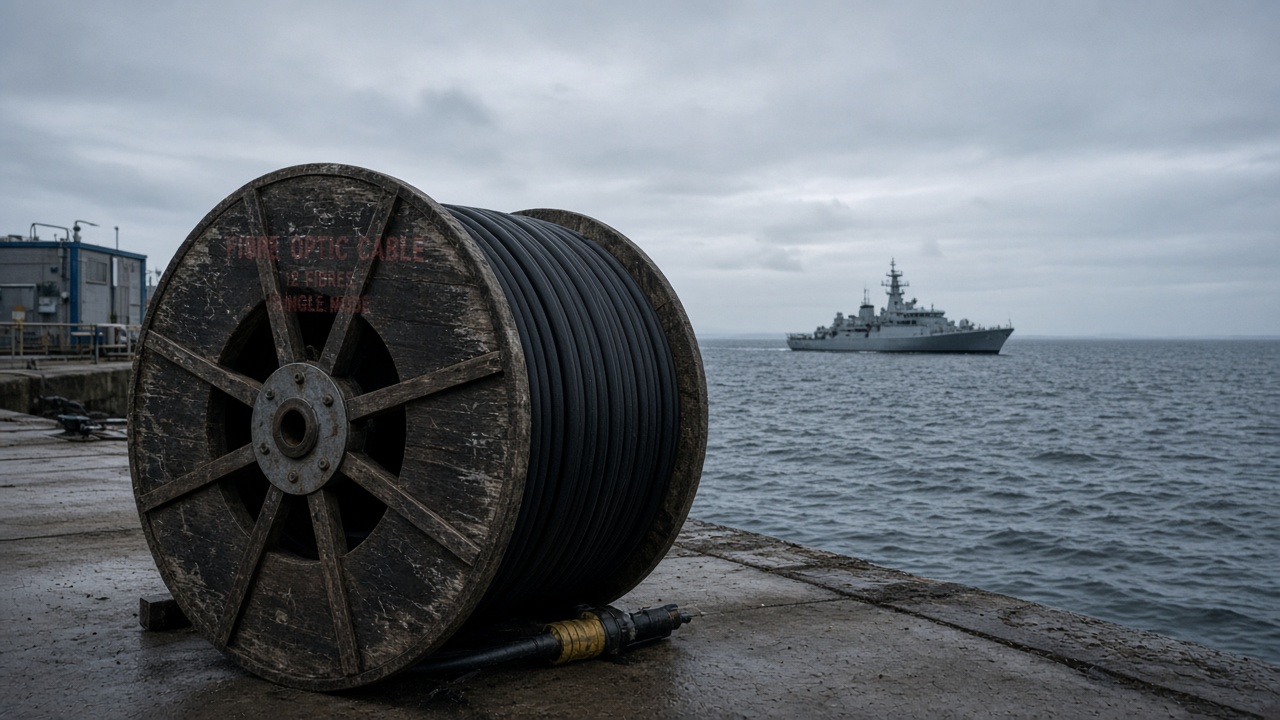
The British government has outlined emergency powers that would let ministers order telecom companies to disable or reroute services when undersea internet cables face a national-security threat, alongside tougher criminal penalties for sabotage. The proposals, published Thursday, respond to growing anxiety that legal tools written for Victorian telegraph lines have not kept pace with fibre-optic networks carrying almost all of the United Kingdom's international data traffic.
What ministers are proposing
A policy paper from the Department for Science, Innovation and Technology said officials currently lack swift powers comparable to those used in aviation or maritime emergencies. Under the plan, the government could compel carriers to hand over information, modify services or shut links connected to a specific incident, with orders typically published but able to be kept secret on national-security grounds.
Companies that refused could face fines of up to £17 million or 10 percent of global turnover, according to the document. Ministers said they want the regime to cover infrastructure beyond the 12-nautical-mile territorial limit, though they acknowledged that enforcing orders far offshore would require coordination with allies.
Penalties for physical attacks
Separately, the government is seeking stronger criminal sanctions for tampering with subsea cables or energy pipelines. Draft figures in the paper include up to 14 years in prison for intentional damage, 10 years for reckless conduct and two years for gross negligence, alongside unlimited fines.
Parliament's Joint Committee on the National Security Strategy warned last year that undersea infrastructure had become a weak point spanning transport, finance and energy. Roughly three-quarters of Britain's gas imports and the vast majority of cross-border internet capacity travel through privately owned seabed routes that are difficult to patrol.
Why cable security is back on the agenda
Downing Street has repeatedly accused Russia of mapping or probing underwater routes. In April, the government said Russian submarines had conducted a covert operation near cables and pipelines north of Scotland. London has also tracked the Russian research vessel Yantar after it passed close to UK waters, alleging the ship supports defence ministry mapping of seabed infrastructure. Moscow has rejected the claims as anti-Russian alarmism.
Nato allies have stepped up naval patrols and information sharing since damage to Baltic connectors in 2023 and 2024 heightened fears of hybrid warfare. Telecom executives told officials that cable landing stations on the English coast remain vulnerable to physical intrusion even when ships are monitored at sea.
What happens next
The measures will require new legislation after a consultation with industry that closes in January. Energy pipelines are not covered by the telecom orders in this paper; officials said they are weighing separate powers for hydrocarbon links. Labour ministers argued that giving regulators fast shutdown authority could limit cascading outages during an attack, though civil-liberties groups are likely to scrutinize how often secret orders might be used against domestic networks.