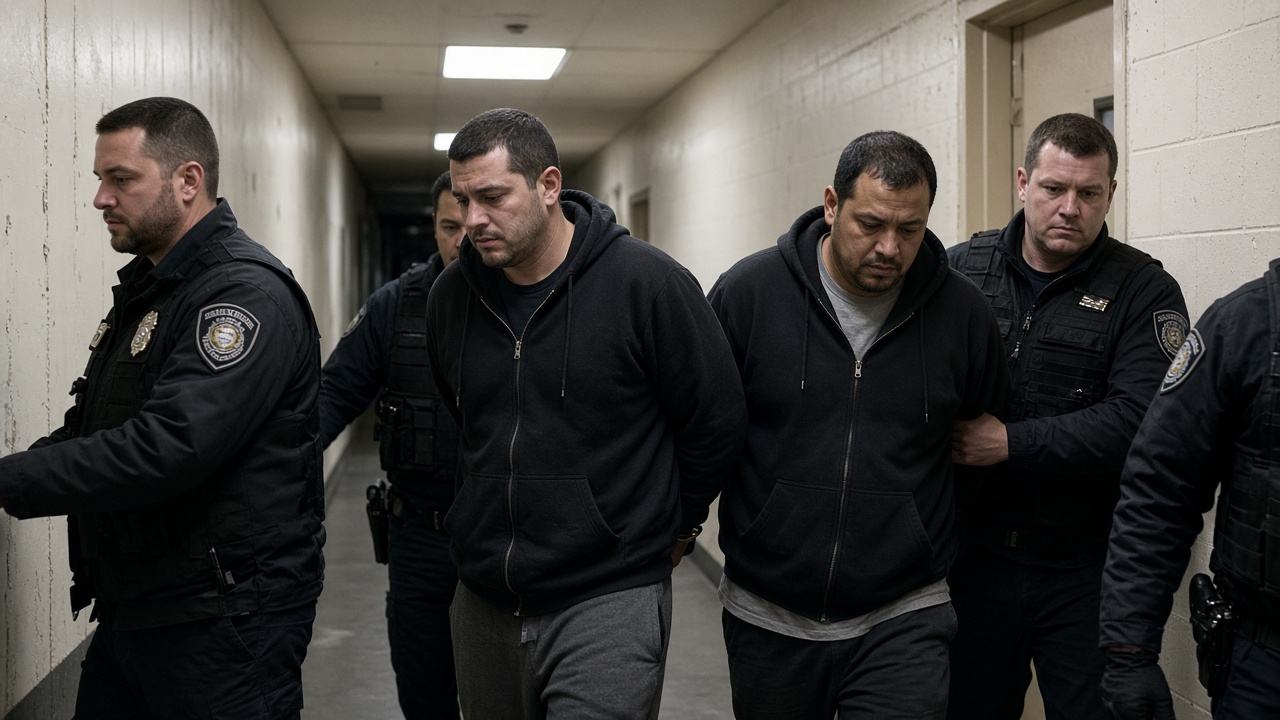
Two gangsters wanted across Haryana for murder, extortion and headline shootings have been detained in Las Vegas after a tip from the state's Special Task Force, Indian and U.S. officials confirmed Saturday, opening a likely extradition fight that will test cooperation between investigators on both sides of the Pacific.
Himanshu Bhau and Neeraj Faridpuria — both linked to the Lawrence Bishnoi network that has shadowed Punjab and Haryana politics — were picked up by U.S. authorities following intelligence passed by the Haryana STF, Inspector General Simardeep Singh told The Hindu. Singh did not detail the charges U.S. agents used to hold the men or the timeline for any deportation request, but he said the detentions followed active coordination between his unit and American law enforcement.
A cross-border file built on violence at home
Indian investigators describe Bhau and Faridpuria as central figures in a wave of contract-style killings and intimidation campaigns that have rattled businessmen, rival gang factions and, in several instances, law-enforcement families. Haryana police have announced multi-crore rewards for information on both men in recent months, and their movements have been the subject of lookout notices intended to flag international travel.
The STF's role underscores how seriously Haryana's Bharatiya Janata Party-led government has treated gang warfare spilling out of jails and social-media feuds. Officials in Chandigarh have repeatedly argued that shooters were being directed from abroad, making foreign detention — not just local arrests — a priority for Chief Minister Nayab Singh Saini's administration.
Las Vegas as an unexpected intercept point
Las Vegas is a frequent transit hub for international visitors, but it is not the first city that comes to mind in Indian gang chronicles dominated by Dubai and Southeast Asian safe havens. The choice of detention location may reflect travel patterns tracked through financial records, immigration databases or informer networks that the STF has not publicly described.
U.S. detention does not automatically return a suspect to India. Federal prosecutors must evaluate immigration violations, outstanding Interpol notices or treaty-based extradition requests. Indian officials typically route such cases through the Ministry of External Affairs and U.S. Department of Justice channels, a process that can take months even when both governments are aligned.
Political and policing stakes in Haryana
News of the detentions landed as Haryana prepares for continued scrutiny of its prison and parole systems after several high-profile escapes and on-camera threats. Opposition parties have accused the state government of allowing gang culture to flourish, while the administration counters that specialized units such as the STF have dismantled financing lines and overseas hideouts.
For families of victims in cases attributed to the Bishnoi syndicate and its affiliates, the Las Vegas detentions offer a rare sense of momentum. Legal observers caution, however, that U.S. courts will insist on documented evidence and due-process guarantees before any transfer.
Singh said Saturday that the STF would share additional material with U.S. partners as the case develops. Neither the U.S. Department of Homeland Security nor the Justice Department had posted a public statement on the detentions by late Saturday India time, leaving the precise U.S. legal basis for the holds to be clarified in coming days.