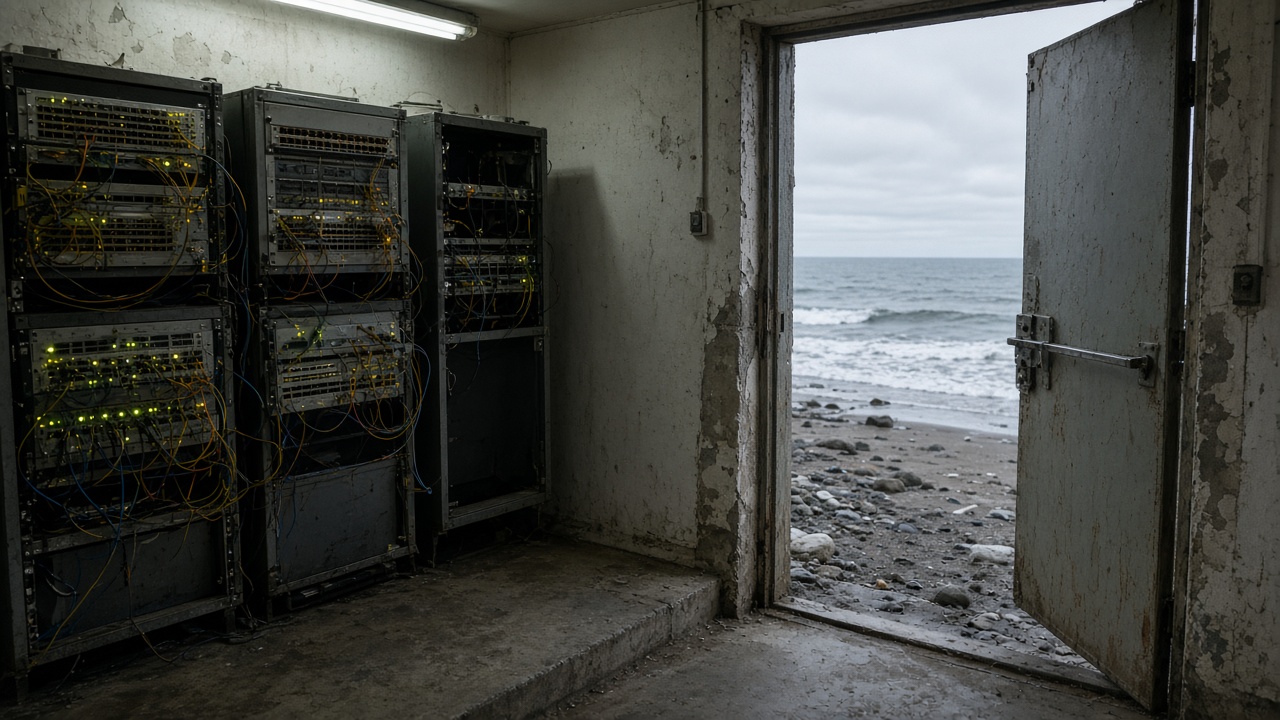
KDDI Corp reported partial packet loss on a Pacific subsea segment during a late-night maintenance window Friday, shifting mobile backhaul onto terrestrial routes while enterprise customers logged latency spikes on cloud dashboards for less than two hours. Haruto Suzuki’s technology desk treats the incident as a reminder that Japan’s redundant fiber map still has choke points when simultaneous maintenance meets unexpected loss on a live span.
Timeline
KDDI’s status page first flagged elevated loss rates on a trans-Pacific leg shortly after 1 a.m. JST, while engineers paused a planned software upgrade on an adjacent repeater. Consumer mobile voice remained up in major metros, but MVNO partners saw jitter on data-heavy routes into U.S. West Coast peering points.
By 3 a.m., traffic had been steered through alternate landing stations and bilateral capacity KDDI leases on other carriers’ systems. Full restoration on the primary path completed before the Tokyo equity open, though some enterprise SLAs triggered automated credits.
Technical context
Subsea maintenance windows are negotiated months ahead with ship schedules and weather margins. Packet loss during live traffic often means engineers aborted a test rather than risk a full cut. KDDI did not attribute the loss to external anchor damage; early internal notes cited a misconfigured protection switch that flipped twice before locking.
MIC requires major carriers to file outage summaries when core networks breach duration thresholds. Friday’s event may fall below mandatory public disclosure limits, but enterprise contracts still demand incident reports within 24 hours.
Who felt it
Mobile gamers and live-stream uploaders noticed first; corporate VPN users saw slower handshakes into AWS us-west and Azure Japan West pairs. Financial firms with split data centers reported no trading halts—latency stayed within internal tolerances—but batch jobs missed schedules.
Rival carriers pitched temporary capacity to wholesale clients by morning; price lists for emergency 10G waves spiked on broker chats Suzuki monitors.
Resilience lessons
Japan’s cable landing diversity improved after prior typhoon cuts, yet Pacific paths remain concentrated in Chiba and Kanagawa prefectures. Data center operators continue to dual-home across carriers, but smaller SaaS vendors sometimes pin to a single ISP for cost.
Government security planners watch cable incidents alongside power-grid events; Friday’s brevity will not trigger cabinet-level review, but MIC may ask for root-cause slides in next week’s industry liaison meeting.
What comes next
KDDI owes customers a formal postmortem on protection-switch testing and whether maintenance overlapped excessively on parallel spans. Falsifiers for systemic risk would include repeated weekend loss, evidence of sabotage, or weather damage—none indicated in initial filings.
For now, the story is a short blip on latency charts, not a national outage—but another data point for CIOs pricing redundancy.
Regulatory filing watch
MIC’s telecommunications bureau may request a written incident summary even if public thresholds are not met, because three carriers share landing rights on the affected segment. KDDI rivals NTT and SoftBank monitored the event for their own maintenance calendars, postponing a planned Saturday window on a neighboring repeater.
Enterprise customers with dual-SIM failover reported shorter blips than single-homed sites—a practical reminder for SMEs upgrading networks before the holiday shopping peak.
Cloud provider statements
Major hyperscalers issued all-clear notices by breakfast, but latency graphs retained a visible step change for U.S.-bound routes until mid-morning. SRE teams recommend keeping multi-region failover drills quarterly, not annually, after three cable-adjacent incidents across Asia this quarter.
Investor read-through
KDDI equity barely moved on the outage, reflecting investor comfort with redundancy spending. Capex guidance for subsea upgrades remains unchanged in the last earnings deck, though CFO commentary on the November call may cite Friday’s switch misconfiguration as evidence for faster automation spending.