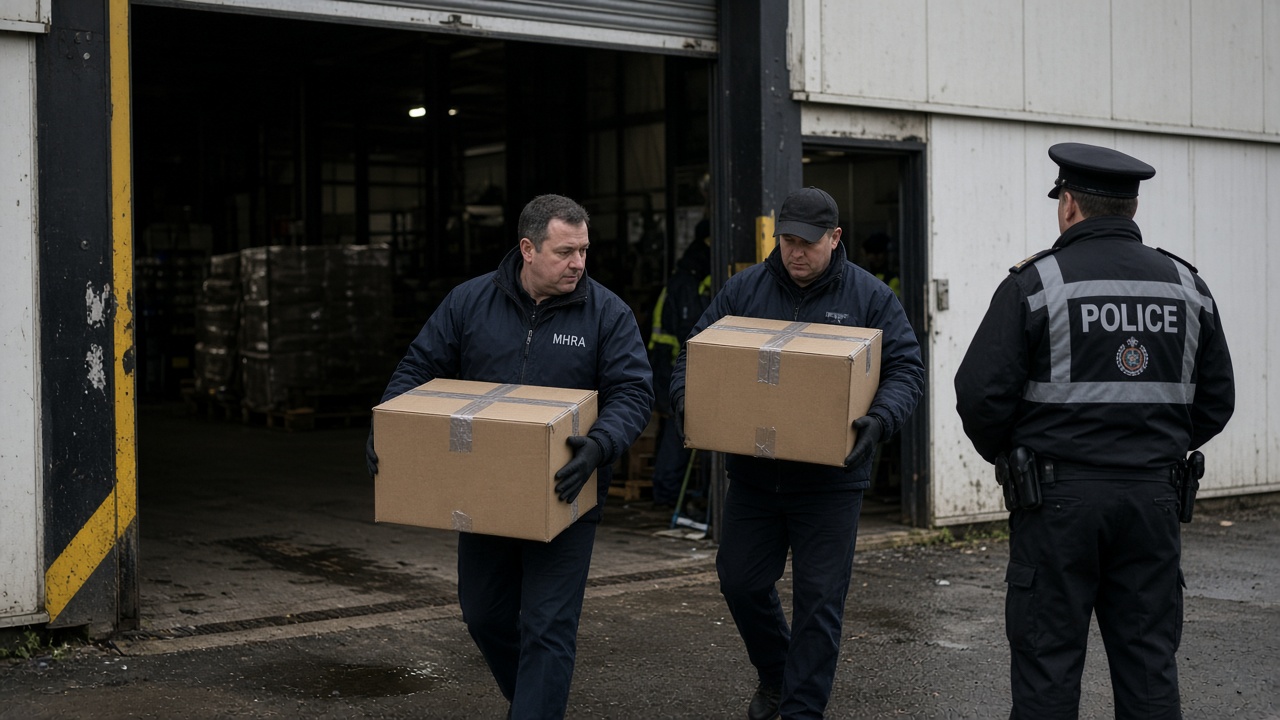
British medicines police have shut down what regulators called the first illicit production site for weight-loss injections found in the United Kingdom, seizing thousands of unlicensed pens, raw ingredients, and packaging gear during a two-day raid in Northampton.
Scale of the seizure
The Medicines and Healthcare products Regulatory Agency said officers recovered more than 2,000 unlicensed Retatrutide and Tirzepatide pens that were ready to ship, alongside tens of thousands of empty injection pens waiting to be filled. Investigators also found chemical precursors, sophisticated labelling equipment, and about £20,000 in cash they suspect came from online drug sales.
Andy Morling, head of the MHRA’s criminal enforcement unit, said the haul was the largest single seizure of trafficked weight-loss medicines ever recorded by a law enforcement agency worldwide. The agency estimated the street value above £250,000. Morling warned the products were “untested, unauthorised and potentially deadly” because they bypassed pharmacy checks, cold-chain rules, and sterile manufacturing standards.
How the factory operated
Northamptonshire Police joined MHRA investigators at an industrial unit on Wednesday after intelligence pointed to domestic manufacturing rather than simple import-and-reship schemes that have flooded social media markets. Morling said organised criminals were filling pens with unknown formulations, then using professional-looking packaging to mimic legitimate GLP-1 brands patients receive on prescription.
Health Secretary Wes Streeting welcomed the raid as a win against “shameless criminals who are putting lives at risk.” He urged the public to buy medicines only from registered pharmacies and not from influencers or encrypted messaging apps promising rapid slimming.
Patient safety and enforcement
Prescription tirzepatide is licensed in Britain for diabetes and, in some cases, obesity under medical supervision, while retatrutide remains experimental and is not approved for routine use. Counterfeit pens have been linked abroad to infections, incorrect dosing, and hospital admissions when patients believed they were using pharmacy-grade stock.
The MHRA said it is tracing customer lists and payment records found on site to warn buyers and to build prosecutions. Morling said dismantling the network prevented “tens of thousands of potentially fatal products from entering circulation” and would be followed by international cooperation because ingredients appeared to move through multiple jurisdictions.
What regulators want next
Officials are pressing online platforms to remove listings for “research use only” peptides that mirror the seized brands. Parliament’s health committee has asked for a timeline on new powers to fine marketplaces that repeatedly host illegal pharmacy ads.
For now, clinicians are telling patients who bought pens online to stop using them and to report adverse reactions through the Yellow Card scheme. The Northampton site remains cordoned off while forensic accountants quantify profits and identify suppliers of the raw powders.
The National Crime Agency said it is sharing intelligence with European counterparts because similar pens have appeared in parcel hubs from Rotterdam to Dublin. Trading standards teams in several English counties have already issued alerts after patients presented at A&E with abscesses traced to messaging-app purchases.