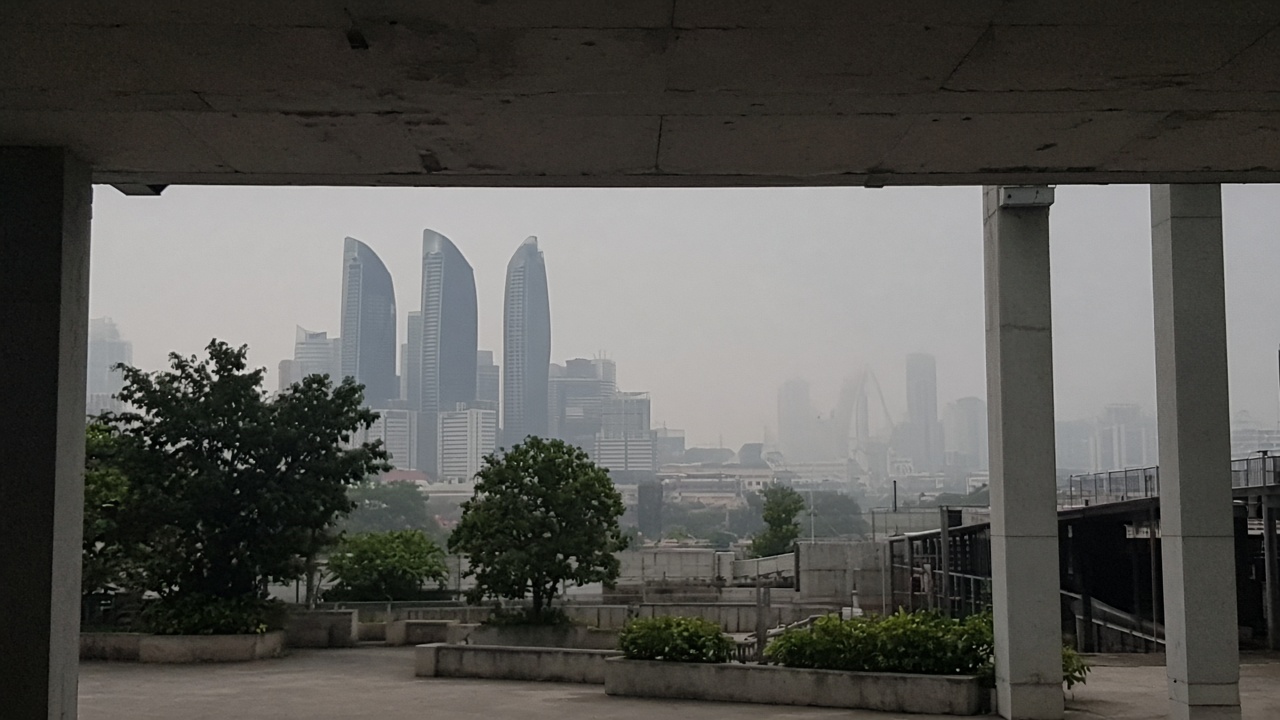
Singapore’s National Environment Agency issued formal information notices on Friday to 10 palm-oil and forestry companies registered here, the first use of the Transboundary Haze Pollution Act against local entities since the law took effect, as overnight air readings pushed every region into the unhealthy range at dawn on Saturday.
The agency said each firm must document corporate links between Singapore parents and Indonesian subsidiaries, list land concessions, and explain fire-prevention and firefighting steps taken during the current dry spell. NEA is also seeking follow-up material from 10 Indonesian companies that received notices earlier in the week.
Which companies received notices
Friday’s list covers Asia Pulp & Paper Company, Asia Pulp & Paper Company (China), Bumitama Agri, Golden Agri International, First Resources, Indofood Agri Resources, Kencana Agri, TSH Global Plantation, TSH Oversea and Wilmar International. Minister for Sustainability and the Environment Grace Fu told Parliament the step is meant to build an evidence trail on whether any operator contributed to fires that sent smoke toward the island.
Companies have not yet published detailed responses in filings reviewed by InfoHandle; NEA’s public statement framed the notices as document requests, not final liability findings. Separately, the Ministry of Law said it will appoint a specialist panel of legal, audit and investigative firms to trace corporate structures and supply chains across jurisdictions when agency staff need extra forensic capacity.
How the haze looked on Saturday morning
Channel News Asia reported that at 7 a.m. on Saturday the 24-hour Pollutant Standards Index ranged from 115 in the north and south to 142 in the west, with the central region at 133. Hourly PM2.5 concentrations were elevated islandwide, including 107 micrograms per cubic metre in the west.
NEA’s evening advisory on Friday had forecast Saturday PSI between 90 and 140, spanning moderate and unhealthy bands, with showers possible but smoke still able to ride south-southeasterly winds from Sumatra. The agency’s haze microsite said dry weather over Singapore had worsened local accumulation even as regional assessments showed moderate to dense haze across parts of maritime Southeast Asia.
Health guidance for Saturday asked healthy residents to reduce prolonged outdoor exertion and told elderly people, pregnant women, children and those with heart or lung conditions to minimise strenuous activity outdoors while PM2.5 stays in the elevated band.
What the law can do next
The Transboundary Haze Pollution Act allows Singapore to pursue operators whose conduct abroad contributes to serious haze here, provided investigators can connect fires to corporate control and due-diligence failures. Friday’s notices stop short of court action; they require records that NEA can compare against satellite hotspot data and Indonesian enforcement reports.
NEA said improvements may arrive from Sunday if winds shift west or southwest and local showers develop, but officials cautioned that scattered fires in southern Sumatra and Kalimantan could keep sending plumes toward the Strait. For households, the immediate question is air quality at the block level; for the named firms, the immediate question is how fast they turn over concession maps and fire logs without forcing NEA to escalate to penalties.
With the specialist panel still being appointed, Saturday’s combination of unhealthy dawn readings and first-time domestic notices marks a sharper enforcement posture than earlier regional haze episodes, when diplomacy outran document demands on Singapore-incorporated planters.