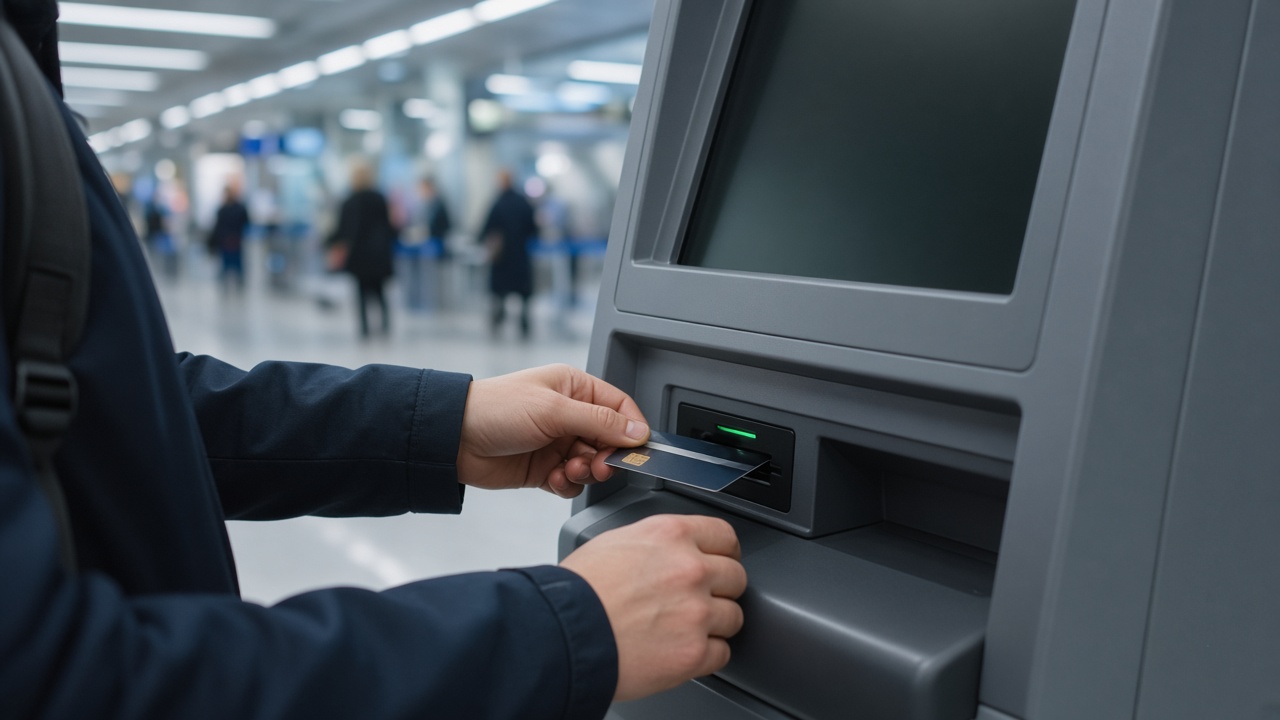
Shinhan Card Co. told cardholders Friday it will cap overseas cash-advance limits on select premium products after the won weakened past 1,420 per dollar, a move consumer-finance analysts said reflects mounting foreign-exchange risk as delegations pour into South Korea for APEC.
What changes on Monday
Starting Oct. 27, holders of The ClassIC and Deep Dream Platinum cards will see daily overseas ATM withdrawal ceilings cut to the equivalent of 1 million won from 2 million won, according to notices sent through the issuer’s mobile app. Purchases at point-of-sale terminals are unchanged; only cash advances, which banks price with wider FX spreads, are affected.
Shinhan Card said the adjustment is temporary and will be reviewed weekly against Bank of Korea reference rates. Other major issuers, including KB Kookmin Card and Hyundai Card, said they are monitoring FX volatility but have not altered limits.
Why cash advances matter
Korean travelers historically use cash advances sparingly, but business delegations during summit season rely on them for per-diem expenses in cities where card networks are less ubiquitous. When the won slides quickly, issuers eat losses between authorization and settlement if they have not repriced FX fees.
Credit-card delinquency ratios eased industry-wide in the third quarter, Financial Supervisory Service data show, giving issuers room to tighten risk controls without chasing volume. Shinhan’s move signals caution rather than credit stress.
Consumer impact
Travel bloggers and airport currency-exchange counters reported steady demand Friday for dollar cash at Incheon International Airport, though lines were shorter than during summer peak. Card industry officials urged travelers to use contactless payments where possible to access wholesale FX rates.
Financial Consumer Agency counselors said complaints about sudden limit changes usually spike when issuers fail to provide 30-day notice. Shinhan argued the change qualifies for an emergency exception because of “sharp currency fluctuation,” a category defined in its card member agreement.
Macro backdrop
The Bank of Korea held its policy rate steady this month while flagging won weakness tied to U.S. rate differentials and geopolitical hedging ahead of APEC. Card caps are a micro-level response to the same forces that have pushed importers to lock in forward contracts.
For households, the practical takeaway is to check app notices before relying on overseas ATM withdrawals during the summit fortnight. Shinhan said it will restore prior limits if the won strengthens sustainably below 1,400.
Industry comparison
Hyundai Card said it will maintain existing overseas advance limits but added a 0.2 percentage point surcharge on FX spreads through November. BC Card encouraged customers to link multi-currency wallets that settle in won at end of day, reducing exposure to intraday swings. Analysts at Hana Financial Investment said issuers are unlikely to cut purchase limits because interchange revenue still funds reward programs.
Travel agencies catering to APEC delegates reported higher uptake of prepaid travel cards denominated in dollars and euros, a workaround for executives who need cash for tipping and small vendors. Shinhan’s caps may push more of that volume toward specialized forex cards rather than general-purpose credit lines.
Regulatory watch
The Financial Supervisory Service reminded issuers to document risk-mitigation notices in Korean and English, given the influx of foreign cardholders during summit week. Violations can trigger fines even when limits are legally permissible.
Household budgeting
Consumer counselors warned that travelers relying on cash advances often pay effective annualized rates above 20 percent once FX spreads and fees compound. Shinhan’s app will show a calculator comparing ATM withdrawals with on-card purchases before travelers leave Incheon.
Airport lounge operators reported steady card spending even as cash demand ticked up, suggesting business travelers are not liquidity-constrained for most purchases.
Bank of Korea officials noted that card FX adjustments are a symptom of broader dollar strength and said they are not intervening specifically to help issuers, focusing instead on smoothing volatility for importers.
Looking ahead
Issuers will revisit limits after APEC if the won stabilizes, but economists warn that U.S. rate expectations could keep the currency under pressure through year-end regardless of summit optics.