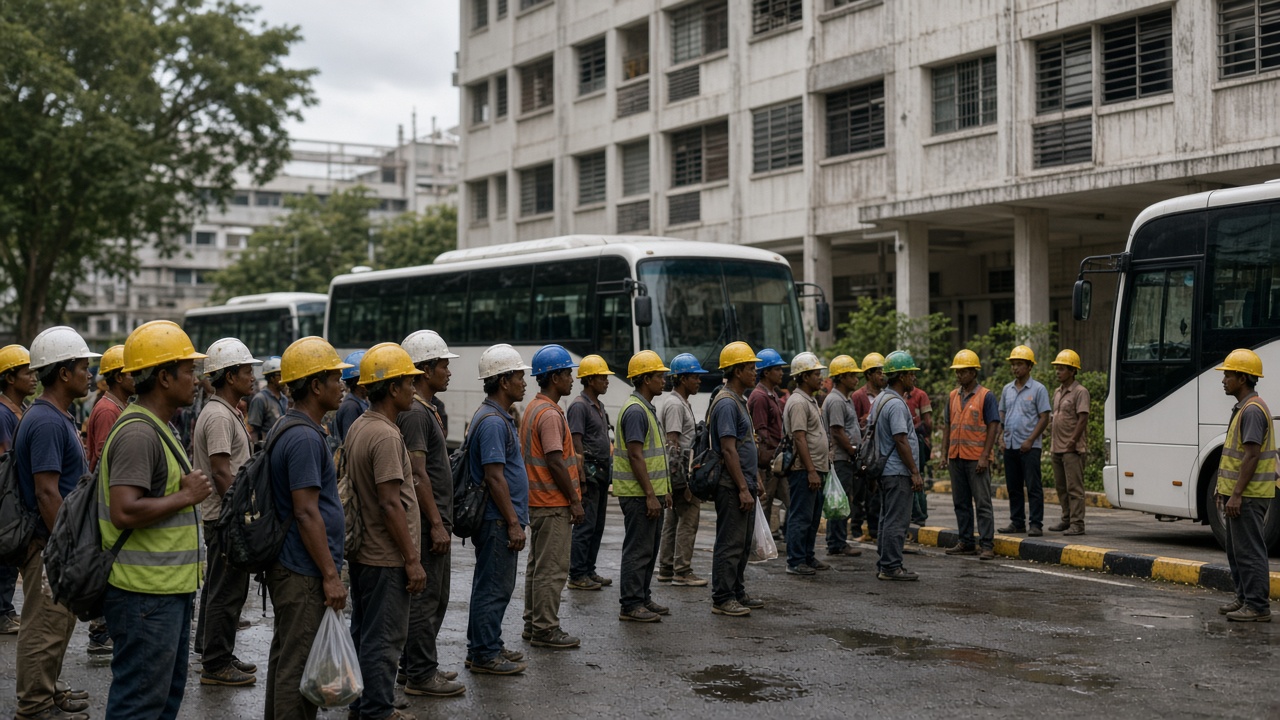
Close to 240 migrant workers employed in Singapore’s process sector have not been paid for two months, prompting the National Trades Union Congress and the Ministry of Manpower to step in with shelter, job matching and salary claims, NTUC deputy secretary-general Desmond Choo said on Friday.
Scale of the shortfall
Choo disclosed the figure in a Facebook post, saying NTUC is working with MOM to support workers who were left without wages as their employer’s finances deteriorated. He did not name the company publicly, but union officials described a single process-industry contractor whose payroll stalled in August and September.
Process-sector roles cover petrochemical, pharmaceutical and related plant operations where foreign work-permit holders make up a large share of the frontline workforce. Missing two consecutive months of pay typically triggers MOM scrutiny of work-pass compliance, accommodation standards and whether bosses still meet solvency requirements to retain permits.
What NTUC and MOM are doing
According to Choo, the immediate response focuses on basic needs and legal recovery rather than waiting for a liquidation outcome. NTUC has helped arrange temporary housing for workers who were told to leave dormitories tied to the employer, while MOM officers are documenting salary arrears for potential claims through the employment claims tribunal route and related channels.
Union volunteers are also running job-matching sessions so skilled workers can transfer to solvent firms without breaching work-pass conditions. Choo wrote that “no worker should face this alone,” a line NTUC has used in earlier arrears cases as it tries to signal that process workers — often less visible than construction crews — still have recourse through the labour movement.
Broader context
Singapore tightened oversight of salary payments after high-profile dormitory and construction disputes during the pandemic, including faster triggers for MOM to revoke passes when bosses default. Process plants, however, depend on long-term contractors whose cash flow can swing with global commodity prices and maintenance cycles, making periodic arrears a recurring risk when parent firms delay subcontractor invoices.
MOM did not release a separate statement on Friday, but the ministry’s usual practice in similar cases is to suspend new work-pass applications for the employer, interview directors and require a security bond or salary escrow before permits are restored. Workers are allowed to change employers with MOM approval when a company is clearly insolvent.
What workers face next
Lawyers who advise migrant worker groups say the two-month gap means many employees will need interim food and phone credit while tribunals schedule hearings. Claims can take months if the employer contests figures or if assets are tied up in cross-border insolvency.
For the 240 workers identified so far, the priority is staying legally employed and housed while NTUC and MOM chase arrears. Choo’s post did not estimate total dollars owed, but union sources said average process salaries imply a seven-figure liability if full back pay is awarded. Until a company name is confirmed in court or MOM orders, workers and advocates will watch whether the case stays a contained payroll failure or widens into another enforcement test for Singapore’s foreign-labour rules.