President Donald Trump said Saturday that the United States could resume major strikes against Iran as soon as Sunday—or walk away with what he called a “good, important and positive” deal—keeping both outcomes live as regional missile exchanges and Gulf shipping tensions continued to escalate.
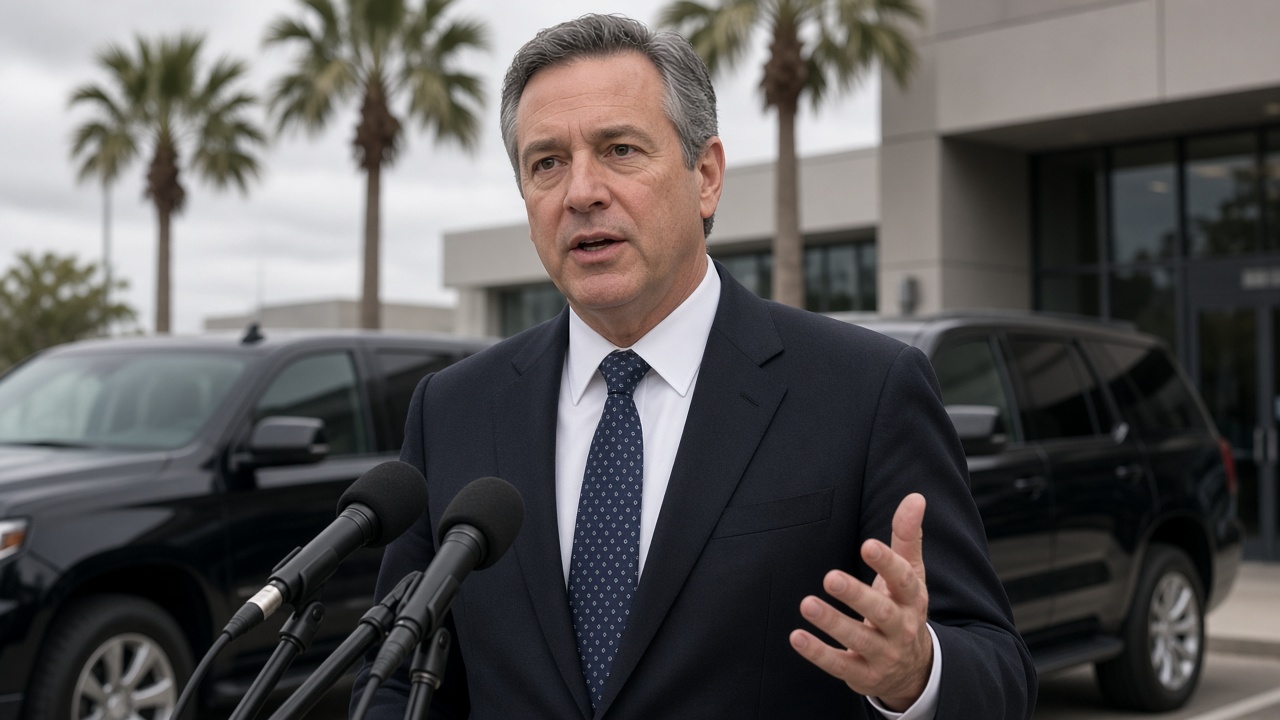
Speaking to reporters after voting early in West Palm Beach, Florida, Trump said there was “a possibility that I will bomb Iran again” while adding that Tehran also “wants to reach an agreement.” He framed the choice as finishing unfinished business from the February 2026 air campaign the Pentagon branded Operation Epic Fury, telling journalists that “we may soon launch Operation Epic Fury 2.”
What Trump said after casting his ballot
Trump’s comments landed hours after he visited a Palm Beach County elections office, a routine stop that nonetheless drew cameras because of the midterm calendar and the parallel crisis over Iran. He urged Iranian leaders to “get down to business” on U.S. terms but said he doubted they would, repeating his insistence that any accord must permanently block a nuclear weapon.
Iranian President Masoud Pezeshkian pushed back in televised remarks carried by regional outlets, blaming Washington for collapsing interim talks and calling U.S. negotiators “cowards” who “messed everything up.” Pezeshkian still argued Tehran should keep pursuing a diplomatic off-ramp, underscoring that both capitals are talking past each other even as strike planning dominates headlines.
Military options and carrier movements
Reporting from Washington described layered planning rather than a single countdown. The Hill cited two sources familiar with deliberations who said U.S. Central Command had prepared follow-on strike options that could be presented after the Nov. 4 midterms, while other accounts pointed to live preparations aboard carrier strike groups in the region. The Wall Street Journal reported sailors loading munitions and readying aircraft on the USS George Washington group, though the Pentagon declined to discuss hypothetical operations.
Those movements sit alongside renewed warnings from Iran’s military leadership about Persian Gulf security and fresh claims from Iran’s Revolutionary Guard navy that two supertankers struck mines in the Strait of Hormuz overnight, disabling engine rooms on vessels said to be carrying more than 4.5 million barrels of crude. Independent verification of the mine incident remained limited, but the claim alone was enough to keep insurers and charterers on edge.
Regional spillover and diplomacy
Outside the Gulf, Houthi forces fired missiles toward Saudi cities while Yemen’s internationally recognized government said the port of Aden was under attack, and Saudi civil-defense authorities reported debris from intercepted projectiles falling in Mecca and Jeddah. The cross-border salvos coincided with Israeli operations in the occupied West Bank that displaced more families around Hebron, adding another front to a weekend already dominated by energy and security risk.
European and Gulf diplomats have spent the week trying to keep shipping lanes open and humanitarian corridors functioning, but Trump’s public musings about Epic Fury 2 make clear that Washington still views force and negotiation as interchangeable levers. For now, the immediate question is whether Sunday brings another round of airstrikes, a surprise framework agreement, or simply more threats while planners wait for election-day politics to clear.