Andhra Pradesh Chief Minister N. Chandrababu Naidu told water resources officials on 23 October to treat an approaching Bay of Bengal cyclone as both a hazard and a storage opportunity, ordering reservoirs and irrigation tanks to capture rainfall while executing flood and disaster plans. Sana Qureshi’s politics desk reads the instruction against India Meteorological Department (IMD) forecasts that a system now over the bay could cross the coast between Bapatla and Visakhapatnam on 28 October as a very severe cyclonic storm with winds up to 125 kmph.
Friday night’s forecast
IMD’s national bulletin timed 0200 IST on 25 October placed the depression over the east-central bay and warned of extremely heavy rain over Andhra Pradesh on 27 and 28 October. Thirteen districts face red alerts, with Krishna and Bapatla on 27 October and a wider coastal belt on 28 October. Light showers were expected on 25–26 October before rain intensifies.
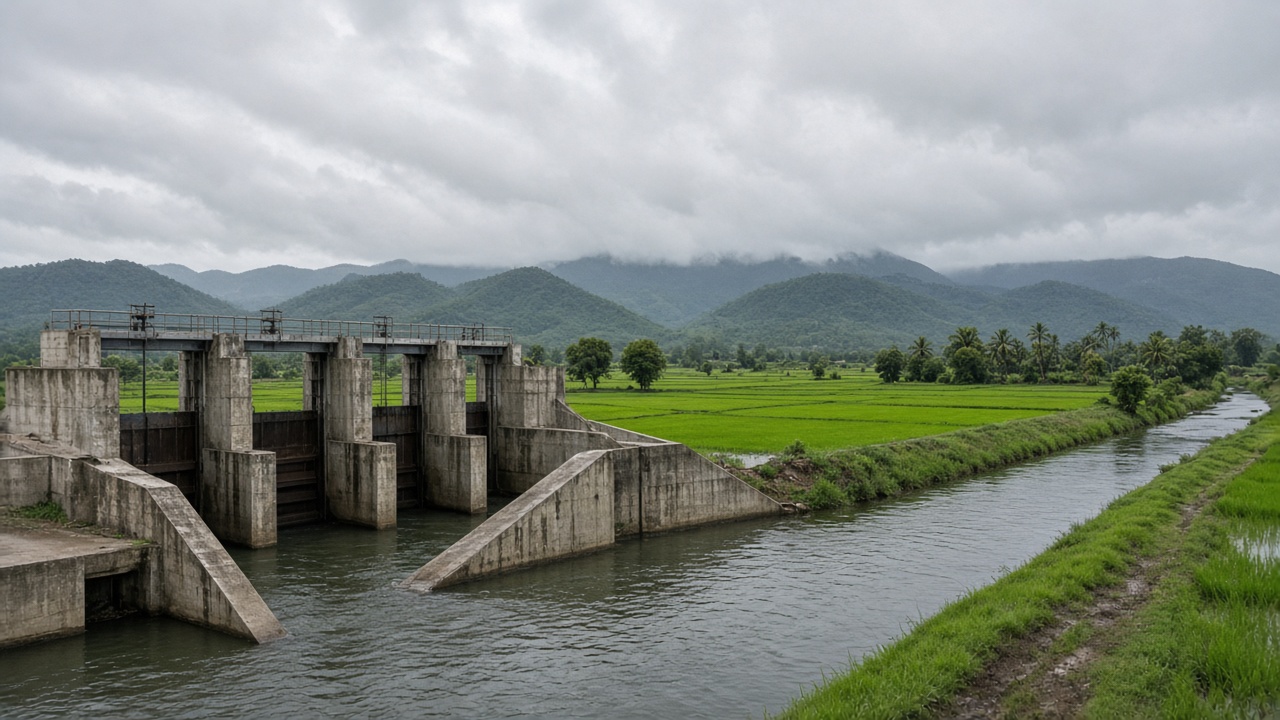
The Hindu reported Naidu’s review with the Water Resources Department (WRD) emphasised filling reservoirs, preventing rainwater waste, and resuming the Chintalapudi lift irrigation project next month. He set a December 2028 target for operationalising 36 priority projects and reiterated tap-water and irrigation-for-every-acre goals.
Politics of preparedness
State disaster officials have cited improved forecasting since Cyclone Hudhud in 2014, with NDRF teams in Visakhapatnam on standby and SACHET cell broadcasts ready. Naidu’s water-capture directive pairs disaster optics with farmer politics ahead of winter cropping: capturing cyclone rain can recharge tanks if gates are managed before floods breach embankments.
Opposition parties typically scrutinise evacuation counts and relief camp quality; the government’s early WRD meeting aims to show coordination beyond meteorology slides. Union-home disaster grants hinge on documented losses; timestamped orders help.
Coordination challenges
Andhra’s Godavari and Krishna deltas mix dense aquaculture with paddy; salinity intrusion and embankment breaches are recurring cyclone damages. WRD engineers must balance pre-release to absorb storm surge with the chief minister’s storage mandate—a hydrological tightrope if rain falls faster than canal capacity.
Fishing bans and port signals already rose along the coast per IMD marine warnings. Political staff will monitor social media for panic selling of poultry and fish, which can hurt farmers even when storms miss districts.
Union interface
Prime Minister’s Office disaster reviews typically activate once IMD upgrades storm categories; New Delhi has not yet announced a central team visit as of Sunday morning. National Disaster Response Force battalions in Andhra can scale if the state requests reinforcements.
Petroleum and port ministries watch Visakhapatnam and Kakinada anchors; energy infrastructure outages during Hudhud remain a reference point for cabinet briefings.
What residents should track
Officials pointed the public to Andhra State Disaster Management Authority platforms and IMD district warnings. Households should stock dry rations and charge phones before 27 October, independent of political rallies.
Opposition legislators in Amaravati asked whether lift-irrigation contractors received cyclone exemptions; the government said safety audits continue. Fisherfolk unions demanded diesel subsidies if trawlers stay ashore under IMD fishing bans through 28 October.
Telangana and Odisha governments mirrored Andhra’s alert posture, sharing bay forecasts even as political rivalry continues in capital headlines. Interstate coordination on Godavari flood releases will matter if rain falls upstream simultaneously.
Union ministers typically tour affected districts after landfall; Naidu’s early WRD order gives state media visuals of engineers at spillways before national cameras arrive.
Village secretariats in coastal mandals tested WhatsApp chains to relay Telugu and Odia warnings to migrant workers inland, a grassroots layer atop SACHET broadcasts.
Revenue officials suspended field tax drives in exposed mandals so staff could join evacuation rosters, a small but telling reordering of administrative priorities before landfall.
Qureshi’s desk will follow evacuation orders, school closures and relief camp openings as the depression recurves west-northwest. Until then, Naidu’s water-order politics signals that Andhra intends to frame the storm as a resource event—not only an emergency—if engineers can open gates safely in time.