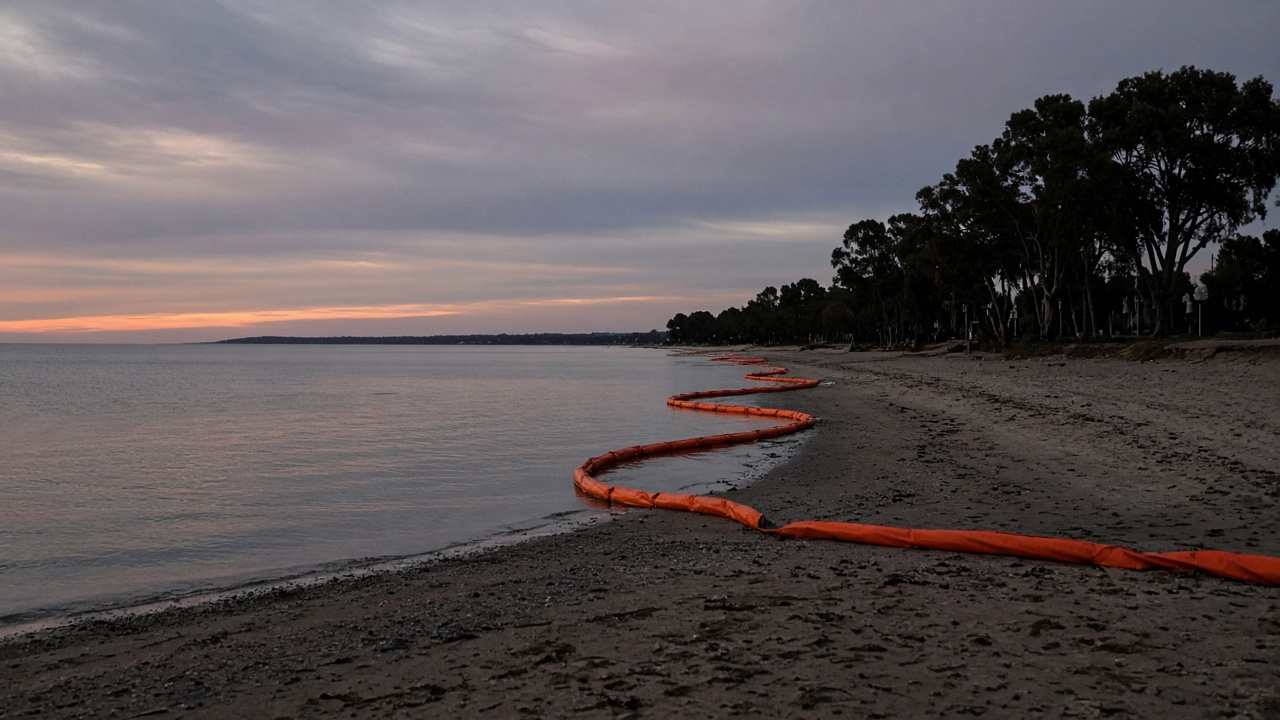
The National Environment Agency shut East Coast Park Area D beach near Siglap to swimming on 24 October after oil patches surfaced along the shoreline on the evening of 23 October, while the Maritime and Port Authority deployed containment booms and NParks said wildlife teams had not observed animal distress.
What visitors saw
Early-morning walkers reported dark sheens and tar-like blobs along the high-tide line. NEA officers taped off swim zones and posted signs directing families to other park segments still open for land activities. Barbecue pits away from the water remained usable, but rangers asked groups not to enter the closed stretch.
Response at sea and on shore
MPA said it is investigating the source of the patches and coordinating with vessel traffic in the eastern anchorage. Booms aim to stop further slicks from reaching the beach while contractors skim surface oil. Cleanup crews in protective gear shovelled contaminated sand into waste drums for safe disposal.
Water sampling will continue until hydrocarbon readings meet recreational standards. NEA will publish updates on its website and social channels before swim flags return.
Wildlife and fisheries
NParks monitors shorebirds and marine turtles along the park belt. As of 24 October, officials said they had not recorded oiled wildlife, though they asked the public to report distressed animals to the hotline with photos and location pins. Anglers were reminded that consuming fish from affected waters is unsafe until tests clear the area.
Planning a park day
Visitors heading to East Coast Park this weekend should check NEA advisories before packing swim gear. Areas outside the closure remain popular for cycling and dining, but sea breeze can carry hydrocarbon odour near the boom line. Volunteers organised litter walks on adjacent beaches to keep debris from complicating the cleanup.
MPA’s investigation will determine whether the oil came from a ship discharge, pipeline leak or land runoff. Until then, Area D stays closed to swimming even as the rest of the park welcomes regular crowds.
Community impact
Beach soccer leagues that rent pitches near Siglap postponed matches and moved training to indoor futsal courts. Wedding photographers who market sunset shoots along the belt shifted clients to quieter stretches west of the closure tape, while hotels along East Coast Road reported few cancellations because pool facilities remain open.
Volunteer coastal groups said they will coordinate with NEA before launching independent cleanup efforts, warning that untrained helpers can spread oil deeper into the sand. NParks reiterated that barbecue sites and cycling paths outside Area D are unaffected, but sea breeze may carry odours toward the park connector during low tide.
Food-and-beverage kiosks along the beach promenade stayed open on 24 October, with owners reporting steady lunch crowds from cyclists who detoured inland rather than skipping the park entirely. NEA officers walked the closure perimeter hourly to answer questions from joggers unsure where the swim ban started.
Environmental groups noted that even small patches can smear onto footwear and pets, urging visitors to rinse shoes before entering cars or homes. MPA boats continued patrolling east of the closure overnight to watch for fresh slicks drifting toward the boom line.
Siglap residents walking their dogs along the park connector said NEA signage was clear by Friday morning, though some tourists relying on older map screenshots arrived unaware of the swim ban until rangers redirected them. NParks staff added temporary wayfinding arrows toward open lawns for weekend picnics.
Water-sports operators east of the closure suspended kayak rentals for the day, posting refunds on their booking pages rather than risking customers paddling into oily patches near the boom line.
NEA said it will lift the swimming ban only after consecutive water samples clear recreational limits, a process that can take several days even when surface sheen disappears. Until then, lifeguards will remain off duty at Area D while patrols continue on foot to keep curious swimmers from slipping past the tape.