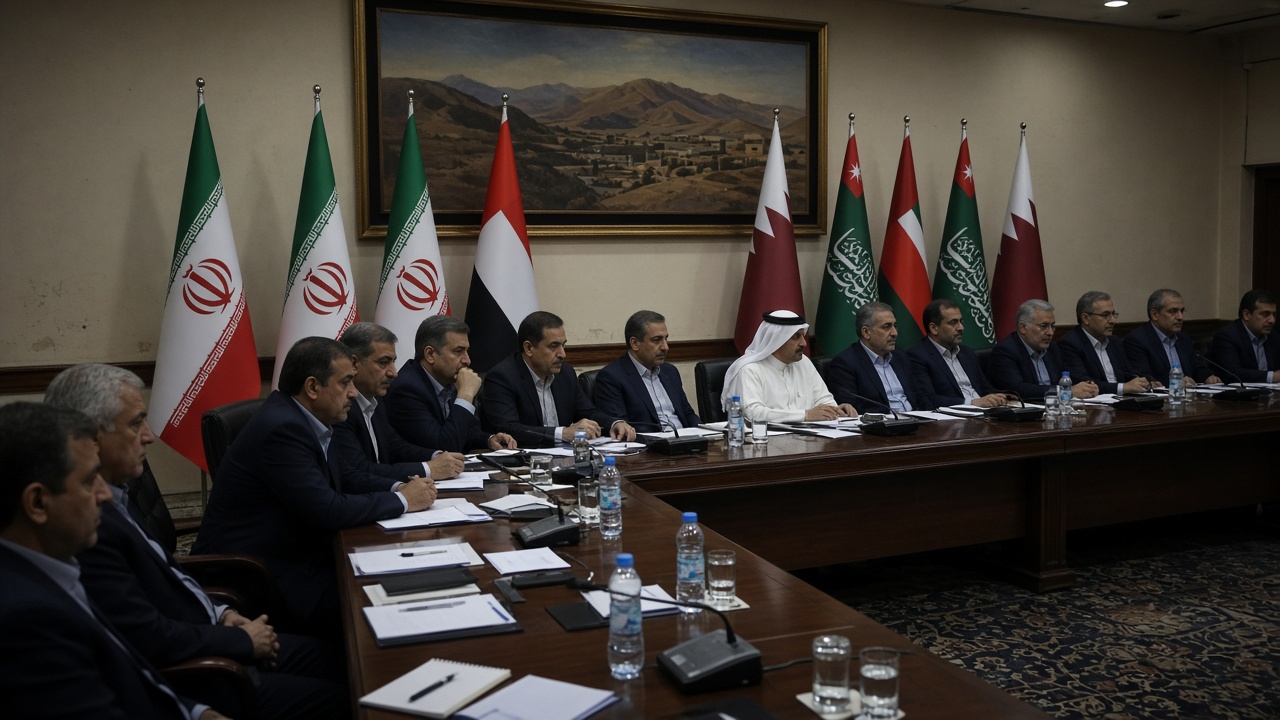
Senior defence officials from Saudi Arabia, Pakistan and Turkey arrived in Tehran on Monday for talks with Iran’s Supreme National Security Council, a rare gathering of Mecca Defence Alliance members inside Iran as fighting between the Saudi-led coalition and Yemen’s Houthis escalates and the United States keeps one eye on renewed strikes against Tehran.
Who is in the room
Deputy secretary Ali Bagheri Kani told Iranian state television that Saudi Defence Minister Prince Khalid bin Salman, Pakistan Army chief Field Marshal Asim Munir and Turkish intelligence chief Ibrahim Kalin would consult on regional security. Two people briefed on the plans told Reuters the same lineup was expected, though Riyadh, Islamabad and Ankara had not issued formal readouts by mid-morning in the Gulf.
The meeting marks the first time all three pact members have sent such a senior delegation to Iran since the alliance was activated earlier in October, when ministers in Riyadh agreed to deploy forces and capabilities to Saudi Arabia after Houthi missile and drone attacks. Turkey’s foreign ministry, in an October 5 joint statement with Riyadh and Islamabad, condemned attempts to target Makkah and Madinah and pledged collective deterrence.
Yemen fighting spills into the Gulf
While diplomats met in Tehran, the Saudi-led coalition supporting Yemen’s internationally recognised government carried out air raids on Houthi-held areas, including Sanaa, Al Jazeera reported Monday. The strikes followed Houthi claims of a ballistic missile attack on Riyadh’s King Khalid International Airport; Saudi authorities have said they intercepted projectiles and that the airport partially reopened for flights after a temporary closure.
The Yemen front has become a pressure point in the wider confrontation between Iran and the U.S.-Israeli campaign that began earlier this year. Attacks on Saudi infrastructure push Washington’s Gulf partners into the line of fire even as Trump administration officials weigh diplomacy against further military action.
Washington’s Sunday pause
U.S. President Donald Trump told reporters on Sunday that there would be “not a strike today” against Iran, after days of mixed signals about a possible operation as soon as the weekend. He separately told Fox News that his choice was whether to “make a deal” with Tehran or “finish them off,” while asserting that the United States now controls traffic through the Strait of Hormuz.
Iranian Foreign Ministry spokesperson Esmail Baghaei said Sunday that Tehran had not left the negotiating table and that messages were still being passed to Washington through intermediaries. Foreign Minister Abbas Araghchi has linked any talks to demands that include easing the naval blockade on Hormuz and releasing frozen Iranian assets, according to regional media accounts of his recent statements.
What the Tehran talks are meant to do
Bagheri Kani framed Monday’s session as a step toward “endogenous” security among regional powers rather than reliance on outside militaries. For Saudi Arabia, sitting with Iran while the Mecca pact’s own forces are on alert for Houthi attacks underscores the tightrope Riyadh walks between confronting Tehran’s allies in Yemen and avoiding a direct spiral with Iran itself.
Analysts will watch whether the delegations issue a joint communique on de-escalation in Yemen or limit themselves to bilateral security assurances. With Israel’s election on Tuesday and U.S. midterms a week later, both Gulf and Iranian officials have reasons to show they can manage crises locally even as Trump keeps the threat of strikes on the table.