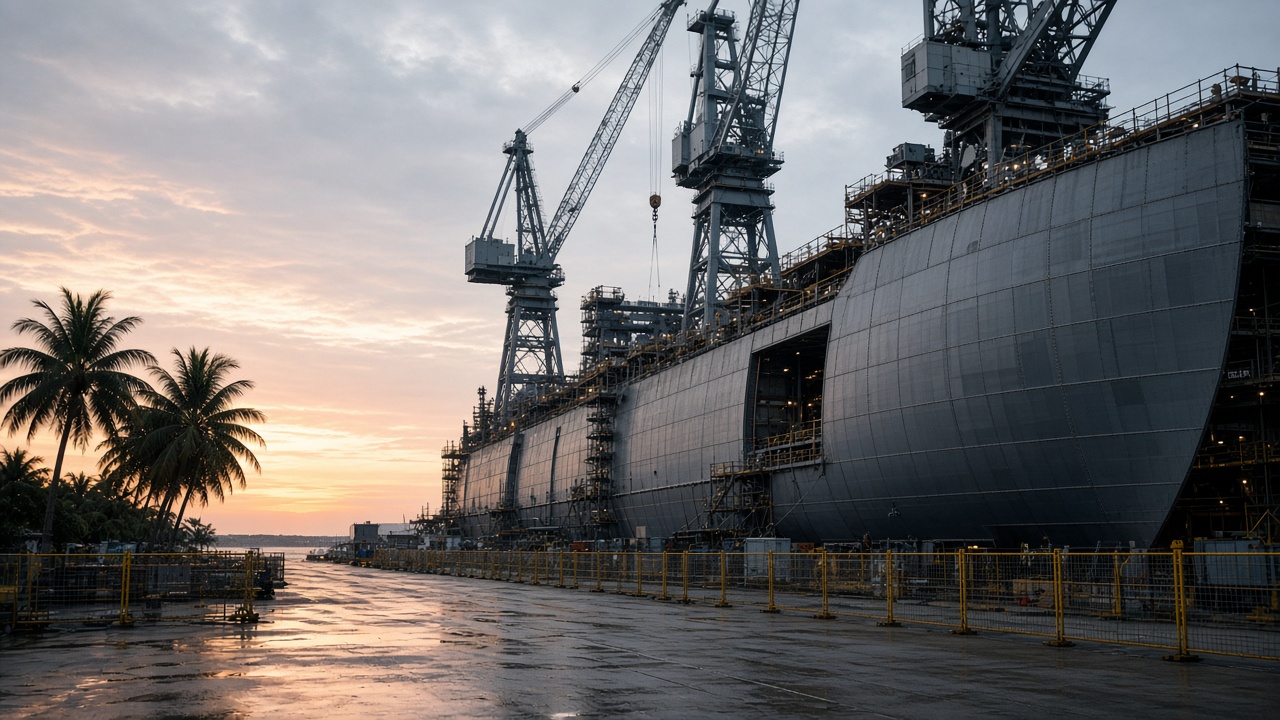
Seatrium and Karpowership signed a contract on 22–23 October 2026 to convert five Whale Class powerships for hydrogen-ready operation, extending a letter of intent from August 2025 into firm yard work with engineering already under way.
Contract scope
The deal covers structural and systems upgrades so floating power units can plug into host grids with up to 600 megawatts of capacity each, depending on configuration. Seatrium will manage detailed design, procurement and outfitting at its Singapore yards, leveraging experience from prior fast-power barge programmes.
Karpowership positions the vessels as mobile generation for markets facing grid constraints or emergency shortfalls. Hydrogen-ready tagging signals future fuel flexibility even if initial operations still burn liquefied natural gas.
Delivery timeline
The first converted unit is slated to leave Tuas in December 2027, with sister hulls following on staggered milestones. Project managers said steel cutting and cable routing have started on the lead vessel while class societies review safety cases for parallel generation and berthing.
Market read-through
Singapore-listed Seatrium shares have reacted to energy-security orders across offshore wind and gas assets; this contract adds recurring fabrication revenue without tying the yard to a single geography because Karpowership deploys globally. Analysts on the exchange call circuit asked how hydrogen kits affect margin per hull, a detail executives promised to break out at the next results briefing.
Competitors in Korea and China also chase floating power work, so cycle time at Tuas will matter for follow-on options in the LOI framework.
Workforce and supply chain
Seatrium said the programme will keep specialist welders and electricians on its payroll through 2028, with subcontractors handling selected module builds. Local suppliers of switchgear and cabling stand to benefit if class approvals stay on schedule.
For investors, the October signing marks the formal start of five-vessel conversions after months of negotiation, with the first delivery test coming at the end of 2027.
Technical milestones
Engineering teams will convert Whale Class hulls that Karpowership already uses for rapid grid connections overseas. Hydrogen-ready tagging means fuel lines and control software leave headroom for future molecules even if early operations still burn liquefied natural gas, a compromise buyers in emerging markets requested to avoid stranding new assets.
Seatrium’s Tuas schedule will overlap with other offshore wind fabrication, so yard executives said they will stagger crane lifts to keep heavy-lift windows clear. Union leaders welcomed the order book but asked for transparent overtime rules as night shifts pick up through 2027.
Karpowership’s plug-and-play model lets host governments moor converted hulls near demand centres, avoiding years-long land-based plant builds. The five-vessel package announced on 22–23 October follows an August 2025 letter of intent and keeps engineering teams busy while offshore rig repair cycles soften.
Listing observers said the contract should support cash flow into 2028 if milestone payments track steel work at Tuas, though currency moves on the US dollar could still sway reported margins on the Singapore exchange.