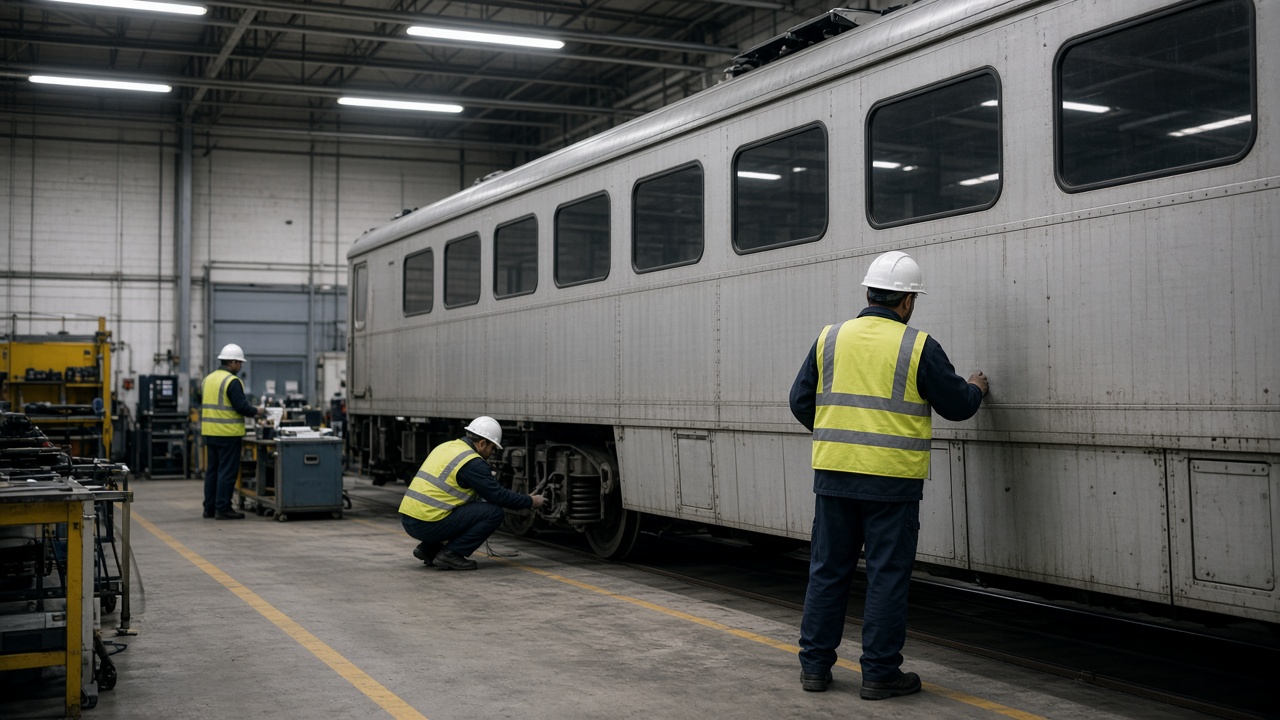
Transport Minister Jeffrey Siow announced at the BusTech RailTech Grand Challenge at ITE College West on 24 October that Singapore Rail Academy will partner ITE, Nanyang Polytechnic, Republic Polytechnic, Singapore Polytechnic and the Singapore Institute of Technology to credit on-the-job rail engineering toward diplomas and degrees.
One curriculum from three operators
From November 2026, training previously split across Land Transport Authority modules, SMRT programmes and SBS Transit apprenticeships will sit inside a consolidated Rail Academy syllabus. Students will log hours on live maintenance tasks while meeting academic benchmarks at their home institutions.
Workforce Singapore-recognised credentials under the national WSQ framework will roll out from early 2027, giving mid-career entrants a recognised path without repeating basic safety modules. Officials said the change removes duplicate classroom time that had slowed hiring during the last MRT expansion wave.
What employers gain
SMRT and SBS Transit human-resource leads at the event said a shared curriculum makes it easier to rotate staff between lines because everyone clears the same competency checks. LTA will keep audit rights over assessment rubrics so private operators cannot soften technical standards to fill rosters quickly.
Polytechnic leaders said embedding academy blocks inside existing diplomas should raise completion rates for rail specialisations, which had trailed general engineering tracks. SIT will map advanced signalling and power-supply modules toward applied-degree requirements, with capstone projects tied to live depot challenges.
Students and mid-career switchers
ITE students demonstrated troubleshooting rigs during the grand challenge, the kind of practical stations that will count for stacked credit once November classes begin. Mid-career participants from electronics and facilities management said WSQ packaging from 2027 will let them port prior safety certifications instead of restarting from zero.
The ministry expects demand to climb as the Cross Island and Jurong Region lines move toward commissioning. Rail Academy leaders cautioned that intake caps will still track available mentor hours on operational assets, so not every applicant will win a slot immediately.
Funding and next steps
Training subsidies announced alongside the partnership mirror existing SkillsFuture support, with extra top-ups for female trainees entering traditionally male-dominated maintenance roles. LTA will publish a skills matrix online before enrolment opens so students can see which academy blocks satisfy which qualification outcomes.
Industry partners at the grand challenge showcased predictive maintenance kits that students will encounter inside the consolidated syllabus, including thermal cameras for track-bed inspections and software logs mirrored from SMRT depots. Siow said those tools will be available at every partner campus so students in the east and west train on comparable kits before touching live assets.
Parents attending the event asked whether Rail Academy slots favour polytechnic students over ITE entrants; LTA responded that quotas will track operator hiring plans, with ITE pathways reserved for technician roles that feed into the same WSQ stack from 2027. Foreign manpower rules still require safety-critical sign-offs from Singaporean or permanent-resident mentors on site.
Republic Polytechnic and Singapore Polytechnic said they will embed two-semester academy blocks inside existing diplomas in electrical and mechatronics tracks, while NYP expands night classes for working adults who want to pivot from bus engineering to rail. SIT’s degree pathways will accept stacked credits from those diplomas so students do not repeat foundational maths when they move up.
BusTech competitors at the grand challenge still highlighted bus electrification, but Siow used the rail announcement to remind students that both modes share power-electronics skills, making cross-training easier when operators shuffle technicians during peak maintenance seasons.
Graduates from the first consolidated cohort are expected to sit for joint assessments in late 2027, giving employers a single certificate to reference when bidding for depot contracts tied to the Jurong Region Line.
Siow told reporters the partnership is the first time five schools share one rail credential map with both public operators. A follow-up briefing on WSQ details is scheduled for early 2027 once the SkillsFuture Singapore endorsement cycle closes.