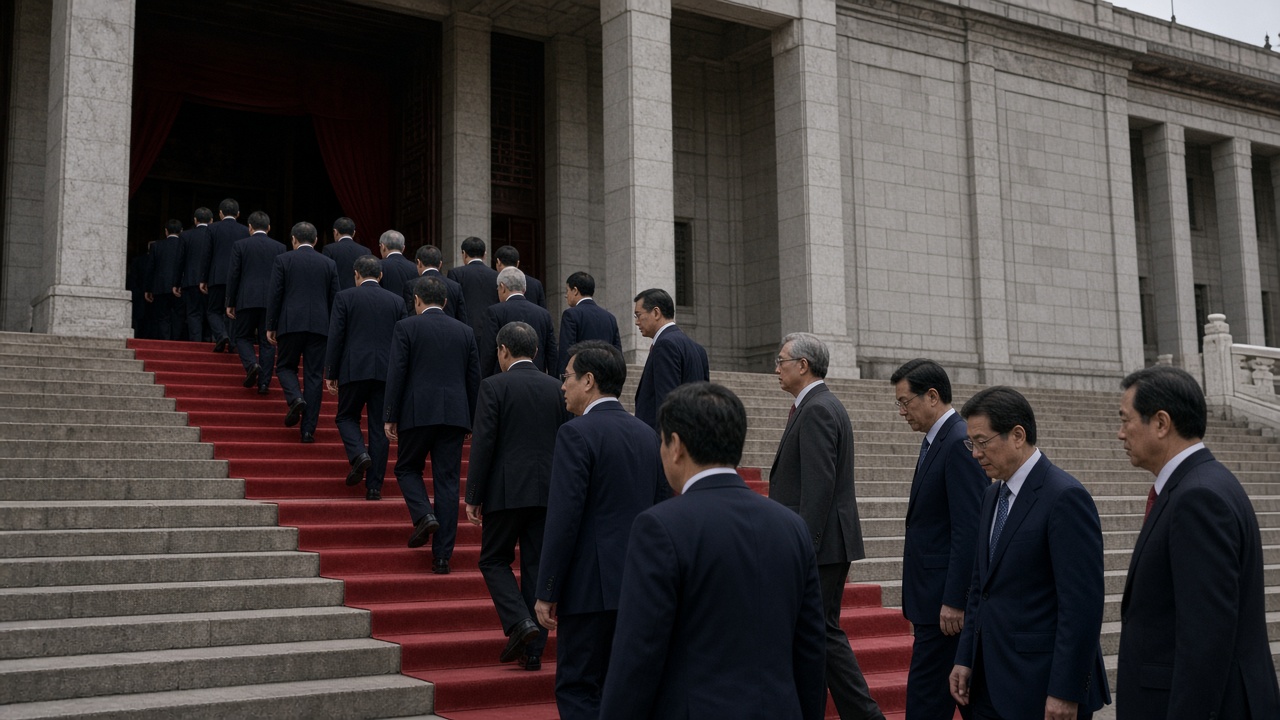
China's Communist Party began its fifth plenum of the 20th Central Committee in Beijing on Monday morning, opening a four-day closed session that will focus on tightening internal discipline rather than unveiling a new economic blueprint. General Secretary Xi Jinping delivered a work report on behalf of the Politburo and explained a draft decision on strengthening what the party calls "full and rigorous self-governance," according to state media.
The meeting, scheduled to run through Thursday, brings together roughly 300 full and alternate members of the Central Committee. It arrives about a year before Xi is widely expected to seek a fourth five-year term as party leader at the 2027 national congress, when leadership bodies from the Politburo down are due for renewal.
What the draft decision is meant to do
State news agency Xinhua said the draft summarizes achievements in party building since the 18th party congress in 2012 and analyzes "new circumstances and challenges" as global and domestic conditions shift. A Politburo meeting in September decided to submit the document to the plenum for approval.
The language tracks a long-running theme under Xi: that the party must police its own ranks more strictly if it is to retain legitimacy and control. The September Politburo session also stressed adopting "higher standards" and "more concrete measures" to fix prominent problems in party organizations and to preserve a political environment shaped by years of internal discipline campaigns.
Discipline, loyalty and the anticorruption track
Foreign analysts and diplomats often read these plenums for economic signals; this year's agenda is narrower. The Associated Press reported that Xi is pushing for greater loyalty and reliability from officials while extending a yearslong disciplinary campaign that has removed generals, ministers and provincial chiefs.
Brookings Institution scholars noted ahead of the session that personnel questions may overshadow the policy text. Purges across the Central Military Commission and the Central Committee have thinned the ranks of senior officials Xi might otherwise rely on, leaving room for the plenum to approve replacements before the 2027 congress locks in the next leadership lineup.
What outsiders will watch for
Communiques issued at the end of prior plenums typically echo the themes Xi highlights in his opening report, sometimes with coded references to factional behavior or lapses in cadre discipline. Al Jazeera reported that the gathering is also being watched for clues to China's broader direction, even though no major growth targets or five-year-plan chapters are on the published agenda.
Markets in Hong Kong and Shanghai showed little immediate reaction Monday, reflecting the session's inward focus. Western governments, meanwhile, will parse any mention of security, technology or foreign policy in the final readout, even if those topics are not the headline item.
Calendar and next steps
The plenum is expected to close with a brief public statement summarizing the decision on party governance. Fuller texts, if released, usually follow days later. Xi has used similar meetings to signal that jockeying for posts before the congress will be treated as disloyalty, a message that may matter as much as the formal resolution for officials weighing their next moves.
For now, the procedural clock is running: four days in Beijing, one draft decision on discipline, and a leadership transition on the horizon that Xi appears determined to shape on his own terms.