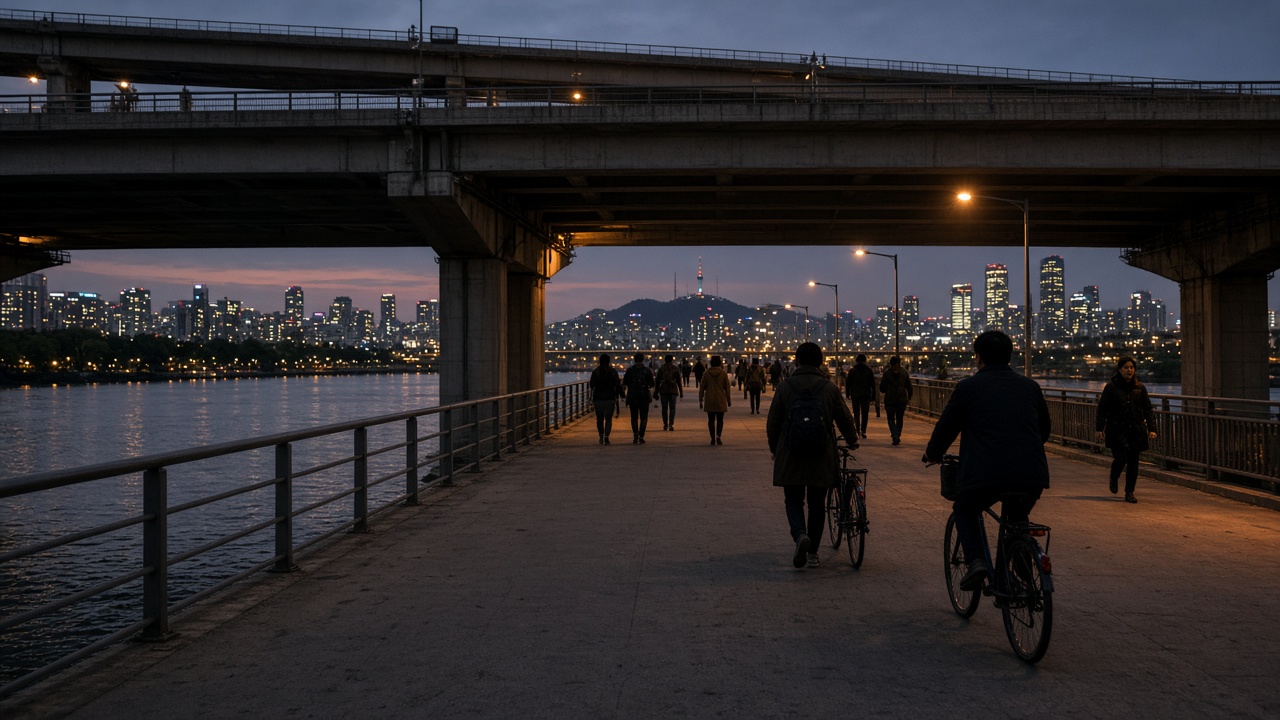
Seoul’s Jamsu Bridge — the low-slung span that dips between the twin Banpo Bridge decks over the Han River — barred cars at midnight on Sunday and reopened as a pedestrian-only crossing for the first time since it began carrying traffic in 1976.
The conversion ends a half-century of rush-hour use that linked southern districts with central Seoul, but city planners argue the structure is better suited as a riverside walkway tying together Banpo Hangang Park, Nodeul Island paths, and festival space beneath the upper bridge. Motorists must now use parallel crossings such as the upper Banpo Bridge decks or nearby Han River spans, and transport officials said they would monitor detour routes during Monday’s commute.
Monday commute tests new traffic patterns
Local broadcasters reported lighter-than-feared congestion on the first weekday morning after the closure, though police and city traffic units kept extra staff on riverside arteries in case drivers unfamiliar with the change queued at Banpo intersections. The bridge remains a recognizable landmark from Seoul’s Expo-era river redevelopment, and its deck-level views of the river and Banpo Bridge fountain shows made it a frequent film location even while cars still crossed.
Under the pedestrian plan, cyclists and walkers share the deck, with city contractors finishing guardrail and lighting adjustments that began ahead of the midnight cutoff. Officials have pitched the project as part of a broader push to expand car-free riverfront segments, similar to other Hangang parks that gained popularity after pandemic-era outdoor dining and night markets.
Political context on the river
The closure lands amid a heated National Assembly audit season in which Seoul Mayor Oh Se-hoon’s record — including appellate court acquittals in a campaign-finance case — has drawn renewed scrutiny from rival parties. Oh’s city government has framed the Jamsu project as quality-of-life infrastructure rather than a symbolic break with past administrations, but opposition lawmakers have questioned whether adequate substitute capacity exists for commuters who relied on the lower deck.
For now, the measurable test is operational: whether Banpo and Dongjak-bound traffic can absorb displaced volume without chronic delays, and whether pedestrians actually use a bridge that once felt dangerous beside fast-moving cars. City hall said it would publish usage counts after the first month and adjust shuttle or signal timing if bottlenecks persist.
Riverside merchants near Banpo Hangang Park said they were hopeful the foot traffic would support weekend vendors, though several taxi drivers told local radio they worried about longer loops to reach southern apartment blocks. The Seoul Metropolitan Government has not announced tolls or fees for crossing on foot, and disability advocates asked whether elevator access from lower river paths would be kept open overnight as summer events resume next year.