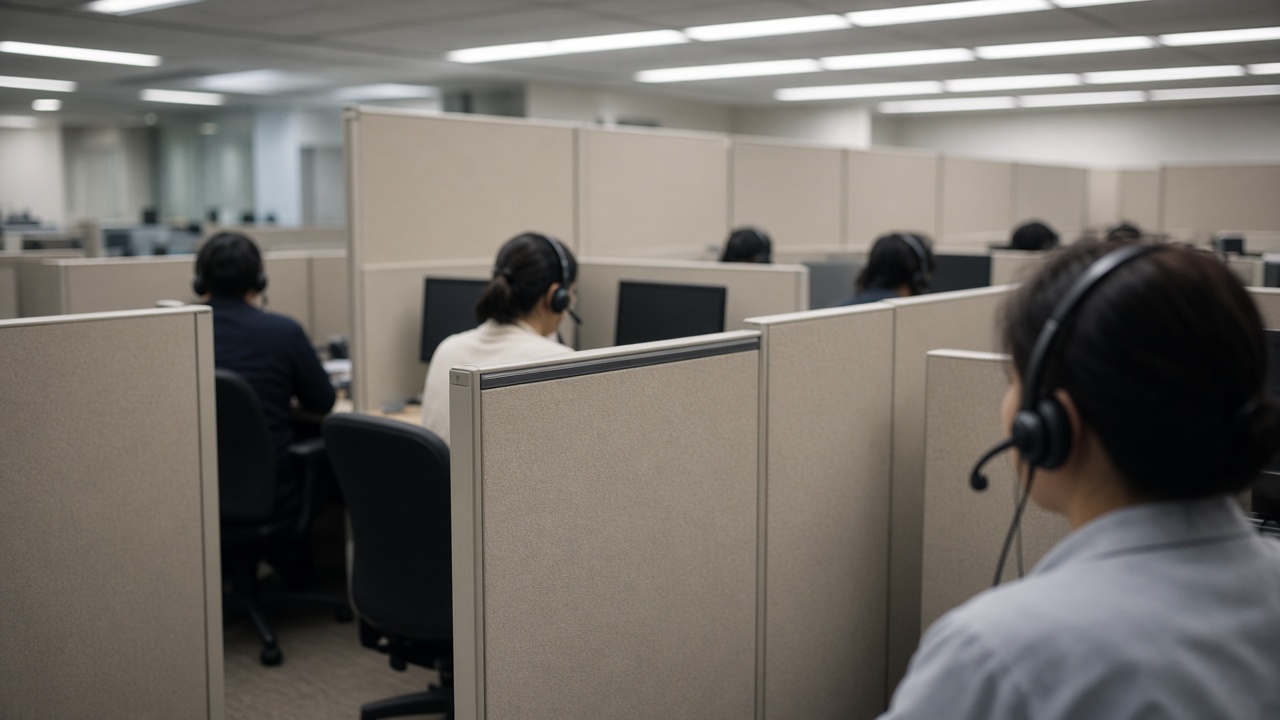
Krutrim deployed an on-premise summarization stack for Maharashtra's Chief Minister helpline, turning Marathi and Hindi voice tickets into structured case files without sending audio to public cloud APIs.
The 181 line fields grievances on water supply, ration cards, and local law-and-order referrals. Operators previously typed free-form notes after each call, creating backlog when monsoon complaints spiked. Krutrim's appliance sits in the Maharashtra State Data Centre in Mumbai, generating English and Marathi summaries that supervisors can approve before routing to district collectors.
Architecture choices
State IT officials insisted on air-gapped inference for citizen phone numbers and Aadhaar references that callers sometimes recite aloud. Krutrim adapted its Indic speech models to run on government-procured GPUs, with firmware updates delivered via sneakernet rather than over the internet. The deployment covers 420 seats in Mumbai and Nagpur, with Pune scheduled for December.
Unlike chatbot pilots that answer citizens directly, this system keeps humans in the loop. Summaries appear in the existing CRM; operators may edit text before submission. That design avoided TRAI's stricter telemarketing rules while still shaving average handle time by about 90 seconds in trial weeks.
Procurement context
The contract value was not disclosed, but officials said it draws from the state's digital governance budget rather than the central IndiaAI mission. Still, the project will feed into MeitY's case-study library as states race to show sovereign AI use ahead of the mission's compute RFP deadline on October 29.
Competitors including Sarvam and Microsoft India pitched hybrid clouds with private endpoints. Maharashtra chose full on-prem after a 2024 audit criticized a police chatbot that briefly mirrored transcripts to a US region.
Risks and limits
Speech recognition accuracy for Konkani code-switching remains uneven, so coastal districts may see more manual edits. Privacy advocates want retention caps on audio snippets used for model fine-tuning; the current memorandum limits storage to 30 days.
For other states watching the rollout, the lesson is operational: summarization pays off faster than citizen-facing generative chat, and keeping hardware in-state defuses procurement objections that have stalled several police analytics tenders.
Maharashtra's IT secretary said uptime during the Ganesh festival week—when complaint volume tripled—convinced doubters that the appliance could survive heat and voltage swings in legacy government buildings without cloud failover.
Opposition legislators asked whether vendor lock-in clauses prevent swapping models after three years; officials promised a competitive rebid window written into the master services agreement signed Friday.