NextDC wiped about $140 million of net revenue and underlying EBITDA from its fiscal 2027 guidance on Wednesday after electricity distributor Jemena told the ASX-listed operator that grid upgrades feeding its M3 Melbourne campus may stay on hold until February 2027.
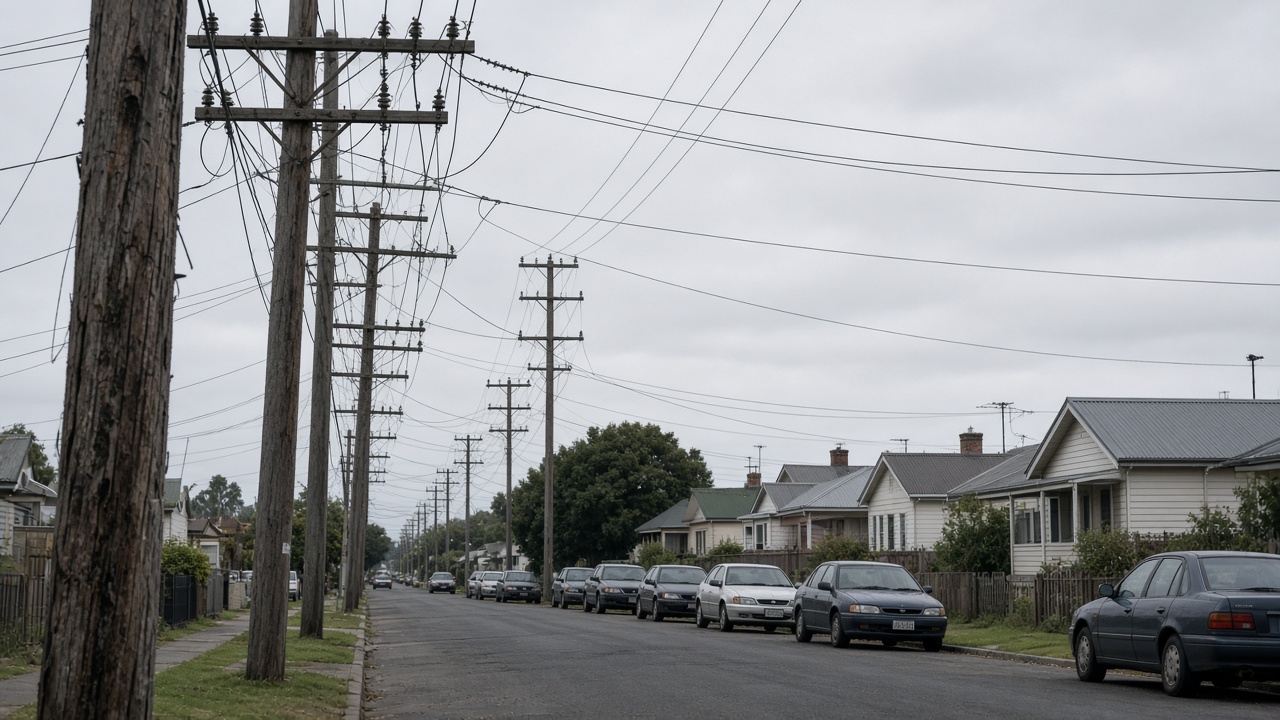
The revision landed less than a week after residents in Yarraville and West Footscray blocked access to 66-kilovolt pole routes, prompting Jemena to pause augmentation works that were meant to lift supply to the hyperscale site beside NextDC's existing West Footscray footprint. Chief executive Craig Scroggie told investors the company had removed not only future capacity from guidance but also contracts that were already billing, until timing can be modelled with confidence.
Community pause ripples through listed markets
Jemena attributed the suspension to safety concerns, lack of site access and the local council withholding road consent while further consultation runs. The distributor said it does not expect to restart the contested pole program before February, pushing the next incremental grid increase into financial year 2028 on current estimates. NextDC shares had already sold off sharply when the dispute surfaced; the guidance cut formalised what traders had been pricing as a multi-quarter delay to contracted capacity.
Group chief development officer Simon Cooper said the operator is working daily with Jemena on alternative pole locations, revised routes and longer-term undergrounding, while acknowledging that burying cables is not an immediate fix. NextDC also faces a separate planning hold-up for later M3 stages after Victoria entered pre-election caretaker mode, with a state decision now unlikely before 2027 even if grid works resume.
What landlords and tenants are watching
For cloud and enterprise customers, the fight is less about share prices than whether Melbourne's newest capacity tranches arrive on the schedules written into master service agreements. NextDC said it continues to engage residents through dedicated staff and intends to expand its community plan once construction and operations ramp again. Until Jemena and Maribyrnong Council settle on a workable corridor, however, the FY27 billing outlook for M3 remains blank on the company's own spreadsheet.
Analysts said the episode also highlights how Australia's AI-driven data-centre build-out depends on distribution networks that were never designed for suburban backlash against 30-metre poles. Whether the pause lasts one quarter or three, the ASX statement made clear that community opposition now carries the same weight as steel and concrete in the national capacity race.
Victorian Energy Minister spokespeople have urged Jemena and NextDC to keep residents informed as mediation continues. Submissions to the Australian Energy Regulator on future distribution pricing may cite the Yarraville dispute as evidence of social licence risk in data-centre corridors.
Hyperscale tenants globally have started requiring power-on dates in contracts with liquidated damages, a trend local operators said will spread to Australian deals if grid delays persist. NextDC competitors in Sydney and Perth are watching whether customers redirect demand south.
Equity analysts trimmed sector multiples slightly while maintaining long-term demand forecasts tied to AI inference growth, arguing one Melbourne pause does not alter national megawatt pipelines already under construction.
Scroggie told the ASX briefing that customer enquiries about Melbourne capacity had not spiked into cancellations, suggesting tenants still expect eventual delivery rather than permanent relocation.