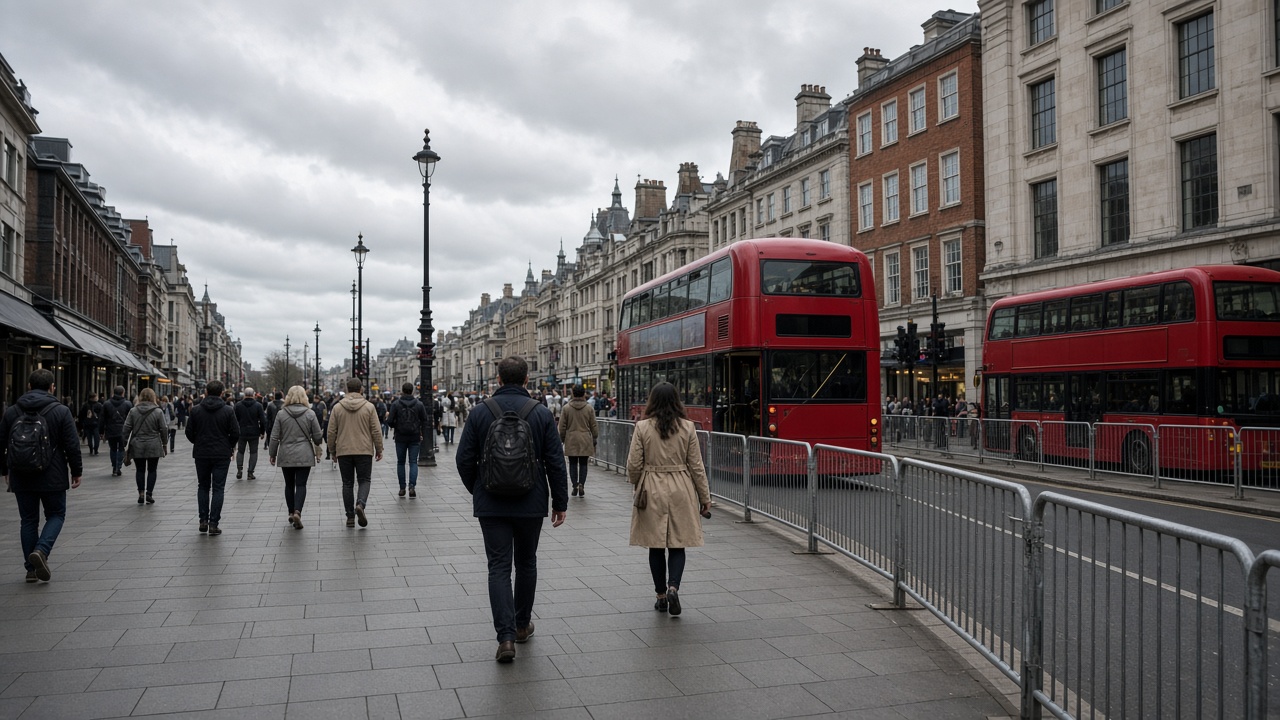
Oxford Street became permanently traffic-free for the first time on Monday as Transport for London closed roughly 900 metres between Orchard Street and Great Portland Street to private motor vehicles, buses, taxis, private-hire cars, cycles and e-scooters. The ban marks the opening phase of Mayor Sadiq Khan’s plan to turn the West End artery into a pedestrian plaza ahead of the Christmas trading rush.
What changed at dawn
City Hall said consultations showed about seven in ten Londoners and businesses backed pedestrianisation, though the scheme has been debated for decades and previous attempts stalled. Monday’s rollout is described as a transitional layout: barriers and signage went in overnight while contractors continued fitting street furniture, and full landscaping—including more than 50 trees and two public squares—is not scheduled to finish until spring 2027.
Buses that once ran along Oxford Street are being diverted to stops on Wigmore Street, Henrietta Place and Cavendish Place, roughly 200 metres from the closed section. Emergency services retain access at all times, and deliveries may enter the pedestrian zone between midnight and 7 a.m. to support retailers.
Shoppers, cyclists and sceptics
BBC reporting from the ground described crowds filling the carriageway as stores opened, with some visitors welcoming extra space but others questioning how disabled shoppers will cross the area safely. Cyclists were seen riding through the new zone despite the ban; security staff asked riders to dismount, and TfL said it is working with dockless hire operators on geo-fencing to limit e-bike power inside the perimeter.
Retail groups have long argued that Oxford Street—once drawing about 500,000 visitors a day and more than £3 billion in annual spending—needs reinvention after pandemic footfall losses and competition from online rivals. Khan called the day “momentous” and said removing traffic is the first step toward reversing decline, comparing the ambition to pedestrian successes in Times Square and on Barcelona’s La Rambla.
Opponents in nearby neighbourhoods have warned that pushing vehicles onto parallel routes could worsen air quality on residential streets. Westminster City Council and TfL said they will publish traffic counts weekly during the trial period and adjust signal timing if queues build on Wigmore Street or Henrietta Place.
What happens next
The Oxford Street Development Corporation, backed by central and city government, will gather feedback on the transitional scheme before locking final designs. TfL said it will monitor traffic on surrounding roads to limit knock-on congestion in Marylebone and Fitzrovia.
Major landlords including Selfridges and John Lewis have publicly backed the project, citing safer curbside collections during the holiday peak. For now, the test is whether a traffic-free high street can deliver roomier walking space without pushing gridlock—and pollution—into neighbouring streets during the capital’s busiest shopping season.