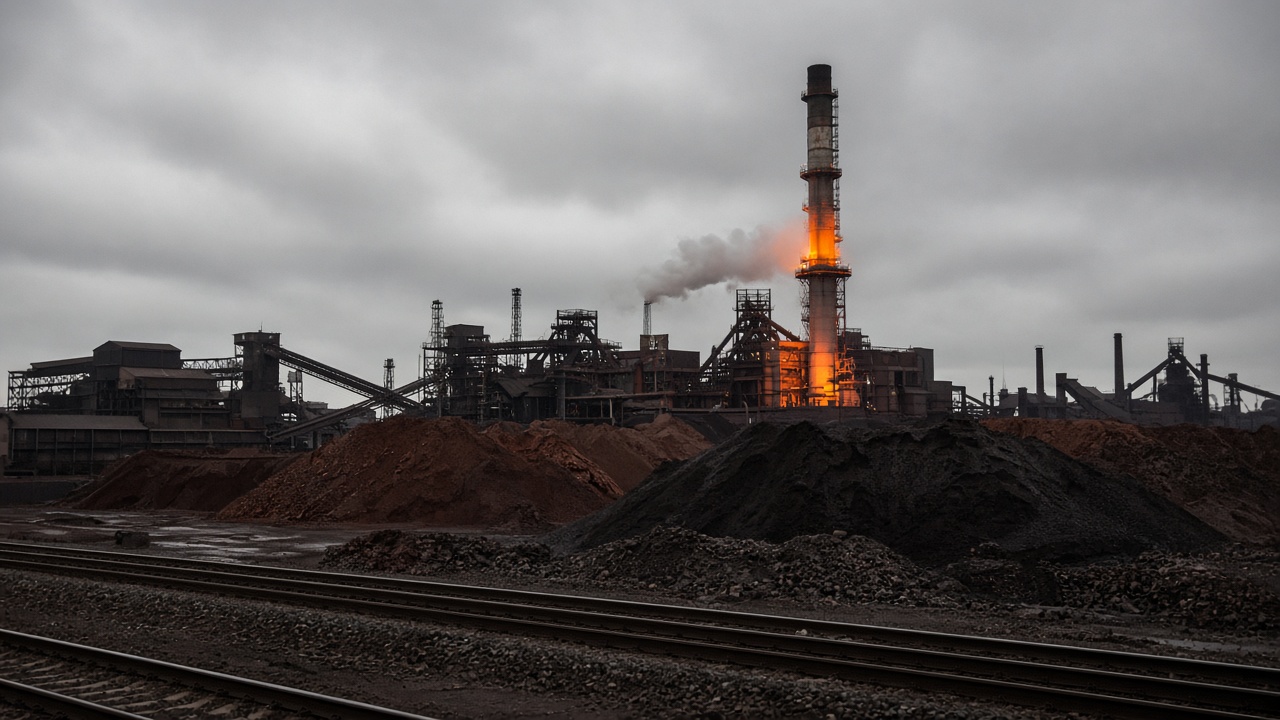
POSCO Holdings warned investors on Monday that Indonesia’s latest nickel-ore export curbs are squeezing fourth-quarter input costs for its stainless and battery-material lines, even though order books from Korean shipbuilders and appliance makers remain intact.
Chief financial officer Lee Sang-myung told a Seoul briefing that two Indonesian provinces have tightened verification rules on ore grades shipped to Korean smelters, forcing POSCO to lean on higher-cost mixed hydroxide feed and spot purchases from Australia. The company kept its full-year operating-profit guidance unchanged but said stainless margins could narrow if Jakarta extends the policy past November.
Why Indonesia matters to Pohang
POSCO processes a large share of its nickel through affiliates in Gwangyang and through trading desks that source laterite ore from Southeast Asia. When Jakarta slows export permits, Korean mills typically face a three- to four-week lag before alternative cargoes clear customs. Traders on the Korea Exchange said shares of POSCO Holdings slipped 1.4 percent in morning trade, outpacing the broader Kospi decline led by memory-chip exporters.
Indonesia’s energy ministry said the curbs target illegal mining and undocumented blending, not long-term contracts with verified suppliers. POSCO executives nonetheless described the paperwork burden as “operationally heavy,” noting that each cargo now requires additional third-party assays before departure.
Downstream customers watch stainless spreads
Shipbuilders Hyundai Heavy Industries and Hanwha Ocean purchase POSCO stainless plate for LNG tank fabrication. Both firms said they have not received force-majeure notices, but procurement teams are modeling a 2 percent to 3 percent increase in plate surcharges if ore costs stay elevated through year-end. Appliance makers LG Electronics and Samsung Electronics, which buy cold-rolled stainless for washer drums, said they are negotiating quarterly price resets with mills.
Battery-grade nickel is a smaller revenue slice for POSCO than stainless, yet it remains strategically important as Korean cathode makers expand high-nickel chemistries. POSCO Future M, the group’s materials arm, told analysts it has six weeks of hydroxide inventory at its Gwangyang precursor line and can divert some supply from trading stockpiles if needed.
What analysts expect next
Shinhan Investment & Securities kept a hold rating on POSCO Holdings but trimmed its fourth-quarter Ebitda forecast by 6 percent, citing ore premiums. Mirae Asset Securities said investors should watch Jakarta’s November policy review and any retaliatory trade language tied to the U.S.–Korea summit week in Gyeongju, where industrial metals are on the bilateral agenda.
POSCO said it will publish a detailed raw-material bridge in its November investor deck and host a call for overseas funds after the APEC leaders’ meetings conclude. Until then, the company is prioritizing long-term ore contracts with verified Indonesian miners and accelerating trials on lower-nickel stainless recipes for construction customers.
Inventory and hedging
POSCO traders said they increased nickel working inventory by nine days of consumption at Gwangyang, paying a premium to secure Australian concentrate when Indonesian barges stalled last month. The company is also testing financial hedges on the London Metal Exchange, though CFO Lee cautioned that hedge accounting rules limit how much protection flows straight to operating profit.
Union leaders at Pohang Works asked management to disclose any production cuts tied to ore shortages, worried that night-shift rolling lines could face downtime during winter maintenance. POSCO replied that no curtailment is planned but that shift supervisors may adjust batch sizes if hydroxide deliveries slip.
Environmental groups in Ulsan urged the company to accelerate low-nickel recipes, citing particulate emissions from smelting. POSCO said its 2030 green-steel roadmap already includes ferritic grades for construction beams, which could trim nickel intensity by up to 15 percent in selected products.
Export credit agencies said they are fielding more inquiries from Korean mills seeking insurance on ore cargoes sailing through the Makassar Strait, a route that has seen intermittent port congestion when Indonesian authorities inspect holds.
Market participants said follow-up disclosures later this week will matter more than opening headlines, and that investors should read footnotes on guidance rather than relying on single-session moves alone.
Regulators reiterated that consumer protections and export competitiveness must be balanced, promising additional guidance if conditions shift before the next policy meeting.