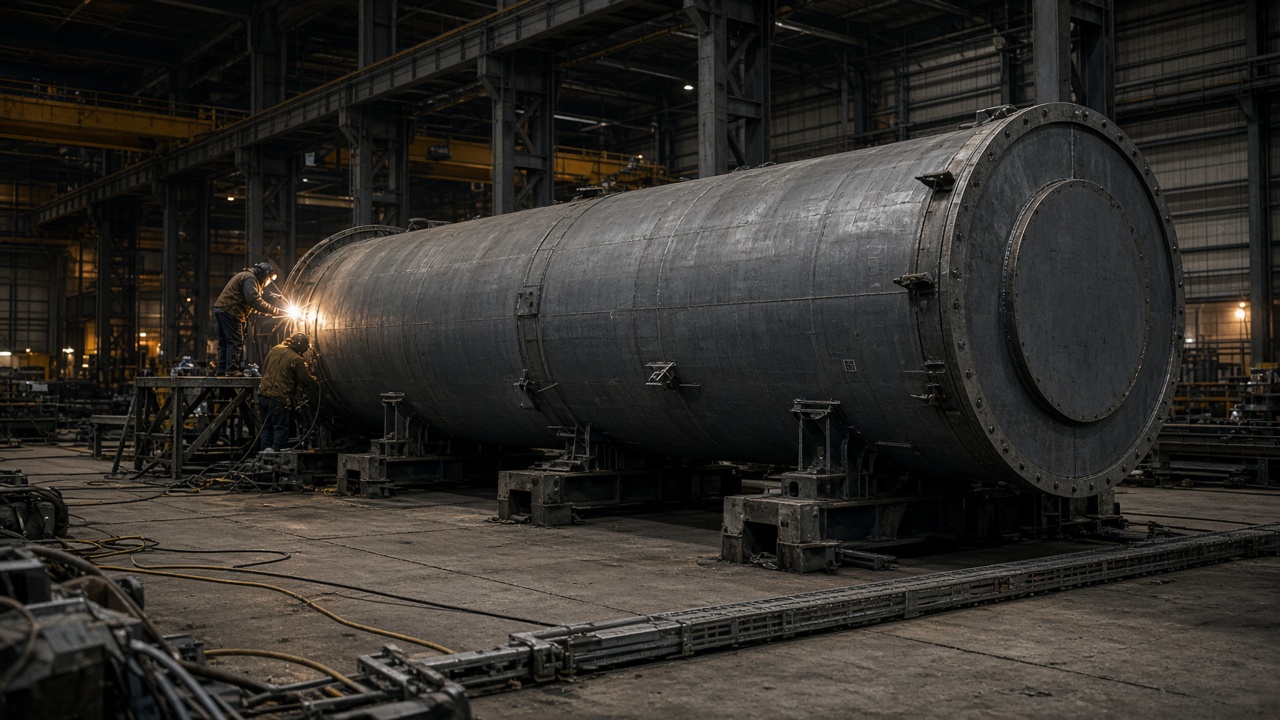
Rolls-Royce SMR pushed back shipment of a factory-built reactor pressure-vessel module to its Hartlepool assembly campus by roughly two weeks after a Tier-2 supplier failed a spot weld audit, a delay the company said will not yet move its first customer delivery date but will tighten cash buffers through year-end.
Chief executive Chris Cholerton told analysts on a Monday call that the module, one of four identical segments destined for a demonstration unit, cleared non-destructive testing in Derby but cannot leave the Midlands plant until an independent reviewer signs off on heat-affected zones in two circumferential seams. The hold affects only the lead module; parallel work on piping skids and control-room consoles continues on schedule, he said.
Why a weld audit matters for Britain's SMR bet
The UK government has staked part of its baseload power story on factory-built small modular reactors that can be sited faster than gigawatt-scale plants. Rolls-Royce SMR's design relies on serial production: identical modules trucked to coastal sites, then bolted together. Any slip in the first module's departure ripples through crane bookings, harbour permits, and the credibility of export campaigns in Poland and the Czech Republic, where ministers are watching Derby and Hartlepool as proof the supply chain can scale.
Investors punished the parent's London-listed shares modestly in early trade, though the move tracked wider industrials weakness rather than a standalone reassessment of nuclear risk. Analysts at Jefferies noted that SMR revenue remains a sliver of group totals; the market reaction, they argued, reflects concern that certification milestones could bunch into 2027 if suppliers stumble now.
Supplier map and political stakes
The delayed welds sit with a subcontractor in South Yorkshire that joined the SMR qualified vendor list only last spring. Rolls-Royce SMR said it will not name the firm while the audit runs, but confirmed the issue is procedural—documentation gaps on calibration logs—not a rejected weld. Even so, the Nuclear Industry Association used the slip to renew calls for a national nuclear manufacturing skills passport, citing competition from shipyards and offshore wind fabricators for the same coded welders.
At Westminster, shadow energy secretary Claire Coutinho asked whether the Department for Energy Security had contingency modules on order from overseas partners. A department spokesperson said the demonstration timeline remains "within the published envelope" and that regulators, not ministers, own manufacturing holds.
What happens next
Rolls-Royce SMR expects the audit to close by 7 November. If it does, the module convoy can reach Hartlepool before Christmas weather windows narrow on the A66 corridor. Failure would force a re-weld and could push the site's first concrete pour into the second quarter of 2027, according to a person familiar with the construction schedule who was not authorised to speak publicly.
For now, the company is absorbing extra carrying costs rather than passing them to its development partner. Cholerton said the lesson is familiar from aerospace: "You do not rush a pressure boundary." Hartlepool council leaders, meanwhile, want proof that local hiring targets—promised at 400 skilled roles—will survive any schedule drift.
Export credit agencies watching the programme said a two-week slip is manageable if welding documentation is the sole issue, but warned that repeated supplier holds could affect loan covenants tied to 2026 milestones. Polish utility PGE, an early customer candidate, declined to comment Monday beyond a statement that it monitors UK certification timelines.
Union officials at the Derby site said day shifts continue on non-affected modules and that no layoffs are planned. Apprentices recruited through the government's nuclear skills fund remain on rotation, a detail ministers may cite if backbenchers ask whether delays undermine the jobs narrative.