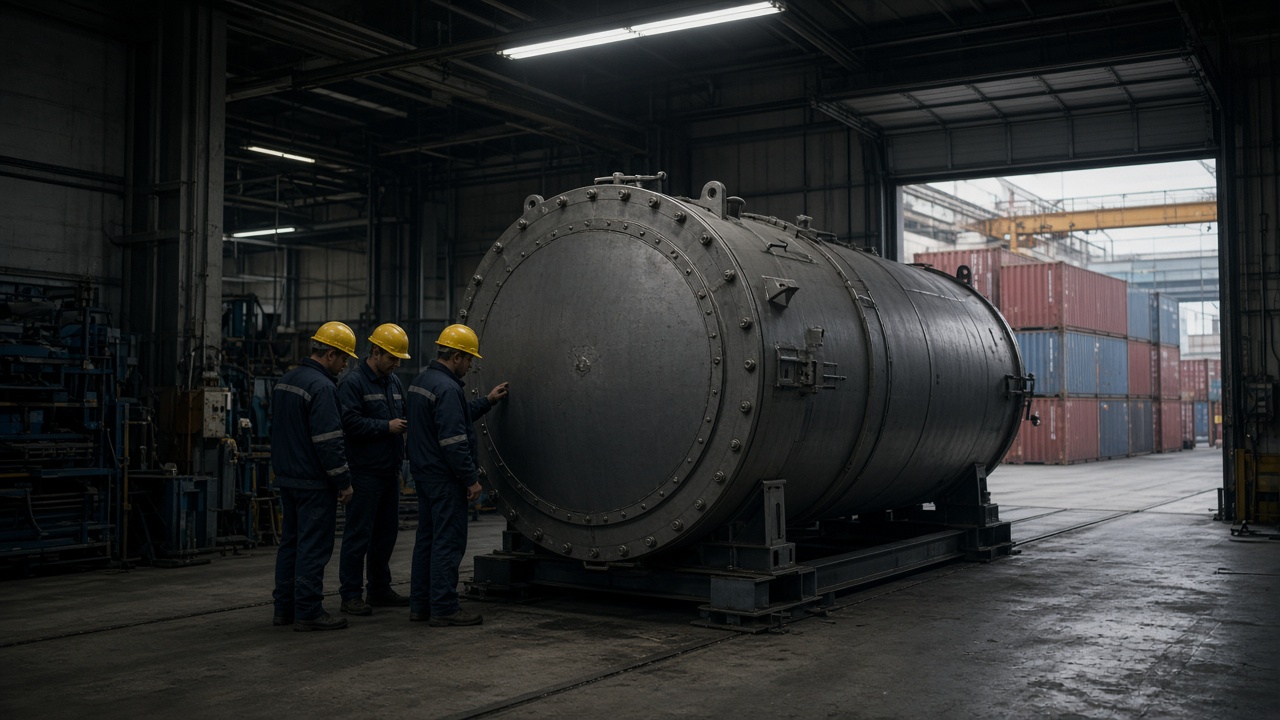
South Korea, Japan and the United States are considering Indonesia as the first country where they would jointly pursue a small modular reactor project, Kyodo News reported Monday, citing multiple Japanese government sources. The trilateral effort would combine American reactor designs, Korean construction know-how and Japanese component manufacturing in a template Washington hopes to replicate across Southeast Asia.
The three governments signed a memorandum of cooperation in July on the sidelines of a NATO summit in Ankara, pledging to support SMR adoption in the Indo-Pacific through standardized designs, simplified contracting and consortium financing. Follow-up talks in New York in September narrowed technical roles: the United States would lean on reactor intellectual property, South Korea on engineering and construction, and Japan on heavy equipment and fuel-cycle services.
Why Indonesia is on the short list
Indonesia has one of the region's most ambitious nuclear road maps, with plans for multiple large reactors on densely populated Java and interest in modular units for remote grids. It has also held discussions with Russia's state nuclear company on floating plants, meaning Seoul, Tokyo and Washington would be entering an active bidding environment rather than an empty field.
Kyodo said the three capitals envision Indonesia as a beachhead for later projects in Malaysia and the Philippines, where electricity demand is rising faster than renewable build-outs can cover. Exporting reactors is not only about megawatts: fuel supply contracts and decades of maintenance tie host governments to their vendors, a form of influence China and Russia have used extensively.
Seoul's stake in the consortium
For South Korea, a successful Indonesian SMR would extend a nuclear export industry that already spans the United Arab Emirates and Eastern Europe. Korean firms have marketed their APR1400 large units globally; modular designs offer a lower-capital entry point for middle-income countries wary of financing multi-gigawatt sites.
Industry officials in Seoul have pointed to Indonesia's archipelagic geography as a natural fit for factory-built modules that can be shipped by barge. The Yonhap news agency noted Monday that foreign ministers from the three countries have framed the effort as part of a "free and open Indo-Pacific" strategy, language Tokyo uses to describe economic and security partnerships that do not depend on Beijing.
Tokyo's hurdles
Japan still lacks a nuclear cooperation agreement with Indonesia, which is required before sensitive equipment can be transferred. Kyodo reported that Tokyo intends to negotiate that framework as part of the SMR push. Domestic politics also matter: Japan's own restart program for large reactors remains contentious after the 2011 Fukushima disaster, and exporting modular technology is one way industry advocates argue Japan can stay in the nuclear business without building many new sites at home.
Competition and timing
Chinese vendors have offered financing packages across Southeast Asia, while Russia promotes floating reactors to nations with long coastlines. U.S. officials have warned allies that accepting Russian fuel cycles can create long-term dependency. The trilateral SMR plan is, in part, an answer to that pitch.
No contract is signed yet, and Indonesian regulators have not announced a winner for modular pilots. Still, Monday's reporting suggests the first trilateral site selection could move from briefing slides to formal negotiations within months, giving Seoul a front-row seat in a contest that mixes energy policy with great-power competition.